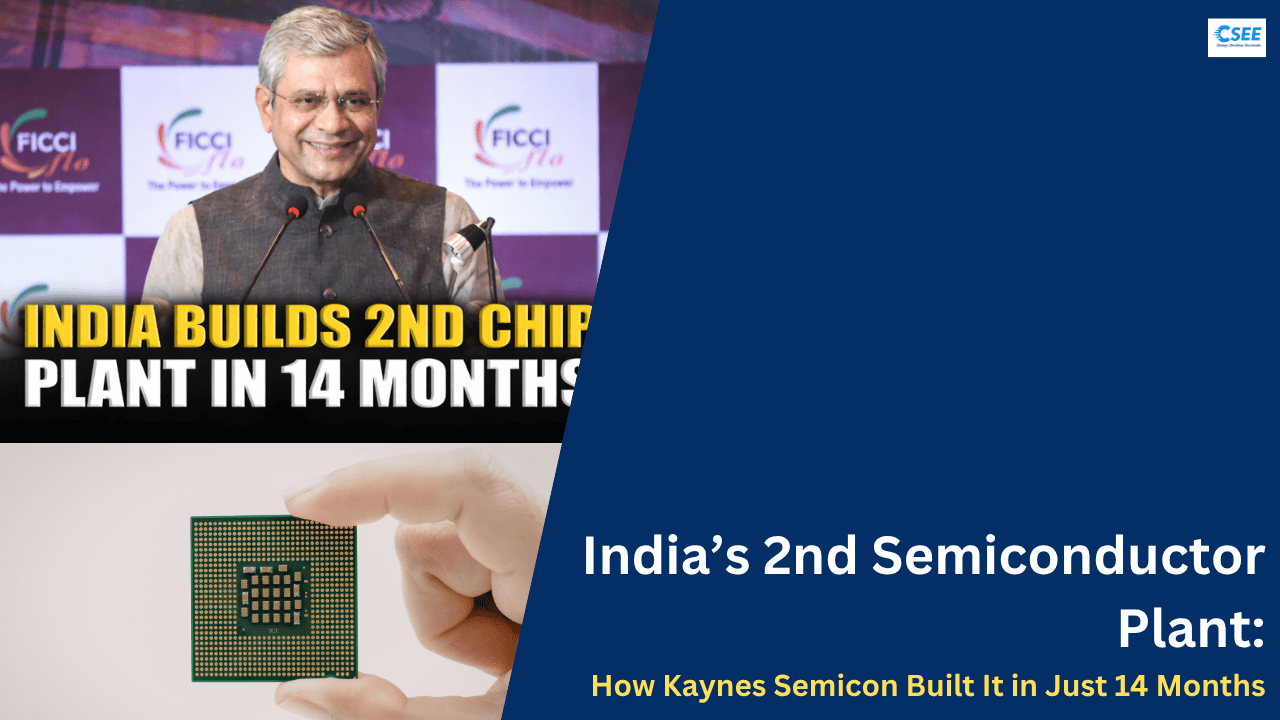
India’s semiconductor ambitions have long been discussed, debated, and delayed. But now, the narrative is changing—rapidly and decisively. The announcement and completion of India’s second semiconductor plant within just 14 months signals more than industrial progress; it represents a structural shift in how the country positions itself in the global technology ecosystem.
For decades, India has been a powerhouse in software and chip design, contributing significantly to global semiconductor giants. Yet, it lacked a strong manufacturing backbone. That gap is now being addressed with urgency and clarity. The establishment of the second semiconductor plant marks a transition from vision to execution.
The Company Behind the 2nd Semiconductor Plant
At the center of this achievement is Kaynes Semicon, a subsidiary of Kaynes Technology India Limited.
Kaynes Technology has been a key player in India’s electronics manufacturing services (EMS) sector, providing end-to-end solutions across industries such as automotive, aerospace, industrial, and IoT. With decades of experience in embedded systems and electronics design, the company has now taken a bold step into semiconductor manufacturing.
What Makes Kaynes Semicon Important?
- One of India’s early private-sector entrants into semiconductor manufacturing
- Focused on OSAT (Assembly, Packaging, Testing) capabilities
- Strong integration with existing EMS and embedded ecosystem
- Positioned to serve high-growth sectors like EVs and industrial automation
This move not only strengthens Kaynes’ portfolio but also aligns with India’s vision of building a self-reliant semiconductor ecosystem.
The Strategic Importance of Semiconductor Manufacturing
Semiconductors are the backbone of modern technology. From smartphones and electric vehicles to defense systems and AI infrastructure, chips power nearly everything. Countries that control semiconductor production hold strategic advantages in:
- Economic growth
- National security
- Technological leadership
India’s move into semiconductor manufacturing is therefore not just industrial—it is geopolitical.
From Dependency to Self-Reliance
Historically, India has depended heavily on imports from regions like Taiwan, South Korea, and China. This dependency became a major concern during global supply chain disruptions, especially during the COVID-19 pandemic.
The new semiconductor plants are part of a broader strategy to:
- Reduce import dependency
- Strengthen domestic manufacturing
- Build a resilient supply chain
The second plant reinforces this direction, ensuring that India is not merely a consumer but a contributor in the global semiconductor ecosystem.
Understanding the 2nd Semiconductor Plant
The second semiconductor facility in India is primarily an OSAT (Outsourced Semiconductor Assembly and Test) unit. While it does not perform full wafer fabrication, its role is critical in the semiconductor lifecycle.
Key Functions:
- Chip packaging
- Assembly of semiconductor components
- Testing and quality validation
These processes are essential before chips are integrated into devices. Without OSAT facilities, the semiconductor value chain remains incomplete.
Why OSAT is a Smart Starting Point
India’s approach to start with OSAT facilities is both strategic and practical.
Advantages:
- Lower entry barrier compared to full fabs
- Faster setup timelines
- Immediate industry integration
- Skill development opportunities
By mastering backend processes first, India is building a strong foundation before moving into advanced front-end fabrication.
Speed of Execution: 14 Months Achievement
Completing a semiconductor plant in 14 months is no small feat. Globally, such projects often take several years due to:
- Complex infrastructure requirements
- Cleanroom standards
- Equipment installation challenges
This rapid execution reflects:
- Strong government support
- Efficient policy implementation
- Growing private sector participation
It also sends a powerful message to global investors that India is serious about semiconductor manufacturing.
Government Push and Policy Support
India’s semiconductor journey is heavily backed by government initiatives, including:
- Production Linked Incentive (PLI) schemes
- Financial subsidies for semiconductor projects
- Infrastructure support in dedicated zones
These policies have played a crucial role in accelerating projects and attracting global players.
Impact on the Electronics Ecosystem
The second semiconductor plant is not an isolated development—it is a catalyst for broader industrial growth.
Key Sectors Benefiting:
1. Automotive Industry
Modern vehicles rely heavily on semiconductors for:
- ADAS systems
- Electric powertrains
- Infotainment systems
2. Consumer Electronics
Smartphones, laptops, and wearables will benefit from:
- Reduced costs
- Faster availability
3. Industrial Automation
Factories and manufacturing units increasingly depend on:
- Sensors
- Controllers
- Embedded systems
Job Creation and Skill Development
One of the most significant outcomes of semiconductor manufacturing is employment generation.
Direct Jobs:
- Engineers (VLSI, embedded systems)
- Technicians
- Quality assurance professionals
Indirect Jobs:
- Supply chain management
- Logistics
- Infrastructure services
Additionally, it will boost:
- Academic research
- Skill development programs
- Industry-academia collaboration
Boost to India’s Startup Ecosystem
The semiconductor push will also energize startups in:
- Chip design
- Embedded systems
- AI hardware
- IoT solutions
With local manufacturing support, startups can:
- Prototype faster
- Reduce costs
- Scale efficiently
Global Positioning: India’s Emerging Role
With two semiconductor plants already operational and more planned, India is positioning itself as:
- A reliable alternative to existing supply chains
- A strategic partner for global tech companies
- A future hub for semiconductor innovation
This shift is particularly important as companies diversify manufacturing bases beyond traditional regions.
The Road Ahead: From OSAT to Full Fabs
While OSAT facilities are a strong start, the ultimate goal is to establish full-scale semiconductor fabrication plants.
Future Developments:
- Advanced fabrication units (fabs)
- High-end chip manufacturing
- Indigenous technology development
India’s long-term vision includes becoming self-sufficient in semiconductor production and competing globally.
Challenges That Still Exist
Despite the progress, several challenges remain:
1. High Capital Investment
Semiconductor fabs require billions of dollars in investment.
2. Skilled Workforce Gap
India needs more specialized talent in semiconductor manufacturing.
3. Technology Dependence
Advanced fabrication technologies are still controlled by a few global players.
4. Infrastructure Demands
Reliable power, water, and logistics are critical for semiconductor plants.
Addressing these challenges will be crucial for sustained growth.
Opportunities for Professionals
For engineers and professionals, this transformation opens new career paths:
- VLSI design
- Semiconductor manufacturing
- Embedded systems
- Hardware engineering
The demand for skilled talent is expected to grow significantly in the coming years.
A Turning Point for India
The completion of India’s second semiconductor plant within 14 months is more than an industrial milestone—it is a signal of intent.
India is no longer waiting to join the semiconductor race; it is actively participating and building momentum.
Conclusion: The Beginning of a Semiconductor Era
India’s semiconductor journey is just beginning, but the pace is promising. The second plant represents:
- Speed
- Strategy
- Scale
As more facilities come online and capabilities expand, India is set to transform from a technology consumer into a manufacturing powerhouse.
The foundation has been laid. The ecosystem is forming. The opportunities are vast.
And most importantly—the momentum is real.
Also, read: