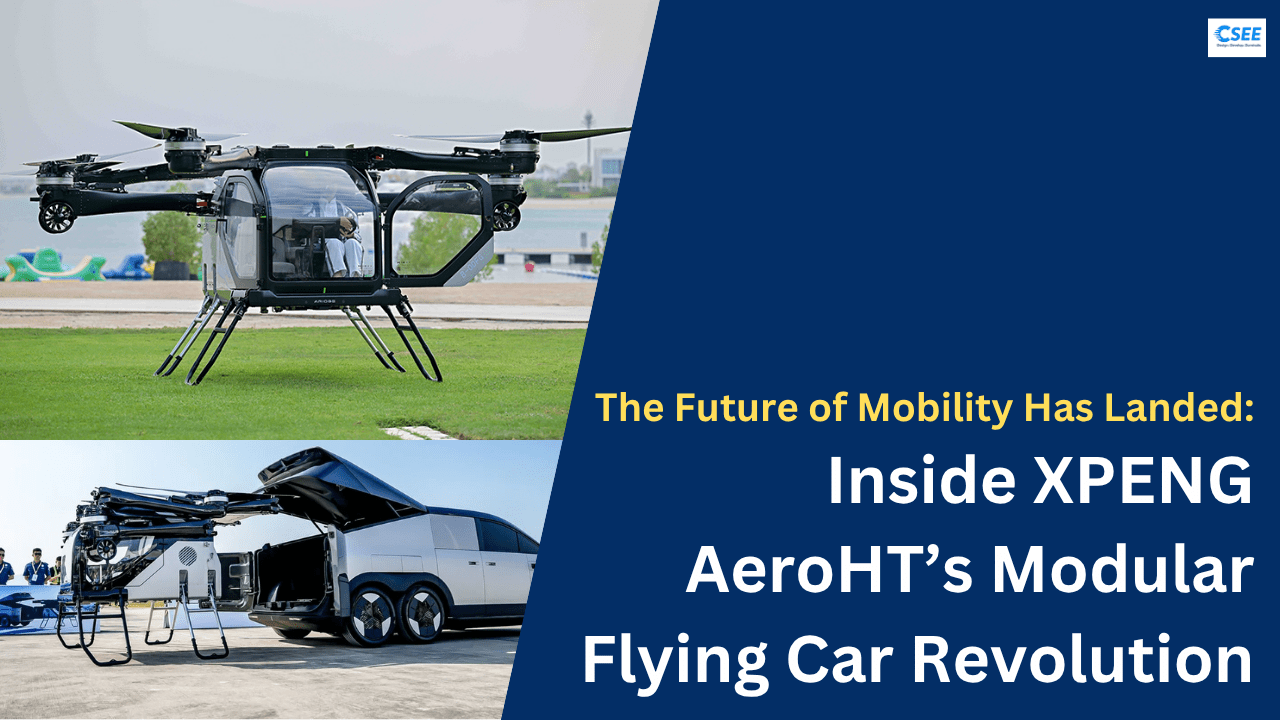
For decades, the idea of flying cars has lived somewhere between imagination and engineering ambition. Movies promised skies filled with personal aircraft, yet reality remained grounded in traffic congestion, long commutes, and incremental improvements in road transport. Today, that narrative is beginning to change—not through a single breakthrough machine, but through a smarter rethinking of mobility itself.
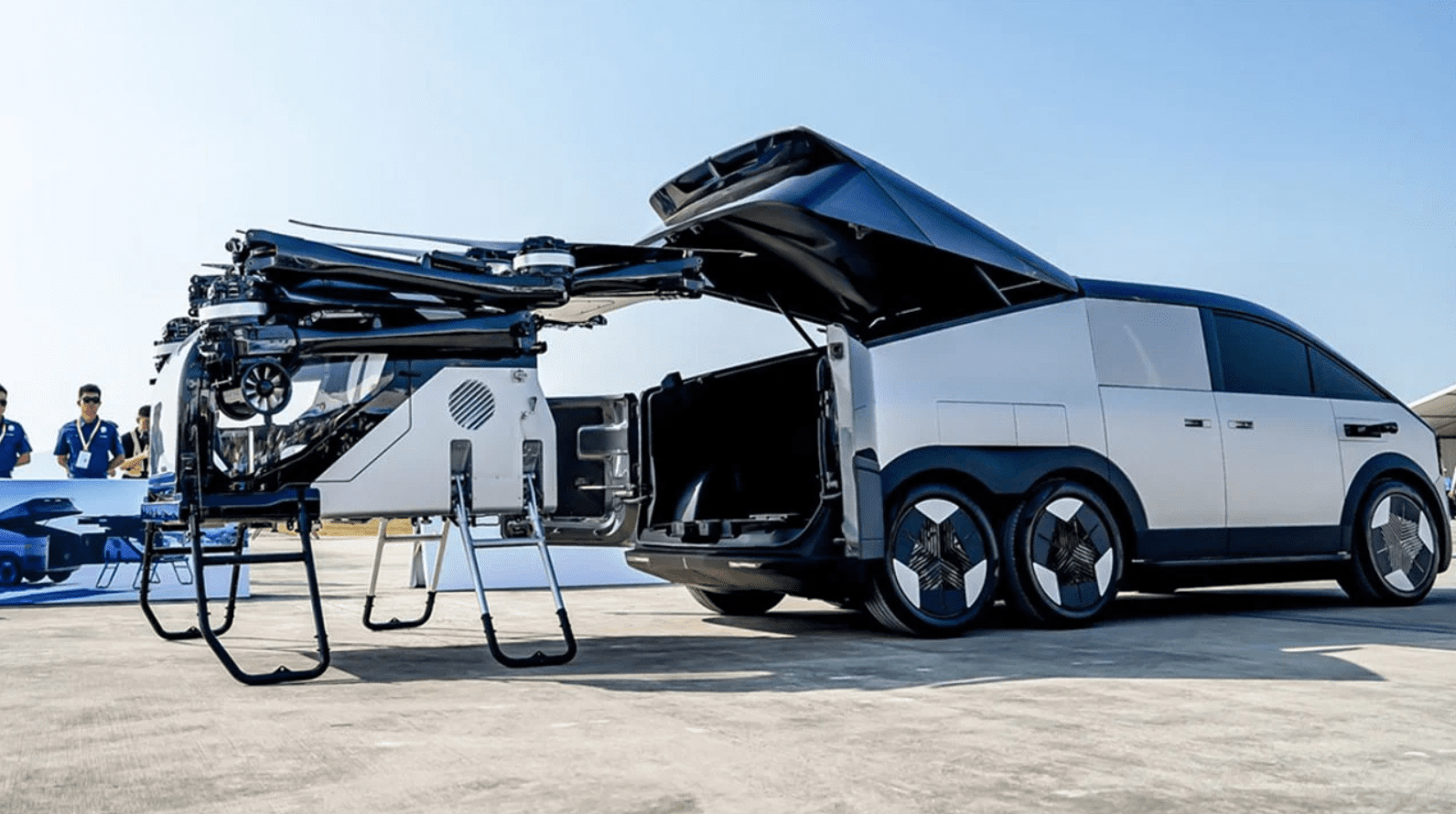
China has taken a bold step in this direction with XPENG AeroHT, an affiliate of XPeng. Instead of attempting to build a traditional flying car that compromises between road and air performance, the company has introduced a modular concept known as the “Land Aircraft Carrier.” This system combines a high-range electric vehicle with a detachable electric vertical take-off and landing (eVTOL) aircraft, effectively separating ground and air mobility into two optimized components.
This is not just a product—it represents a shift in how we think about transportation systems. The implications stretch across engineering, urban planning, regulation, and the future of cities themselves.
The Concept: Why One Vehicle Was Never the Right Answer
The traditional flying car idea has always faced a fundamental engineering dilemma: how do you design a machine that performs efficiently both on roads and in the air?
Road vehicles require:
- Stability and crash safety
- Efficient energy usage for long distances
- Comfort and passenger capacity
Aircraft require:
- Lightweight structures
- Aerodynamic efficiency
- High power-to-weight ratios
Combining these into a single vehicle often leads to compromises that weaken both functions. Flying cars either become too heavy to fly efficiently or too fragile to function as practical road vehicles.
This is where XPENG AeroHT’s modular approach stands out. Instead of forcing one system to do everything, it separates responsibilities:
- The ground module handles long-distance road travel efficiently
- The air module focuses purely on short-distance aerial mobility
This design philosophy is similar to how modern logistics systems operate—different modes optimized for different tasks, seamlessly integrated.
The Ground Module: More Than Just a Car
At first glance, the ground component of the Land Aircraft Carrier resembles a premium electric SUV. However, its role goes far beyond that of a typical car.
Key Capabilities
- Passenger Capacity: 4–5 people
- Range: Over 1,000 km
- Functionality: Transport hub + storage + charging base
This vehicle is designed to carry the eVTOL aircraft securely within its structure. It acts as a mobile base station, ensuring that the air module is always available when needed.
Engineering Significance
Designing a vehicle that can:
- Safely house an aircraft
- Provide energy support
- Maintain road performance
is no small feat. The structural integrity, weight distribution, and energy management systems must all be carefully balanced.
This transforms the car into something more advanced—a mobility platform, not just a transport vehicle.
The Air Module: A Compact eVTOL for Urban Skies
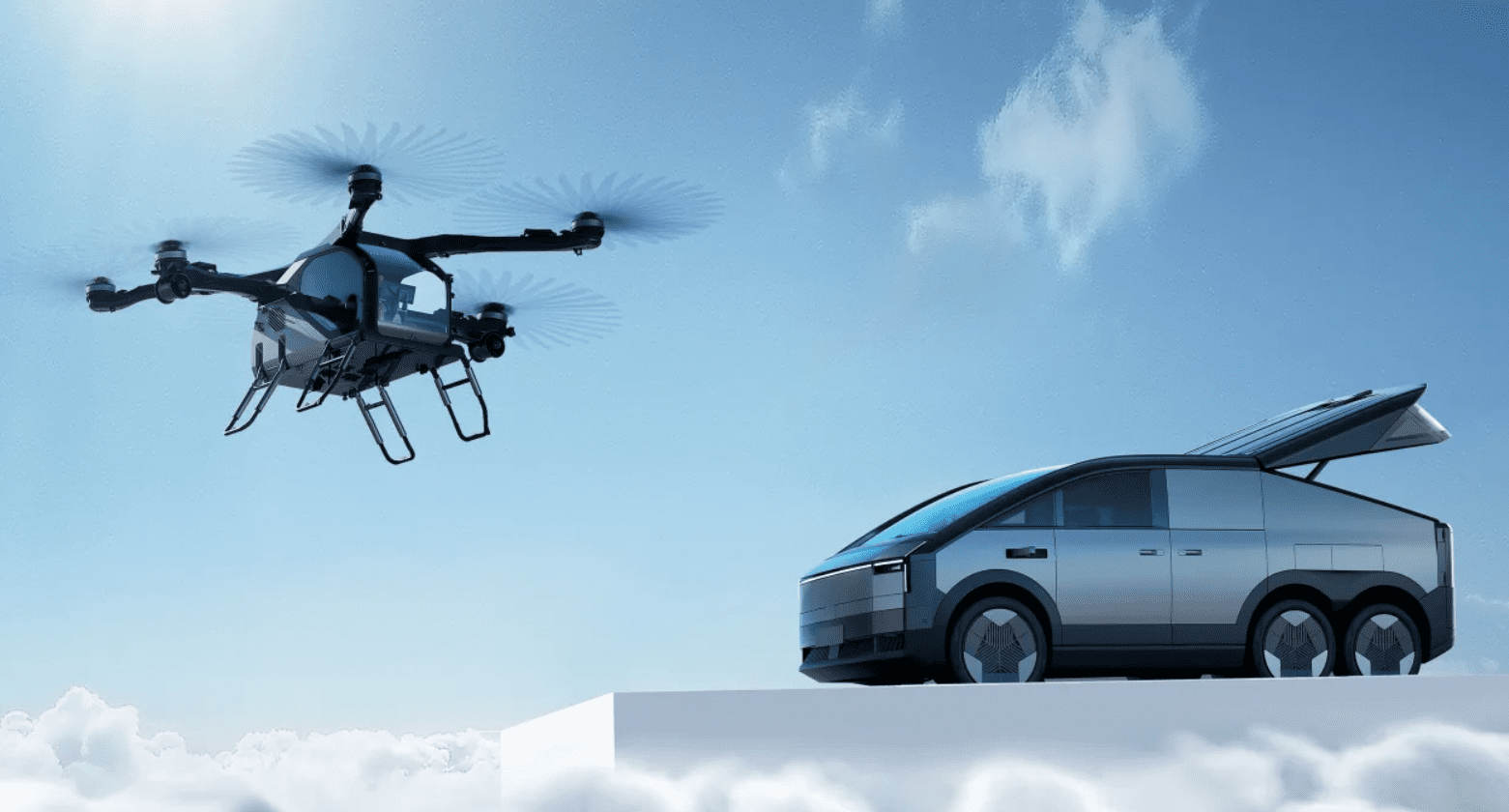
The air module is where the futuristic aspect becomes most visible. This detachable aircraft is an eVTOL—electric vertical take-off and landing vehicle—designed for short, efficient aerial travel.
Key Specifications
- Speed: Approximately 300–360 km/h
- Take-off: Vertical (no runway required)
- Use Case: Short-distance, high-speed transport
Why eVTOL Matters
Unlike traditional aircraft, eVTOL systems:
- Require minimal space to operate
- Are quieter than helicopters
- Use electric propulsion, reducing emissions
This makes them ideal for urban environments where space and noise are critical constraints.
Design Philosophy
The air module is not intended for long-haul flights. Instead, it focuses on:
- Quick deployment
- Short travel durations
- High efficiency for specific use cases
This targeted design improves safety, reduces complexity, and enhances feasibility for early adoption.
How It Works: A Seamless Mobility Experience
Imagine a typical use scenario:
- You drive your ground vehicle through the city or across long distances.
- When traffic becomes a bottleneck or time becomes critical, you stop at a designated area.
- The eVTOL module is deployed from the vehicle.
- It takes off vertically and flies you to your destination.
- The ground module either follows or remains parked as a base.
This integration allows users to switch between mobility modes without relying on separate infrastructure systems—at least in the early stages.
Real-World Applications: Where This Makes Immediate Sense
While mass adoption may take time, there are several high-value use cases where this technology can deliver immediate impact.
Emergency Response
In situations where seconds matter—medical emergencies, disaster response, or firefighting—traffic congestion can be life-threatening. An eVTOL module can bypass road delays and reach critical locations quickly.
Tourism and Experience Travel
Scenic aerial rides over cities, coastlines, or mountains offer a premium experience. This is likely to be one of the earliest commercial applications due to fewer regulatory barriers.
Rapid Intercity Transport
Short-distance travel between nearby cities can be significantly faster through air mobility, especially in regions with heavy road congestion.
Remote Accessibility
Areas with poor road infrastructure can benefit from aerial connectivity, improving access to essential services.
The Economics: A Premium Entry Point
The Land Aircraft Carrier is expected to be priced under 2 million yuan (approximately $280,000–$300,000).
What This Means
- Positioned as a luxury innovation product
- Targeted at early adopters and high-net-worth individuals
- Comparable to private aviation entry-level pricing
The reported thousands of preorders indicate strong interest, but this should be viewed as an early market signal rather than mass adoption.
The Bigger Challenge: Technology Is Not the Bottleneck
While the engineering behind the vehicle is impressive, the real challenges lie outside the vehicle itself.
1. Regulatory Frameworks
Air mobility introduces complex questions:
- Who is allowed to operate these vehicles?
- What certifications are required?
- How are flight paths regulated?
Governments will need to develop entirely new policies for urban air mobility.
2. Airspace Management
Urban skies are not empty—they must be managed carefully to avoid collisions and ensure safety.
This requires:
- Digital traffic control systems
- Real-time monitoring
- AI-driven route optimization
3. Infrastructure Development
The success of such systems depends on:
- Vertiports (designated take-off/landing zones)
- Charging infrastructure
- Maintenance facilities
Without this ecosystem, even the most advanced vehicle cannot operate efficiently.
Global Context: A Competitive Race in the Sky
XPENG AeroHT is not alone in this space. Several global players are working toward similar goals.
Key Competitors
- Joby Aviation
- Archer Aviation
These companies are focusing primarily on standalone eVTOL aircraft for urban air taxi services.
What Makes XPENG Different?
The key differentiator is integration:
- Instead of relying on separate transport systems, XPENG combines road and air mobility into one cohesive solution.
This approach could reduce dependency on infrastructure in the early stages and accelerate adoption.
The Role of China: Why This Is Happening There First
China has several advantages that make it an ideal testing ground for such innovations:
Strong EV Ecosystem
Companies like XPeng have already built expertise in:
- Battery technology
- Electric propulsion
- Autonomous systems
Government Support
Large-scale infrastructure projects and regulatory flexibility can accelerate experimentation and deployment.
Urban Density
High population density and traffic congestion create strong demand for alternative mobility solutions.
Engineering Challenges: What Still Needs to Be Solved
Even with a promising concept, several technical hurdles remain.
Energy Density
Batteries must support both:
- Long driving ranges
- High-power flight requirements
Balancing these demands is complex.
Safety Systems
Redundancy is critical in aviation:
- Backup propulsion systems
- Emergency landing protocols
- Fault-tolerant software
Weather Limitations
Unlike cars, aircraft are sensitive to:
- Wind conditions
- Rain
- Visibility
Ensuring reliable operation in varied conditions is essential.
Environmental Impact: Cleaner Skies or New Challenges?
Electric propulsion reduces emissions compared to traditional aircraft, but the overall environmental impact depends on:
- Energy sources used for charging
- Manufacturing processes
- Lifecycle sustainability
If powered by renewable energy, eVTOL systems could significantly reduce urban transport emissions.
Social Impact: Redefining Urban Life
The introduction of air mobility could reshape cities in profound ways.
Reduced Traffic Congestion
By moving some transport into the air, road congestion could decrease.
New Urban Design
Cities may need to incorporate:
- Rooftop landing zones
- Integrated transport hubs
Accessibility Concerns
Initially, such systems will be accessible only to a small segment of the population. Over time, scaling and cost reduction will determine inclusivity.
The Road Ahead: From Prototype to Everyday Reality
The journey from demonstration to daily use will likely follow these stages:
- Pilot Programs – Controlled environments and limited use cases
- Commercial Niches – Tourism, emergency services
- Urban Integration – Gradual expansion into cities
- Mass Adoption – Long-term goal with reduced costs and mature infrastructure
This process could take a decade or more, depending on regulatory and technological progress.
Conclusion: A System, Not Just a Vehicle
What XPENG AeroHT has introduced is not just a flying car—it is a new way of thinking about mobility. By separating ground and air functions, the company has addressed one of the biggest limitations in the flying car concept.
The success of this innovation will not depend solely on engineering excellence. It will depend on how well governments, cities, and industries collaborate to build the ecosystem required for urban air mobility.
The real breakthrough will come not when the technology exists—but when it becomes usable, accessible, and integrated into everyday life.
Until then, the Land Aircraft Carrier stands as a powerful symbol of what the future of transportation could look like: connected, flexible, and no longer limited to the ground.
Thanks for reading.
Also, read:
- 100 (AI) Artificial Intelligence Applications In The Automotive Industry
- 100 GitHub Projects to Level Up Your Embedded Engineering Skills
- 1000+ Automotive Interview Questions With Answers
- 2024 Is About To End, Let’s Recall Electric Vehicles Launched In 2024
- 2026 Hackathons That Can Change Your Tech Career Forever
- 25 AI & Embedded Technologies You Shouldn’t Miss
- 50 Websites Every Engineer, Student, and Tech Professional Should Know
- 6G Technology: What To Expect Beyond 5G