In 2026, the world is not witnessing a traditional war with tanks and missiles. Instead, a far more powerful and silent battle is unfolding — a technology and materials war. At the center of this conflict lies one simple but extremely powerful material: polysilicon.
Almost everything that defines modern life depends on it — AI chips, smartphones, laptops, data centers, electric vehicles, solar panels, satellites, and even advanced missile systems. Without polysilicon, the digital world simply stops working.
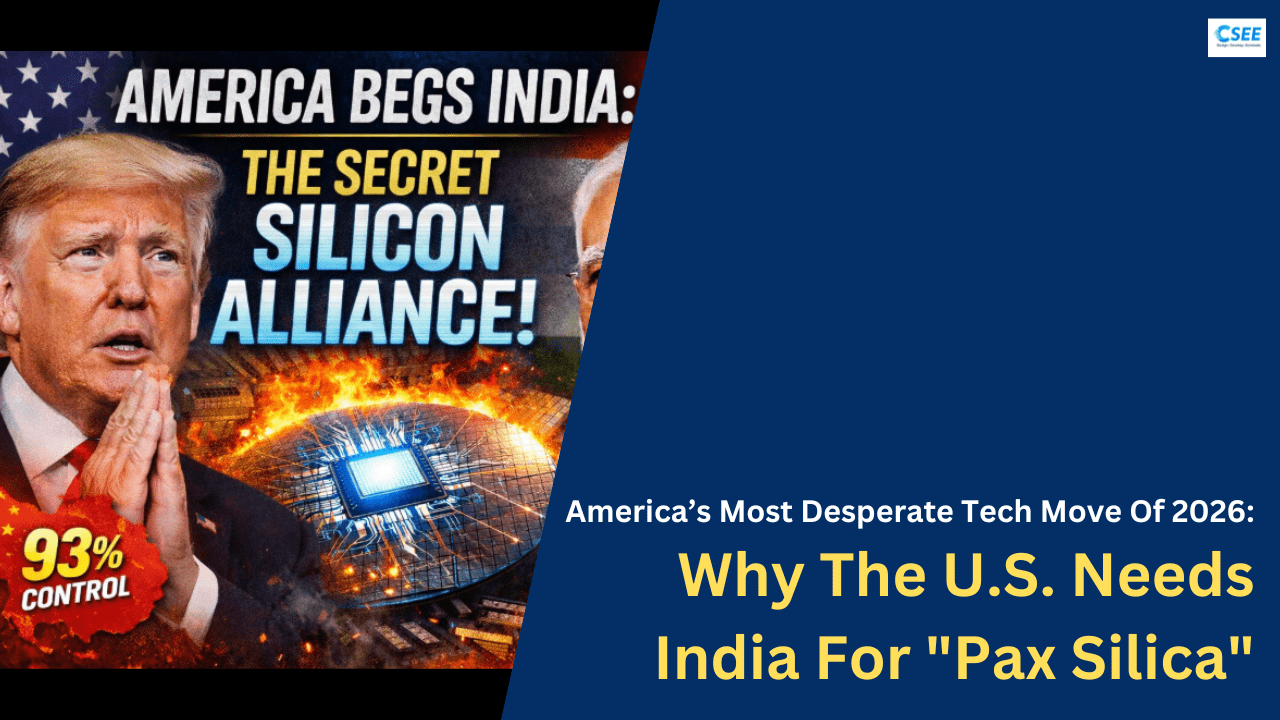
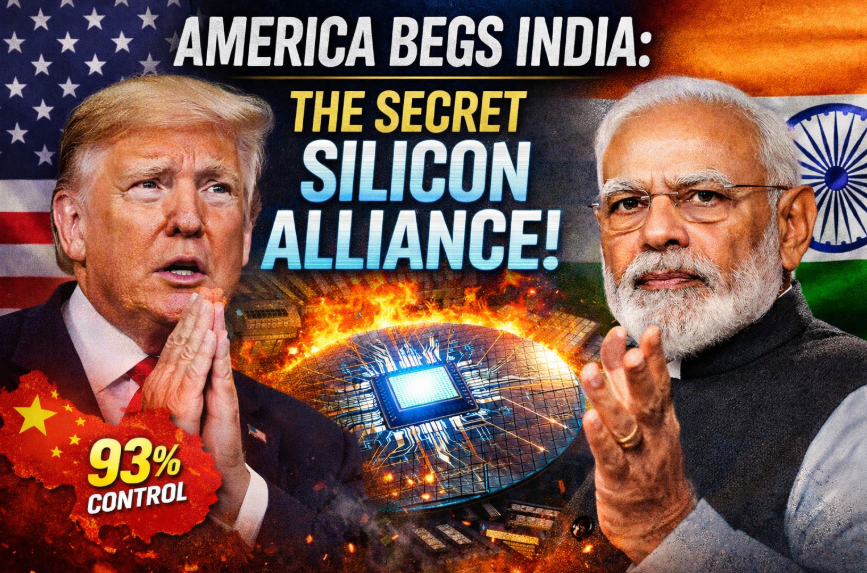
And here’s the shocking reality: China controls nearly 93% of the global polysilicon supply chain.
This single fact has triggered what many analysts are calling America’s most desperate tech move of 2026 — reaching out to India and inviting it into a strategic, largely quiet alliance known as “Pax Silica.”
This article explains:
- Why polysilicon is so important
- How China gained near-total control
- Why alternatives don’t work at scale
- What Pax Silica really is
- Why India is central to this plan
- And how this could reshape global power for decades
Chapter 1: What Exactly Is Polysilicon?
Polysilicon, also called polycrystalline silicon, is a highly purified form of silicon. It is the base material for semiconductor wafers, which are used to manufacture integrated circuits (chips).
Why Polysilicon Matters
Polysilicon is used to make:
- Microprocessors (CPUs, GPUs, AI accelerators)
- Memory chips (DRAM, NAND)
- Power electronics
- Solar cells
- Sensors and communication chips
Every time you:
- Unlock your phone
- Use ChatGPT
- Drive an EV
- Watch satellite navigation
- Or store data in the cloud
You are relying on polysilicon.
From Sand to Supercomputers
Silicon comes from sand, but turning sand into electronics-grade polysilicon is:
- Extremely energy-intensive
- Technically complex
- Capital expensive
- Requires years of expertise
This is why only a few countries can do it at scale.
Chapter 2: How China Came to Control 93% of Polysilicon
China did not gain dominance overnight. It was a 20-year strategy.
Step 1: Heavy State Subsidies
China:
- Subsidized electricity (polysilicon production needs massive power)
- Gave cheap land
- Provided tax exemptions
- Offered low-interest loans
This allowed Chinese companies to undercut global prices, driving competitors out of business.
Step 2: Vertical Integration
Chinese firms integrated:
- Raw material processing
- Polysilicon purification
- Wafer manufacturing
- Solar panel and electronics production
This reduced costs even further.
Step 3: Environmental Outsourcing
Polysilicon production generates:
- Chemical waste
- High carbon emissions
Many Western countries restricted such industries due to environmental laws. China absorbed these costs in exchange for strategic dominance.
Result?
By 2025–26:
- China controls ~93% of polysilicon
- Many Western fabs depend indirectly on Chinese supply
- Any disruption can freeze global chip production
Chapter 3: Why This Terrifies the United States
For the U.S., this is not just an economic issue. It is a national security threat.
Defense Dependence
Polysilicon powers:
- Radar systems
- Guidance chips
- Satellites
- Missile control electronics
- Secure communication systems
If supply is disrupted:
- Defense manufacturing slows
- Military readiness is affected
AI and Supercomputing
AI chips require:
- Advanced silicon wafers
- Ultra-pure materials
Without stable access, AI leadership collapses.
The Taiwan Problem
The U.S. already depends on Taiwan (TSMC) for advanced chip manufacturing. Adding China-controlled raw materials creates a double dependency — a nightmare scenario.
Chapter 4: Why Not Just Use Alternatives?
Many people ask:
“If polysilicon is risky, why not replace it?”
The Main Alternatives
- Silicon Carbide (SiC)
- Used in EVs and power electronics
- Excellent for high voltage
- Too expensive for mass logic chips
- Gallium (GaAs, GaN)
- Used in RF, defense, optics
- Limited supply
- Not suitable for CPUs at scale
- Germanium
- Used in infrared and optics
- Rare and expensive
The Reality
- These materials are specialized, not universal
- They cannot replace silicon for:
- CPUs
- GPUs
- Memory
- AI accelerators
Conclusion:
Polysilicon has no real large-scale replacement today.
Chapter 5: Enter Pax Silica — The Silicon Peace Strategy
“Pax Silica” is not an official public treaty yet, but a strategic framework discussed across:
- U.S. government
- Semiconductor companies
- Allied nations
What Pax Silica Means
Just like:
- Pax Romana = Roman peace
- Pax Americana = U.S.-led world order
Pax Silica means:
A stable global order built around secure silicon and semiconductor supply chains.
Core Goals
- Reduce dependence on China
- Diversify raw material sources
- Secure trusted manufacturing partners
- Control the full pipeline:
Mine → Polysilicon → Wafers → Chips → Systems
Chapter 6: Why India Is the Missing Piece
The U.S. has money.
Japan has precision.
Europe has equipment.
Taiwan has fabs.
But India brings something unique.
1. Energy Advantage
Polysilicon production needs massive power.
India offers:
- Expanding renewable energy
- Lower electricity costs than the West
- Ability to scale clean energy-linked production
2. Manufacturing Scale
India has:
- Experience scaling industries fast
- Government-backed industrial corridors
- Growing semiconductor incentives
3. Strategic Trust
For the U.S.:
- India is not a treaty ally like NATO
- But it is a trusted strategic partner
- Not aligned with China’s supply dominance
4. Talent and Design Strength
India already leads in:
- Chip design
- Embedded systems
- Verification and validation
- EDA engineering
Pax Silica connects Indian design with global manufacturing.
Chapter 7: What Raw Materials Will Pax Silica Use?
Primary Raw Material: Polysilicon
Pax Silica does not replace polysilicon.
It secures it.
Key focus areas:
- New polysilicon plants outside China
- India as a purification and processing hub
- Trusted sourcing of quartz and silicon feedstock
Secondary Materials
For specialized chips:
- Silicon carbide (EVs, power grids)
- Gallium nitride (defense, RF)
- Advanced packaging materials
But polysilicon remains the backbone.
Chapter 8: What India Gains from Pax Silica
Economic Impact
- High-value manufacturing jobs
- Export growth
- Reduced import dependence
Technological Leap
- From IT services → deep tech manufacturing
- From chip design → chip ecosystem leadership
Strategic Power
- Control over a choke point material
- Increased geopolitical leverage
- Long-term global relevance
Chapter 9: Risks and Challenges
Pax Silica is not easy.
Challenges include:
- Environmental concerns
- High capital cost
- Long setup timelines (5–10 years)
- Global political pressure
But the alternative is worse: continued dependency.
Chapter 10: The Bigger Picture — A New World Order
We are entering a world where:
- Oil is no longer the main strategic resource
- Silicon is
Countries that control:
- Silicon
- Chips
- AI hardware
Will control:
- Economies
- Militaries
- Innovation
Pax Silica is not just an alliance.
It is a survival strategy.
Conclusion: Why 2026 Will Be Remembered
History may look back and say:
“2026 was the year the world realized that silicon, not oil, decides power.”
America’s outreach to India is not charity.
It is a necessity.
India’s response will shape:
- Global technology
- Economic leadership
- Geopolitical balance
The silicon war has already begun — quietly, strategically, and permanently.
Thanks for reading.
Also, read:
- Why Quantum Computers Could Break Today’s Cybersecurity
- Solid-State Batteries: Why Aren’t They in Every EV Yet?
- Why Qualcomm Is Entering the Automotive Industry
- The Memory Problem Behind AI Chips
- Why EUV Lithography Took Decades to Develop
- How Intel Lost Its Semiconductor Dominance
- Want To Crack Top Embedded Companies? Build These LLM Projects
- Why The Entire AI Industry Needs ASML