Hello everyone! 👋 Welcome back to my blog! 🚗✨
Today, we’re diving into one of the most exciting revolutions happening in the automotive world — ADAS, or Advanced Driver Assistance Systems — the technology that’s redefining how we drive, how cars think, and how safety is engineered on modern roads.
For decades, driving was a purely human task — powered by our instincts, judgment, and reflexes. But as cars get smarter and roads get more connected, we’re slowly handing over parts of that control to software and sensors. Cameras, radars, and algorithms are now working behind the scenes, making split-second decisions to protect us — from applying brakes automatically to keeping us centered in the lane, or even recognizing traffic signs before we do.
This is where ADAS comes in — the stepping stone toward self-driving vehicles. It’s not just a futuristic buzzword anymore; it’s a living, evolving part of our cars today.
But here’s the real question everyone’s asking:
👉 What level of ADAS do we actually have in India?
👉 Are Indian cars capable of autonomous driving like in the U.S. or Europe?
👉 And if not, what’s holding us back?
Well, in this article, we’re going to explore it all. We’ll break down the six global ADAS levels, understand which level is currently available in India, and most importantly, why we haven’t yet reached full automation.
Ask questions if you have any electrical, electronics, or computer science doubts. You can also catch me on Instagram – CS Electrical & Electronics.
- Normal Camera Vs Event-Based Camera: Understanding the Future of Vision Systems
- Top 10 FPGA Boards In The Market — And Which Are Best For AI
- Top 10 Applications Of FPGA In The Automotive Industry: Driving The Future Of Smart Mobility
Which ADAS Level Is Available In India
The future of driving is being reshaped by software and sensors. Cars are no longer just mechanical machines — they are becoming intelligent systems capable of assisting drivers, predicting hazards, and in some cases, driving themselves. This evolution is powered by ADAS (Advanced Driver Assistance Systems) — a collective term for technologies designed to make driving safer, more comfortable, and more efficient.
Globally, ADAS has become a major innovation pillar, and every country is moving toward higher levels of automation. But where does India stand in this journey?
Which ADAS level is actually available in India, and why haven’t we reached full automation yet?
To understand that, we must first explore the different ADAS levels, how they work, and what prevents India from moving beyond certain levels today.
1. What Is ADAS?
ADAS (Advanced Driver Assistance Systems) refers to a suite of technologies that assist the driver in the driving process. These systems rely on sensors, cameras, radars, and software algorithms to monitor the surroundings, detect potential risks, and take corrective action if necessary.
The goal of ADAS is simple — to reduce human error, which is responsible for over 90% of road accidents globally. From simple alerts like lane departure warnings to complex systems like adaptive cruise control or automated parking, ADAS plays a critical role in saving lives and enhancing convenience.
2. The Six Levels of Driving Automation (SAE J3016 Standard)
The Society of Automotive Engineers (SAE) defines six levels of driving automation — from Level 0 (no automation) to Level 5 (full automation). Each level describes how much control the vehicle, rather than the human driver, has.
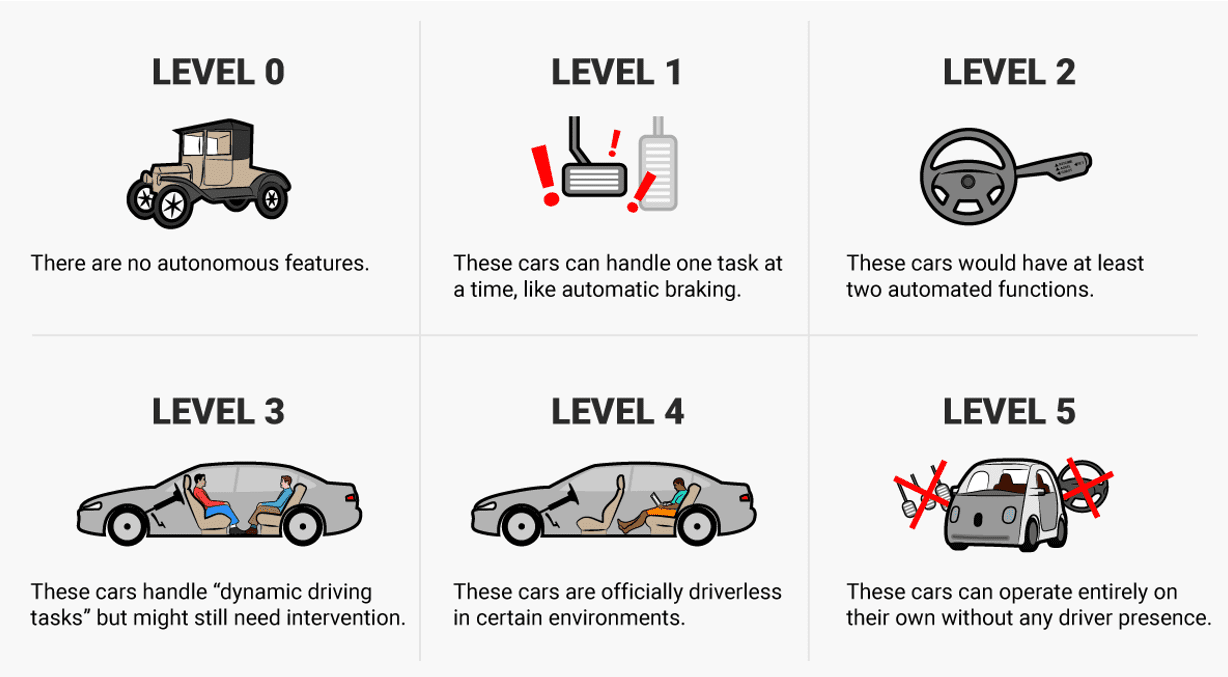
Level 0 – No Automation

The driver performs all driving tasks manually. The vehicle may give warnings or minimal assistance (like ABS or basic cruise control), but it does not take control.
Level 1 – Driver Assistance
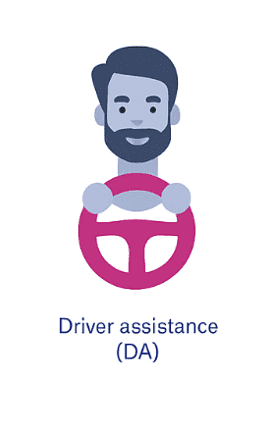
The car can assist with either steering or acceleration/braking, but not both simultaneously.
Example: Adaptive Cruise Control (ACC) or Lane Keeping Assist (LKA) as standalone features.
Level 2 – Partial Automation
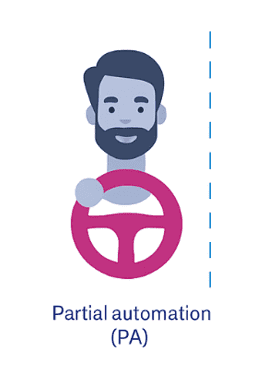
The vehicle can control both steering and acceleration/deceleration at the same time, but the driver must constantly monitor and remain ready to take control. Example: Adaptive Cruise Control + Lane Centering Assist — the car manages speed and lane position, but hands must stay on the wheel.
Level 3 – Conditional Automation
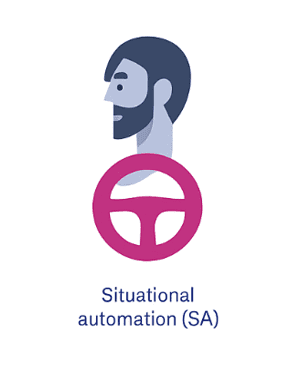
The vehicle can drive itself under specific conditions (like on highways) without driver supervision. However, the driver must be ready to take over when the system requests. This is the first level where the system is legally “driving” the car during engagement.
Level 4 – High Automation

The car can perform all driving tasks in predefined conditions (for example, geofenced city routes or autonomous shuttles). Human intervention is not needed within those boundaries.
Level 5 – Full Automation

The car can operate anywhere, under any condition, with no human driver required.
This level represents true self-driving — but it remains theoretical and is not yet commercially available anywhere in the world.
3. Key ADAS Technologies Behind These Levels
Each ADAS level builds upon a set of hardware and software technologies. Some of the most important include:
- Radar Sensors – Detect objects and measure distance/speed for adaptive cruise and collision avoidance.
- Cameras – Identify lane markings, pedestrians, traffic signs, and vehicles.
- Ultrasonic Sensors – Used for parking assistance and short-range detection.
- Lidar Sensors – Provide 3D mapping for high-precision perception (mainly in Level 3+).
- ECU and AI Software – Process all sensor data and make real-time decisions.
- Connectivity and Maps – Support navigation, geofencing, and over-the-air updates.
These components work together to create a real-time, 360° view around the vehicle, allowing it to assist or take partial control as needed.
4. ADAS Levels Around the World
In markets like Europe, Japan, and the U.S., Level 2 systems are now common in premium and even mid-range vehicles. A few manufacturers have reached Level 3 approvals — such as Mercedes-Benz’s “Drive Pilot” in Germany and Honda’s “Traffic Jam Pilot” in Japan — but these are limited to specific roads and conditions.
Level 4 systems are being tested in the form of autonomous taxis and delivery pods in controlled environments. Level 5, however, is still experimental and far from commercial reality.
5. Which ADAS Level Is Available in India Today?

India’s Current Status: Level 1 and Level 2
As of 2025, almost all ADAS-enabled vehicles sold in India offer Level 1 or Level 2 automation.
These systems assist the driver — they do not replace them.
Common Level 1 and Level 2 features available in India:
- Autonomous Emergency Braking (AEB)
- Adaptive Cruise Control (ACC)
- Lane Departure Warning (LDW)
- Lane Keep Assist (LKA)
- Blind Spot Detection (BSD)
- Rear Cross Traffic Alert (RCTA)
- Forward Collision Warning (FCW)
- Traffic Sign Recognition (TSR)
- High Beam Assist (HBA)
These features are increasingly common across both premium and mainstream brands.
Top Indian Cars Offering ADAS (Level 1–2)
1. Mahindra XUV700 / XUV3XO – Offers AEB, LKA, ACC, and Traffic Sign Recognition.
2. MG Astor and MG ZS EV – Level 2 ADAS suite with ACC, LDW, and speed assist.
3. Hyundai Tucson and Creta – Advanced ADAS package with AEB, LKA, and blind spot warning.
4. Honda City, Elevate, and Amaze (Honda Sensing) – Include adaptive cruise and lane keeping.
5. Tata Safari, Harrier, and Nexon EV – Equipped with AEB and lane assist systems.
6. Kia Sonet and Carens – Introduced ADAS in top trims for highway safety.
7. Toyota Innova Hycross and Fortuner (Hybrid variants) – Offer radar-based safety assists.
8. BYD Atto 3 and Seal – Electric cars with strong Level 2 ADAS capability.
These models make India one of the fastest-growing ADAS markets in Asia — though still limited to partial automation.
Are Level 3 Cars Available in India?
Not yet in a legal, fully functional sense.
Some imported luxury vehicles — like the Mercedes-Benz S-Class, BMW i7, and Audi A8 — come equipped with Level 3-capable hardware, but their Level 3 features are disabled for Indian roads due to a lack of regulatory approval, mapping, and infrastructure support.
So, India is currently at Level 2, both technically and legally.
6. Why Higher ADAS Levels Aren’t Available in India Yet
India’s slow adoption of Level 3 and above automation is not due to lack of technology — it’s due to a combination of infrastructure, policy, and practical challenges. Let’s explore them:
1. Lack of Regulatory Framework
India does not yet have specific laws governing autonomous or semi-autonomous driving. The Central Motor Vehicle Rules (CMVR) and the Motor Vehicles Act don’t define who is legally responsible when the vehicle drives itself. Without clear liability standards, automakers cannot activate Level 3 systems.
2. Road and Traffic Conditions
Indian roads are unpredictable — lane markings fade, two-wheelers weave through traffic, animals cross highways, and pedestrians appear anywhere.
Level 3 systems require predictable road environments and lane discipline — both are inconsistent in India.
3. Mapping and Localization
Level 3+ vehicles depend on high-definition maps for precise positioning. Creating and maintaining such maps for India’s dynamic and evolving road networks is a huge challenge.
4. Cost Sensitivity
Level 3 technology requires expensive sensors (like Lidar) and redundant systems for safety. These raise vehicle costs significantly — something that doesn’t align with India’s highly price-sensitive car market.
5. Data and Insurance Challenges
If an ADAS-enabled car crashes, who is responsible — the driver or the automaker? India’s insurance sector doesn’t yet have clear models for handling such claims.
6. Consumer Awareness
Many drivers misunderstand ADAS as “autonomous driving.” Misuse (like taking hands off the wheel) could lead to accidents. Manufacturers and authorities are cautious about introducing higher levels of automation until driver education improves.
7. Bharat NCAP and ADAS Regulations in India
India’s Bharat New Car Assessment Program (Bharat NCAP) now includes Safety Assist technologies like AEB and Lane Keep Assist in its ratings. This is a major step — it encourages OEMs to standardize ADAS features and verify their real-world performance.
The Automotive Research Association of India (ARAI) and Automotive Industry Standards (AIS) committees are also working on updating certification protocols for electronic safety systems, cybersecurity, and ADAS performance.
In the coming years, Bharat NCAP 2.0 is expected to include specific tests for ADAS effectiveness, similar to Euro NCAP protocols. This will accelerate adoption and ensure consistent quality across brands.
8. What Needs to Change for Level 3+ Adoption in India
To unlock the next phase of automation, India must focus on a few key areas:
- Legal Clarity:
Introduce legislation defining liability and approval frameworks for autonomous systems. - Infrastructure Readiness:
Invest in consistent lane markings, traffic signs, and well-maintained highways. - Mapping and Connectivity:
Develop national high-definition maps and 5G/V2X connectivity for real-time communication. - Testing Corridors:
Launch pilot projects for Level 3 on selected expressways with controlled environments. - Insurance Frameworks:
Create dedicated insurance models for semi-autonomous and autonomous vehicles. - Public Education:
Teach drivers about ADAS functionality, limitations, and safe usage.
With these changes, Level 3 systems could gradually enter India — first in premium vehicles or fleet applications, then across mainstream cars.
9. Future Outlook: The Road Ahead
Short-Term (2025–2027):
- Rapid growth of Level 2 ADAS across segments.
- Integration of AEB and LKA into Bharat NCAP scoring.
- Introduction of over-the-air (OTA) updates for ADAS features.
Mid-Term (2027–2030):
- Pilot projects for Level 3 ADAS on expressways like Delhi–Mumbai or Bengaluru–Chennai corridors.
- Development of legal frameworks for shared liability.
- Increased use of AI-based driver monitoring systems.
Long-Term (After 2030):
- Possible introduction of limited Level 3 vehicles in premium segments.
- Gradual roadmap toward Level 4 automation for public transport and autonomous fleets.
10. Key Takeaways
- India currently offers only Level 1 and Level 2 ADAS systems.
- Level 3 and above are not yet approved or feasible due to regulatory and infrastructural limitations.
- With upcoming Bharat NCAP updates and government policy evolution, Level 3 adoption could begin within this decade.
- For now, drivers must treat ADAS as an assist system, not an autopilot.
11. Conclusion
India is on a steady journey toward vehicle automation. While global markets are testing Level 3 and Level 4 systems, India’s roads and policies are still best suited for Level 2 ADAS — systems that enhance safety but keep the driver in full control.
The good news is that manufacturers, policymakers, and testing agencies are moving in the right direction. The inclusion of ADAS in Bharat NCAP will speed up adoption, while India’s growing digital infrastructure will pave the way for future automation.
For now, Indian drivers can enjoy the benefits of Level 2 ADAS — safer highways, reduced fatigue, and smarter assistance — while the nation prepares for the next big leap into semi-autonomous driving.
This was about “Which ADAS Level Is Available In India And Why? Let’s See The Different ADAS Levels“. Thank you for reading.
Also, read:
- 10 Free ADAS Projects With Source Code And Documentation – Learn & Build Today
- 100 + Electrical Engineering Projects For Students, Engineers
- 100+ Indian Startups & What They Are Building
- 1000+ Automotive Interview Questions With Answers
- 1000+ Electronics Projects For Engineers, Diploma, MTech Students
- 1000+ MATLAB Simulink Projects For MTech, Engineering Students
- 2000+ Embedded Systems Interview Question Bank
- 2026 Hackathons That Can Change Your Tech Career Forever