Hello guys, welcome back to my blog! ?⚡
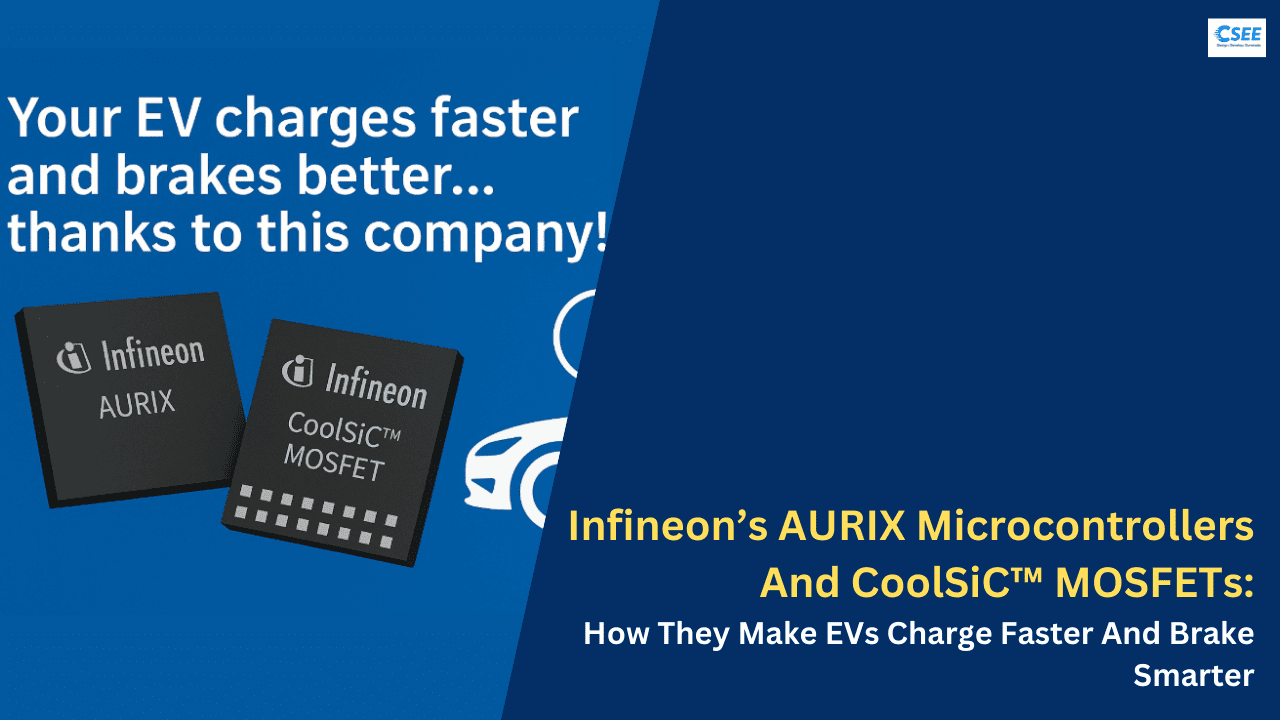
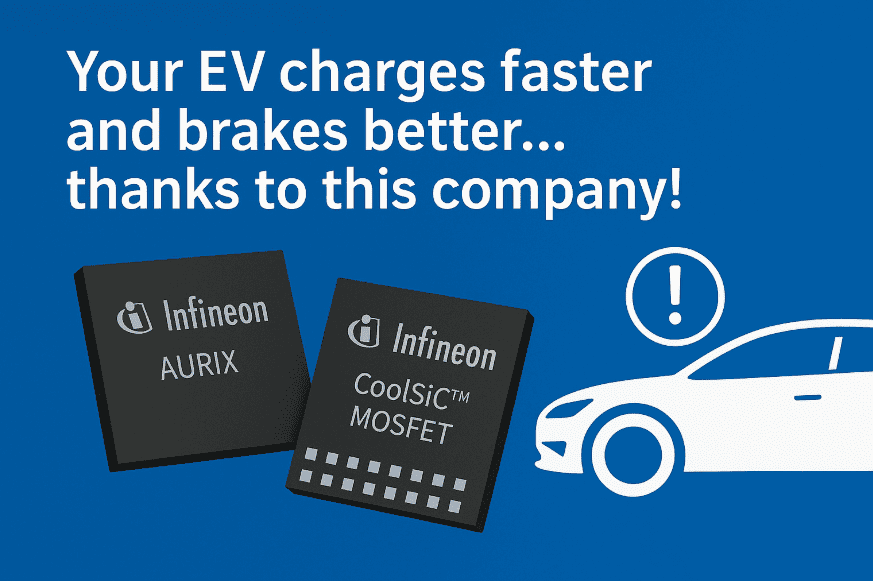
In this article, I am going to talk about something really exciting in the electric vehicle world — how your EV charges faster and brakes better, all thanks to Infineon Technologies. We’ll explore two of Infineon’s most powerful innovations: AURIX™ microcontrollers, which keep your car’s safety systems rock-solid, and CoolSiC™ MOSFETs, which make EVs more efficient, giving you faster charging and longer driving range.
By the end of this article, you’ll understand how Infineon is solving two of the biggest challenges in electric mobility — safety and energy efficiency — and why their technology is at the heart of the EV revolution.
Ask questions if you have any electrical, electronics, or computer science doubts. You can also catch me on Instagram – CS Electrical & Electronics
- How NXP’s S32G and i.MX Processors Power the Software-Defined Vehicle Revolution
- 10 Free ADAS Projects With Source Code And Documentation – Learn & Build Today
- From Fonts To Steering: How Tesla’s Software-Driven Recalls Are Reshaping Car Safety
Infineon’s AURIX Microcontrollers And CoolSiC™ MOSFETs
The automotive world is in the middle of a massive transformation. Electric vehicles (EVs) are no longer futuristic concepts—they are rapidly becoming mainstream. Governments, automakers, and consumers are all pushing for cleaner, smarter, and safer mobility. But while EVs promise a sustainable future, they also face major challenges: limited driving range, slow charging times, thermal management issues, and the need for robust safety systems.
So, how do we solve these problems? The answer doesn’t lie only in bigger batteries or stronger motors. The real magic is happening inside the semiconductors that control everything from energy conversion to advanced safety features.
This is where Infineon Technologies steps in. A global leader in semiconductor innovation, Infineon has introduced two groundbreaking solutions that are shaping the EV industry:
- AURIX™ Microcontrollers – The brains behind advanced automotive safety systems like ABS, lane-keeping assist, and automatic braking.
- CoolSiC™ MOSFETs – The power electronics devices that make EVs charge faster, drive longer, and run cooler.
In this blog post, we’ll explore how Infineon’s AURIX and CoolSiC are revolutionizing electric mobility by solving the two biggest challenges of EVs: safety and energy efficiency.
The Challenges Facing Electric Vehicles
Despite rapid adoption, EVs still face obstacles that limit their acceptance worldwide. Let’s break them down.
1. Range Anxiety
The fear of running out of charge before reaching a charging station is still one of the biggest concerns for EV buyers. Even though EV ranges are improving, energy management and battery efficiency remain critical.
2. Long Charging Times
Consumers want EV charging to be as convenient as refueling a gas car. Traditional charging often takes hours, while newer fast-charging solutions still generate heat and stress on batteries.
3. Thermal Management
High-power systems in EVs produce significant heat. If not managed properly, it reduces efficiency, shortens battery life, and can even cause safety risks.
4. Safety Concerns
EVs are generally heavier due to their large battery packs. This increases stopping distances and makes robust braking and stability systems even more important. Features like automatic emergency braking and lane-keeping assist are no longer luxuries—they’re necessities.
5. Cost Pressure
Automakers face the challenge of balancing affordability with cutting-edge performance. Semiconductors that deliver more power, efficiency, and safety without driving costs too high are essential.
Infineon addresses all these challenges through its innovative semiconductor portfolio.
Infineon: Powering the Future of Mobility
Infineon Technologies AG, headquartered in Germany, is one of the world’s leading semiconductor manufacturers. Its chips are found in everything from smartphones to industrial automation systems, but its automotive division is where it truly shines.
- Global Reach – Infineon serves automakers and Tier-1 suppliers across Europe, the U.S., China, and beyond.
- Automotive Focus – The company provides solutions for power electronics, microcontrollers, sensors, and security systems.
- Trusted Partnerships – Infineon’s chips are used by global automakers such as Tesla, Mercedes-Benz, BYD, Volkswagen, and many others.
Infineon’s mission is clear: to enable safer, greener, and smarter mobility.
AURIX™ Microcontrollers: The Brain Behind EV Safety
Let’s start with safety, the most critical factor in modern vehicles.
What is a Microcontroller?
A microcontroller (MCU) is a small computer on a chip. Unlike CPUs that handle general-purpose computing, MCUs are designed for real-time control of specific tasks. In cars, they process sensor data and make split-second decisions that can save lives.
Why AURIX™ Stands Out
Infineon’s AURIX MCU family is built on the TriCore™ architecture, which combines three CPU cores with redundancy and safety mechanisms. This makes AURIX ideal for safety-critical applications.
Applications in EVs
- Anti-lock Braking System (ABS): Prevents wheel lock during sudden braking.
- Electronic Stability Program (ESP): Keeps vehicles stable on slippery roads.
- Lane-Keeping Assist: Uses cameras and sensors to prevent unintentional lane departure.
- Automatic Emergency Braking: Reacts faster than human reflexes to prevent collisions.
- Battery Management Systems (BMS): Ensures battery safety, balancing, and longevity.
Why Safety is More Important in EVs
- EVs deliver instant torque, increasing the need for precise control.
- Their heavier batteries extend stopping distances.
- Safety systems must be fail-proof to protect both driver and pedestrians.
With AURIX microcontrollers, automakers ensure that safety systems run smoothly, even under extreme conditions.
CoolSiC™ MOSFETs: The Power Behind Efficiency
Now let’s shift to energy efficiency—the other pillar of EV performance.
What is a MOSFET?
A MOSFET (Metal-Oxide-Semiconductor Field-Effect Transistor) is an electronic switch used to control current. In EVs, MOSFETs manage high-voltage power flows between the battery, inverter, and motor.
Why Silicon Carbide (SiC) Matters
Traditional MOSFETs are made of silicon. Infineon’s CoolSiC MOSFETs are made of silicon carbide (SiC), a material that offers huge advantages:
- Higher switching speeds – enabling smaller, lighter power electronics.
- Lower energy loss – improving overall system efficiency.
- Better thermal performance – reducing the need for bulky cooling systems.
Applications in EVs
- On-Board Chargers (OBC): Faster and more efficient AC/DC conversion.
- DC/DC Converters: Power delivery between high-voltage batteries and low-voltage systems.
- Traction Inverters: Converting DC battery power into AC for the electric motor.
- Fast-Charging Stations: Higher voltage handling for ultra-fast charging.
Real-World Benefits
- Faster Charging Times – 50% or more reduction in charging duration.
- Extended Driving Range – more kilometers per charge.
- Reduced Cooling Needs – smaller, lighter, cheaper EV designs.
- Long-Term Savings – higher efficiency lowers lifetime operating costs.
Simply put: CoolSiC MOSFETs make EVs charge faster, drive longer, and waste less energy.
How AURIX and CoolSiC Work Together
The true strength of Infineon’s technology is how AURIX microcontrollers and CoolSiC MOSFETs complement each other.
- AURIX ensures that safety systems like ABS and lane assist respond instantly.
- CoolSiC ensures that power systems operate at maximum efficiency.
Imagine this scenario:
You’re driving an EV that’s fast-charging at a public station. Suddenly, a pedestrian steps onto the road.
- AURIX Microcontroller detects the obstacle and activates emergency braking.
- CoolSiC MOSFETs keep the charging and power conversion stable, even under heavy load.
This synergy makes EVs not only smarter but also safer and more reliable.
Real-World Case Studies
Tesla Model 3 and Model Y
Tesla was one of the first automakers to adopt SiC MOSFETs in its traction inverters, dramatically increasing efficiency and range.
BYD and the Chinese EV Market
Chinese automaker BYD leverages Infineon’s power electronics to dominate the EV market, proving scalability for mass adoption.
European Automakers
Mercedes-Benz and Volkswagen use Infineon’s microcontrollers and power semiconductors to meet strict safety and efficiency regulations in Europe.
Fleet and Commercial EVs
For buses and delivery vans, Infineon’s chips improve reliability and lower operational costs, making large-scale EV adoption more practical.
The Future of EVs with Infineon
Infineon isn’t stopping here. Its roadmap includes:
- Next-Gen AURIX MCUs – More computing power for autonomous driving and advanced driver assistance systems (ADAS).
- Advancements in CoolSiC – Higher voltage ratings, lower costs, and compact designs.
- Integration with AI and IoT – Enabling smarter, connected, and autonomous vehicles.
- Sustainability Goals – Reducing CO₂ emissions by making EVs more energy-efficient.
Infineon’s role in the future of mobility is undeniable.
Conclusion
The future of electric vehicles depends on solving two challenges: safety and efficiency.
Infineon Technologies is leading the way with its AURIX microcontrollers and CoolSiC MOSFETs.
- AURIX ensures life-saving safety features always work, from ABS to automatic braking.
- CoolSiC delivers faster charging, longer driving range, and lower energy loss.
Together, these technologies make EVs smarter, greener, and safer.
So the next time your EV charges in minutes instead of hours, or brakes just in time to avoid an accident, remember—there’s a good chance Infineon’s chips are working silently under the hood.
Infineon isn’t just building semiconductors. It’s building the future of mobility.
This was about “Infineon’s AURIX Microcontrollers And CoolSiC™ MOSFETs“. Thank you for reading.
Also, read:
- 10 Free ADAS Projects With Source Code And Documentation – Learn & Build Today
- 100 + Electrical Engineering Projects For Students, Engineers
- 100 GitHub Projects to Level Up Your Embedded Engineering Skills
- 100+ Indian Startups & What They Are Building
- 1000+ Automotive Interview Questions With Answers
- 1000+ Electronics Projects For Engineers, Diploma, MTech Students
- 1000+ MATLAB Simulink Projects For MTech, Engineering Students
- 20 Advanced Coursera Courses for Embedded Engineers That Can Lead to High-Paying Careers