Hello guys, welcome back to our blog. In this article, I will discuss neuromorphic computing in the automotive industry, neuromorphic computing is the future with brain-inspired intelligence, and its associated challenges.
Ask questions if you have any electrical, electronics, or computer science doubts. You can also catch me on Instagram – CS Electrical & Electronics
- Why Automakers Are Building Their Own Vehicle Operating Systems
- Role Of OTA, FOTA & SOTA In Modern Vehicle Architecture
- Kalman Filter Applications in ADAS (Advanced Driver Assistance Systems)
Neuromorphic Computing In The Automotive
The automotive industry is in the midst of a technological revolution. From electric vehicles to autonomous systems, the demand for intelligent, responsive, and efficient computing platforms is growing. Amid this evolution, Neuromorphic Computing—a brain-inspired paradigm—is emerging as a game-changer.
Neuromorphic systems offer a way to bring real-time learning, ultra-low power consumption, and robust decision-making to vehicles. This article explores how neuromorphic computing is redefining the automotive landscape.
What is Neuromorphic Computing?
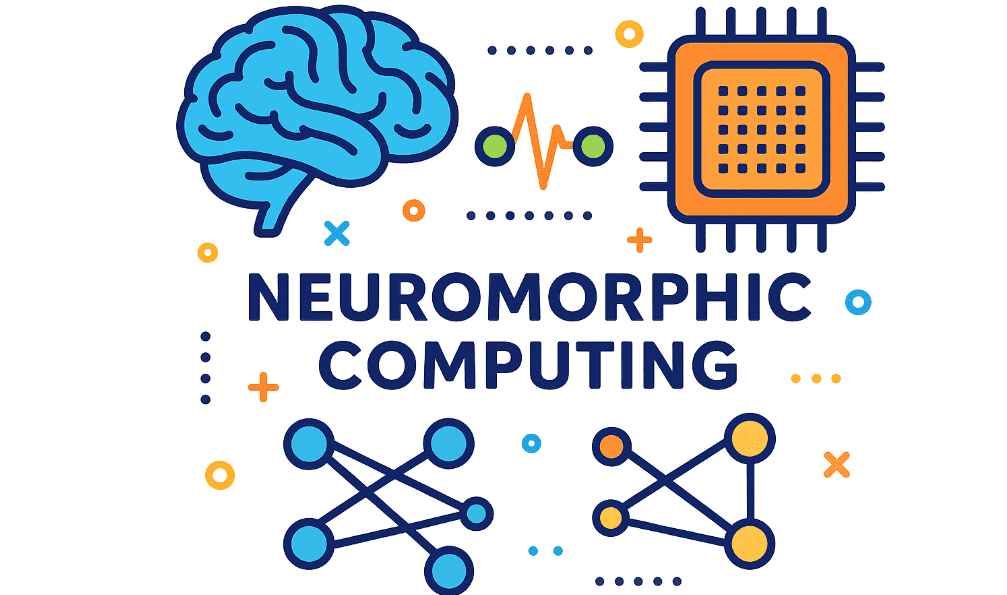
Neuromorphic computing mimics the structure and functioning of the human brain using electronic circuits. Unlike conventional von Neumann architectures that separate memory and computation, neuromorphic systems integrate them, leading to higher efficiency and parallelism.
Key Characteristics:
- Spike-based processing (Spiking Neural Networks)
- Event-driven computation
- Low power consumption
- On-chip learning capabilities
These features make neuromorphic systems highly suitable for edge applications, like those found in modern vehicles.
Neuromorphic vs Traditional Computing
| Feature | Traditional Computing | Neuromorphic Computing |
| Architecture | Von Neumann | Brain-inspired (Non-Von Neumann) |
| Processing | Sequential | Parallel |
| Power Consumption | High | Ultra-low |
| Learning | Offline (Cloud-based) | On-chip, real-time |
| Efficiency | Limited for real-world dynamics | Optimized for dynamic environments |
The Need for Neuromorphic Systems in Automotive
Modern vehicles process data from cameras, LiDAR, radar, ultrasonic sensors, and ECUs. With growing reliance on ADAS and autonomous functions, traditional CPUs and GPUs struggle to meet latency, power, and cost constraints, especially at the edge.
Neuromorphic chips are purpose-built to handle:
- Massive parallel data streams
- Event-based sensor inputs
- Local learning and adaptation
- Real-time decision-making with minimal latency
Thus, neuromorphic computing is not just an upgrade—it’s a necessity for next-gen vehicles.
Core Applications in Automotive
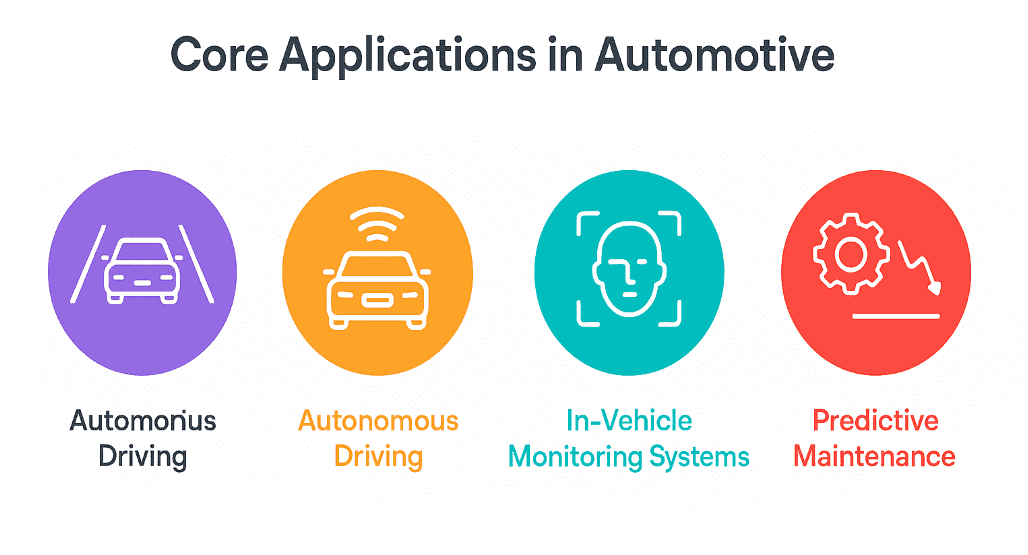
a. Advanced Driver Assistance Systems (ADAS)
Neuromorphic chips can enhance:
- Lane detection
- Pedestrian recognition
- Traffic sign interpretation
- Emergency braking decisions
Because these tasks require ultra-fast image processing and pattern recognition under varying conditions, neuromorphic processors deliver both speed and robustness.
b. Autonomous Driving
Autonomous vehicles need to understand dynamic environments with human-like perception. Neuromorphic processors enable:
- Real-time learning from driving scenarios
- Improved decision-making under uncertainty
- Adaptability to new roads or weather conditions without cloud retraining
c. In-Vehicle Monitoring Systems
Driver and occupant monitoring (e.g., drowsiness detection, facial recognition) benefits from neuromorphic capabilities like:
- Low-latency visual recognition
- Continuous, low-power surveillance
- Fast adaptation to different lighting or driver behaviors
d. Predictive Maintenance
Neuromorphic systems process vibration, sound, and thermal sensor data in real-time to:
- Detect anomalies
- Predict component failures
- Recommend maintenance without cloud-based analytics
e. Real-Time Sensor Fusion
Neuromorphic processors can fuse data from multiple sensors (camera, radar, IMU) in parallel, allowing:
- 3D scene reconstruction
- Obstacle tracking
- Environmental understanding—all with low energy use
Leading Companies & Projects
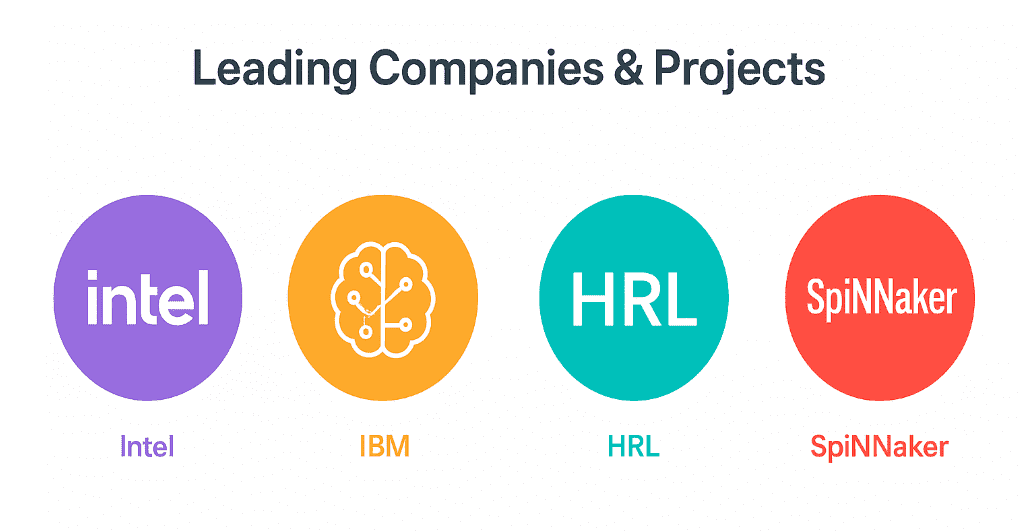
? Intel – Loihi
Intel’s Loihi chip simulates 130,000 neurons and supports on-chip learning, ideal for automotive edge applications. Research projects have shown Loihi achieving >1000x energy efficiency compared to CPUs in real-time inference.
? IBM – TrueNorth
IBM’s TrueNorth was one of the earliest large-scale neuromorphic platforms. While not automotive-focused initially, its architecture inspired further developments.
? BrainChip – Akida
Akida is a neuromorphic processor specifically designed for edge AI. It has already been deployed for vehicle occupant monitoring and gesture recognition.
? SynSense
This startup focuses on ultra-low-power neuromorphic vision sensors, making them highly suitable for automotive vision systems.
? Mercedes-Benz & Bosch
In collaboration, these companies are exploring neuromorphic computing for real-time driver assistance and intelligent camera systems.
Integration with Other Emerging Technologies
Neuromorphic computing does not operate in isolation. It works synergistically with:
- Edge AI: Enabling intelligence without constant cloud connectivity
- Event-based cameras (DVS): Complementing neuromorphic processing
- 5G and V2X: Facilitating rapid data exchange while neuromorphic chips handle real-time decision-making
- Software-Defined Vehicles (SDV): Allowing updates and reconfigurable neuromorphic modules
Challenges in Implementation
Despite its promise, several hurdles remain:
- Lack of Standardization: No unified software stack or programming model for automotive neuromorphic systems
- Hardware Availability: Most chips are still in experimental or early-commercial stages
- Scalability: Scaling neuromorphic systems to entire vehicle platforms is non-trivial
- Integration Complexity: Blending neuromorphic chips with conventional ECUs and architectures
Future Roadmap
By 2030, neuromorphic computing is expected to:
- Become mainstream in the premium and autonomous vehicle segments
- Power entire sensor-fusion modules for L4 and L5 autonomy
- Replace conventional edge AI systems in resource-constrained ECUs
- Enable dynamic, personalized in-vehicle AI that learns and evolves with the user
- Facilitate sustainability by significantly reducing automotive compute power consumption
Governments and automakers are investing heavily in AI research, and neuromorphic tech will be a key pillar in this transformation.
Conclusion
Neuromorphic computing stands at the crossroads of neuroscience and automotive engineering. With its potential to revolutionize everything from ADAS to autonomous navigation and predictive maintenance, it’s poised to become a foundational technology for future vehicles.
As challenges are addressed through industry collaboration, standardization, and silicon advancements, neuromorphic systems will drive the next wave of automotive intelligence, making vehicles smarter, safer, and more energy-efficient.
This was about “Neuromorphic Computing In The Automotive“. Thank you for reading.
Also, read:
- “Mother of All Deals”: How The EU–India Free Trade Agreement Can Reshape India’s Economic Future
- 10 Free ADAS Projects With Source Code And Documentation – Learn & Build Today
- 100 (AI) Artificial Intelligence Applications In The Automotive Industry
- 1000+ Automotive Interview Questions With Answers
- 2024 Is About To End, Let’s Recall Electric Vehicles Launched In 2024
- 2026 Hackathons That Can Change Your Tech Career Forever
- 50 Advanced Level Interview Questions On CAPL Scripting
- 7 Ways EV Batteries Stay Safe From Thermal Runaway