Hello guys, welcome back to my blog! ??️
Today, we’re exploring the technology that’s transforming how we drive — ADAS (Advanced Driver Assistance Systems). From lane-keeping to adaptive cruise control, ADAS is the brain behind safer, smarter, and more comfortable journeys. And when it comes to powering these intelligent features, semiconductors and microcontrollers are the hidden heroes making it all possible.
In this article, I’ll walk you through how radar sensors, LiDAR, and cameras work together with powerful processors to monitor the road in real time. We’ll also dive into how companies like Texas Instruments, NVIDIA, and Qualcomm are providing the chips that enable predictive braking, driver monitoring, and 360° vision — all with split-second accuracy.
By the end, you’ll see why ADAS isn’t just about convenience — it’s about saving lives, reducing accidents, and paving the way for fully autonomous vehicles. Whether you’re a car enthusiast, an engineer, or simply curious about the future of driving, this blog will help you understand why ADAS is the foundation of tomorrow’s mobility.
Ask questions if you have any electrical, electronics, or computer science doubts. You can also catch me on Instagram – CS Electrical & Electronics
- Electric Cars Need Precise Power – How Texas Instruments is Driving the Future of EVs
- From Engines to Airbags: How Renesas Chips Power the Future of Mobility
- Different Types of ASIL A, B, C, D Microcontrollers – Complete Guide
ADAS Technologies Explained
The automotive industry is experiencing a revolution with the rise of ADAS (Advanced Driver Assistance Systems). These technologies are designed to enhance driver safety, improve convenience, and pave the way toward fully autonomous vehicles. From collision avoidance systems to AI-driven predictive path planning, ADAS is transforming how we drive.
In this guide, we will cover all the latest ADAS technologies in 2025, breaking them down into categories with detailed explanations. Whether you’re a student, automotive engineer, or simply an enthusiast, this comprehensive article will help you understand the present and future of smart driving.
A. Collision Avoidance & Safety Systems
1. Forward Collision Warning (FCW)
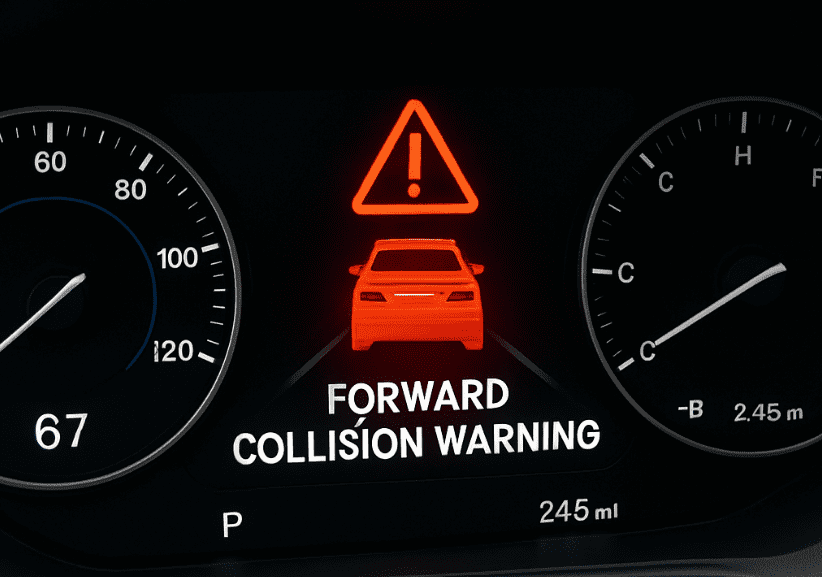
Forward Collision Warning (FCW) is a driver-assistance technology that uses sensors, cameras, or radar to detect the risk of a front-end collision. It alerts the driver with visual, audible, or haptic warnings, giving them enough time to react. The goal of FCW is not to take control but to warn the driver so they can slow down, brake, or steer away from danger.
This system is especially useful in high-traffic areas, on highways, and during sudden traffic slowdowns. By reducing reaction time, FCW significantly lowers the chances of rear-end accidents. It serves as the first layer of defense in collision avoidance systems, complementing more advanced features like Automatic Emergency Braking (AEB).
Key Points:
- Detects vehicles, pedestrians, or obstacles ahead.
- Alerts drivers before a potential collision occurs.
- Uses radar, LiDAR, and cameras for monitoring.
- Reduces rear-end collisions in traffic-heavy areas.
- Complements braking and steering assist systems.
2. Automatic Emergency Braking (AEB)
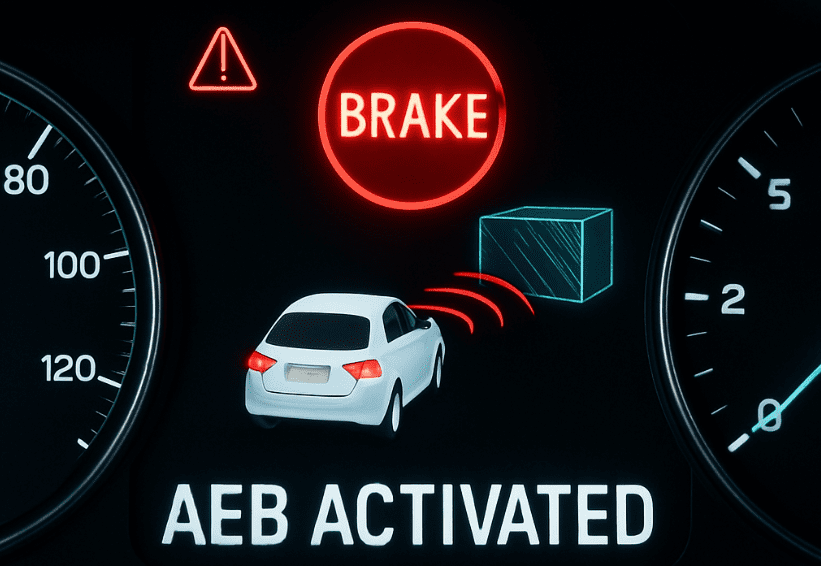
Automatic Emergency Braking (AEB) goes one step further than FCW by actively applying the brakes if the driver doesn’t respond in time. This system can either prevent a collision or reduce its severity. It relies on real-time data from sensors to detect imminent danger and automatically initiates braking action.
AEB is highly effective in preventing low-speed crashes in urban areas and reducing the impact of high-speed collisions. Many governments now require AEB in new vehicles due to its proven safety benefits. It provides reassurance to drivers while reducing insurance claims and accident costs.
Key Points:
- Automatically applies brakes in emergencies.
- Prevents or mitigates collisions if the driver fails to act.
- Works at both low and high speeds.
- Reduces the severity of unavoidable accidents.
- Mandated or recommended in many safety regulations.
3. Rear Collision Warning
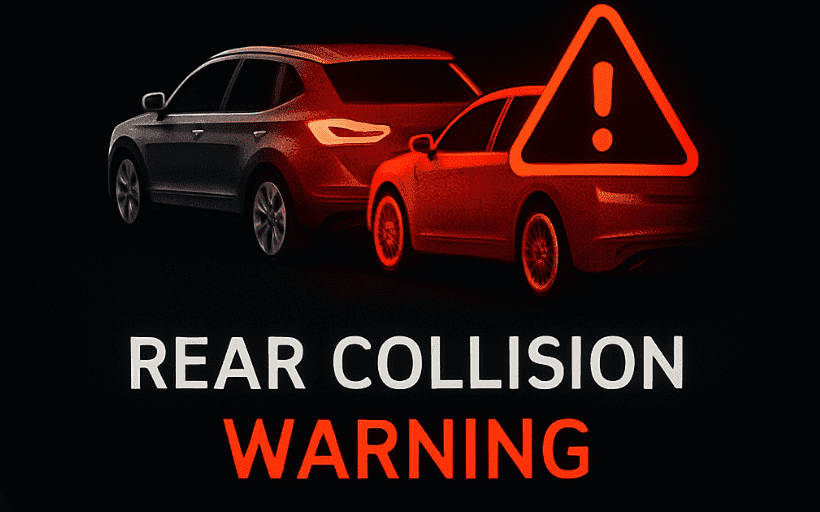
Rear Collision Warning alerts the driver when a vehicle behind is approaching too fast and a rear-end crash is likely. Using rear radar or cameras, it monitors vehicles coming from behind and provides timely warnings.
This feature is crucial in stop-and-go traffic, where sudden braking is common. In some advanced versions, it works alongside pre-crash safety systems to tighten seatbelts and prepare airbags.
Key Points:
- Detects fast-approaching vehicles from behind.
- Alerts the driver with visual or audible warnings.
- Useful in traffic jams and sudden stops.
- Can integrate with automatic seatbelt tightening.
- Reduces the chances of rear-end impacts.
4. Rear Cross-Traffic Alert
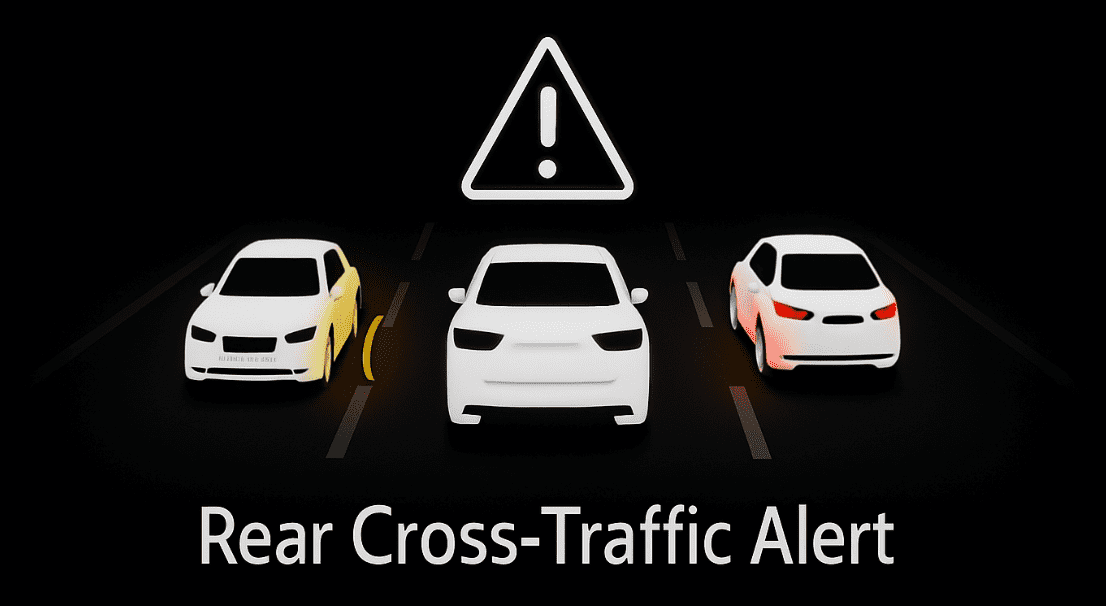
Rear Cross-Traffic Alert helps drivers when reversing out of parking spaces. It detects approaching vehicles, cyclists, or pedestrians from either side that may not be visible due to blind spots.
By giving real-time warnings, this system prevents collisions in crowded parking lots. Some versions even apply the brakes automatically if the driver doesn’t respond in time.
Key Points:
- Monitors cross-traffic when reversing.
- Uses radar and cameras for side detection.
- Alerts the driver of hidden vehicles or pedestrians.
- Prevents parking lot accidents.
- May include automatic braking in advanced models.
5. Blind Spot Detection (BSD)
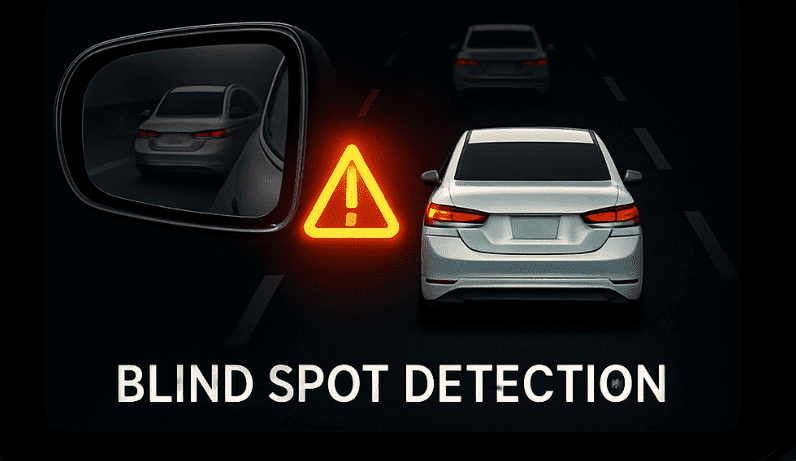
Blind Spot Detection (BSD) uses radar sensors mounted on the sides of the vehicle to monitor areas that are not visible in mirrors. When another vehicle enters this zone, the system alerts the driver through lights on the side mirrors or steering wheel vibrations.
BSD is particularly valuable during lane changes on highways. It prevents dangerous side collisions and boosts driver confidence, especially for larger vehicles with bigger blind spots.
Key Points:
- Monitors hidden areas around the vehicle.
- Alerts through lights or vibrations.
- Reduces lane-change accidents.
- Enhances safety for larger vehicles.
- Often combined with Lane Change Assist.
6. Lane Departure Warning (LDW)
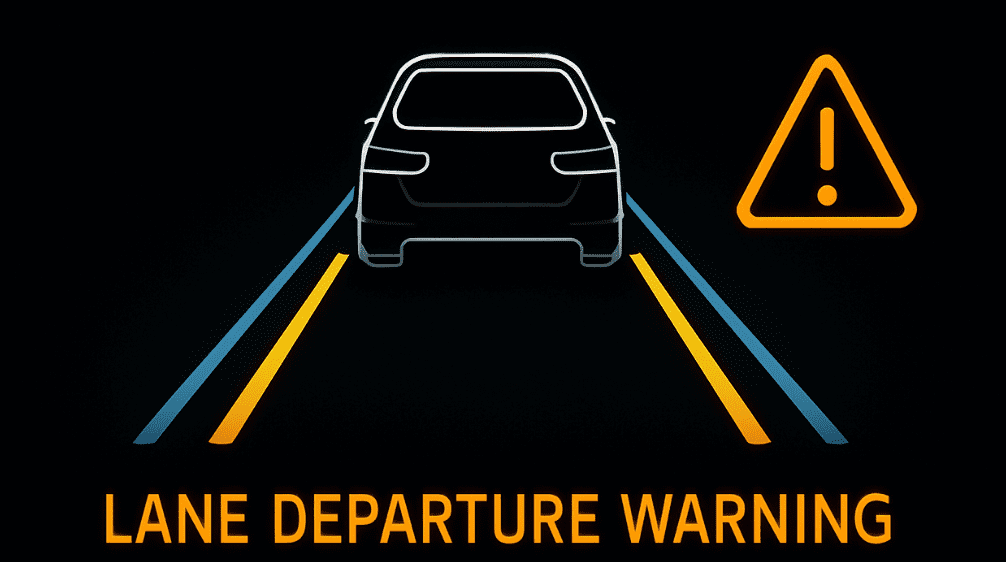
Lane Departure Warning alerts drivers when they unintentionally drift out of their lane without signaling. Cameras track road markings and detect lane boundaries.
This feature is most effective on highways, where fatigue or distractions can cause lane drifting. While LDW doesn’t actively steer, it gives strong alerts to keep the driver focused.
Key Points:
- Detects unintentional lane drift.
- Uses cameras to read road markings.
- Alerts with sound, vibration, or visual cues.
- Helps prevent accidents caused by driver fatigue.
- Works best on highways with clear lane markings.
7. Lane Keeping Assist (LKA)
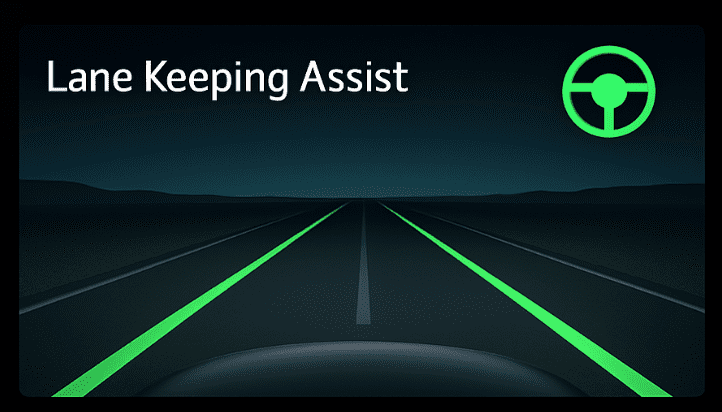
Lane Keeping Assist (LKA) builds on LDW by actively steering the vehicle back into its lane. When the car starts drifting, the system applies corrective steering input to keep it centered.
This feature reduces the risk of side collisions and is highly effective for long drives. It keeps the driver engaged while ensuring safety during lapses in attention.
Key Points:
- Provides corrective steering to prevent lane drift.
- Works with lane detection cameras.
- Reduces side-impact risks.
- Complements Lane Departure Warning.
- Enhances long-distance driving safety.
8. Lane Centering Assist
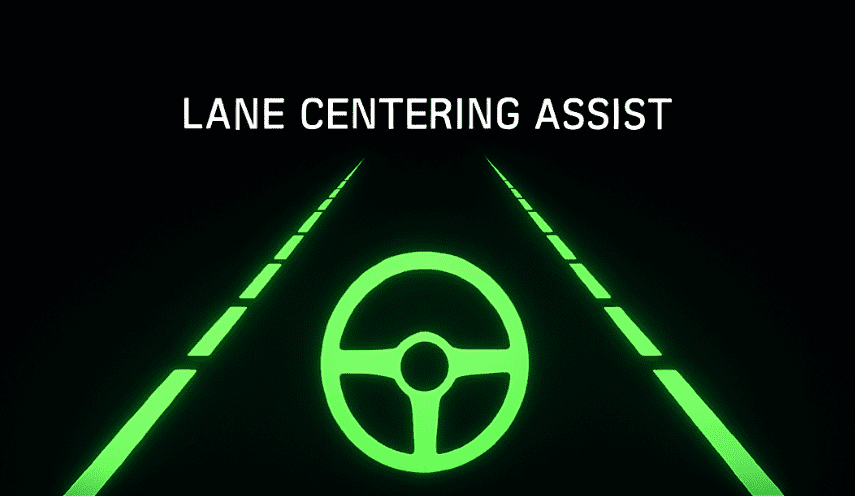
Lane Centering Assist takes lane assistance to the next level by keeping the vehicle perfectly centered in its lane. Unlike LKA, which only corrects when drifting, this system provides continuous steering support.
Often combined with Adaptive Cruise Control, it’s a key feature in semi-autonomous driving. It reduces driver fatigue during highway travel and enhances comfort.
Key Points:
- Continuously keeps the car centered in the lane.
- Provides smooth steering input.
- Works well with Adaptive Cruise Control.
- Reduces long-distance driving fatigue.
- Important for semi-autonomous systems.
9. Intersection Collision Assist
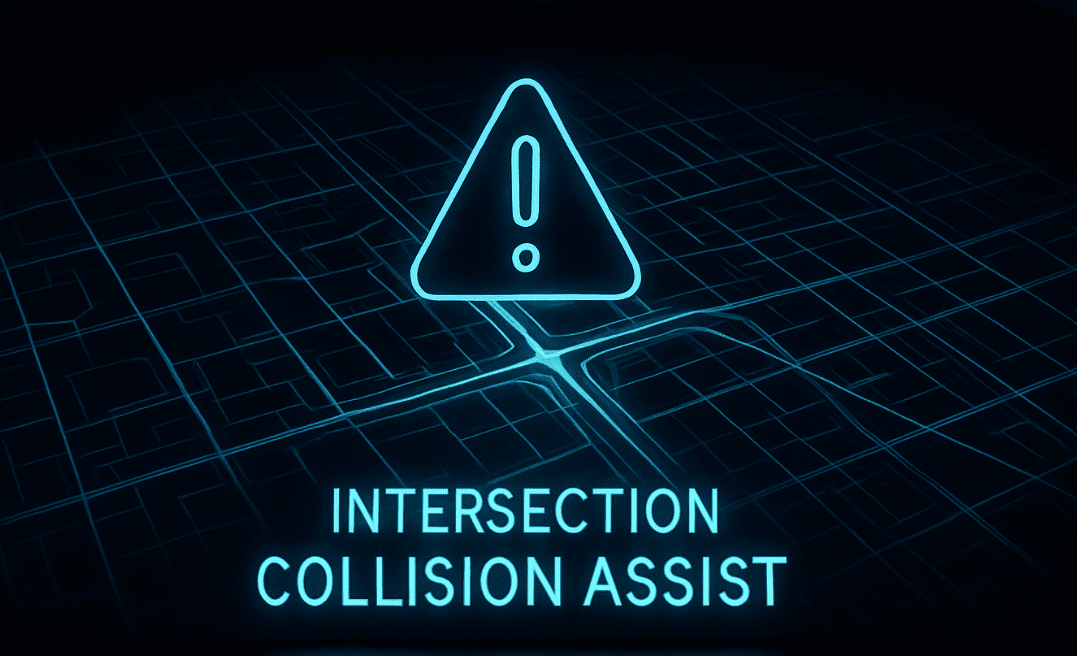
Intersection Collision Assist prevents accidents at junctions by monitoring cross-traffic. It detects vehicles approaching from the sides and warns the driver if it’s unsafe to cross or turn.
Some advanced systems can apply automatic braking to avoid intersection crashes. This is especially useful in urban areas with heavy traffic flow.
Key Points:
- Detects vehicles at intersections.
- Alerts the driver during unsafe turns.
- Reduces side-impact crashes.
- It can include auto-braking for safety.
- Improves urban traffic safety.
10. Evasive Steering Assist
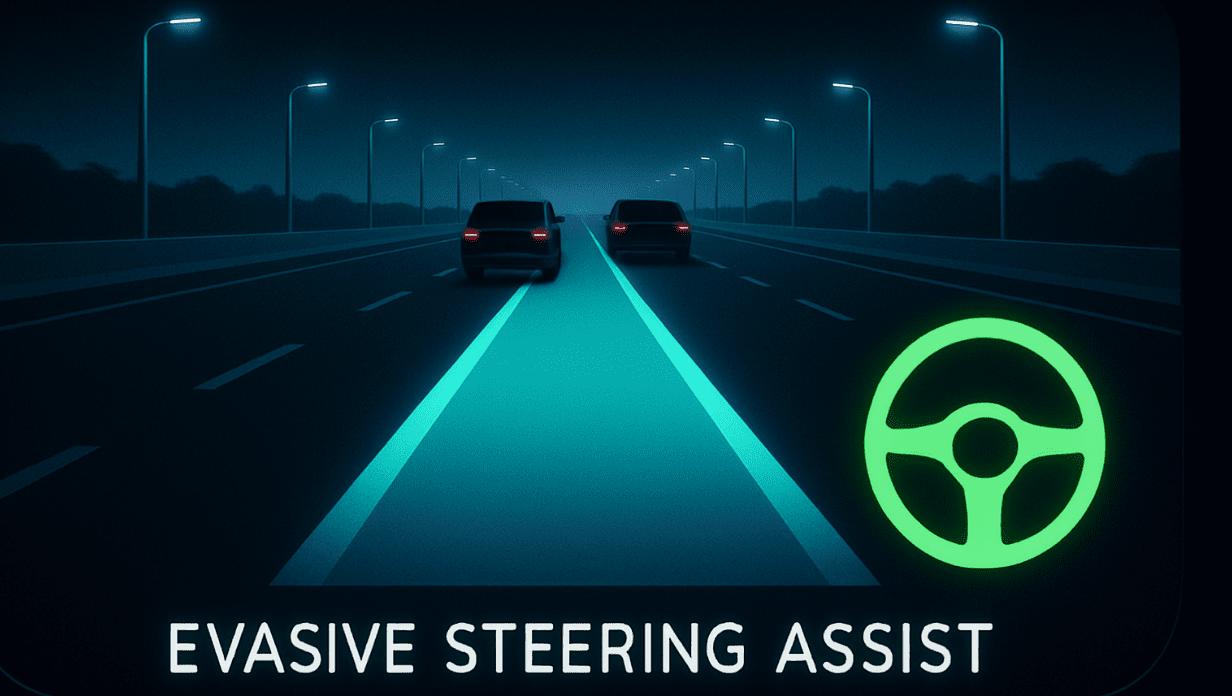
Evasive Steering Assist helps the driver steer around an obstacle when braking alone won’t prevent a collision. It provides additional steering torque for safe maneuvering.
This feature works together with sensors to calculate the safest path around an obstacle. It’s especially valuable in emergencies like sudden pedestrian crossings.
Key Points:
- Provides steering support in emergencies.
- Works when braking is not enough.
- Calculates the safest path around obstacles.
- Reduces the chances of side collisions.
- Enhances driver control during critical moments.
11. Emergency Lane Keeping (ELK)
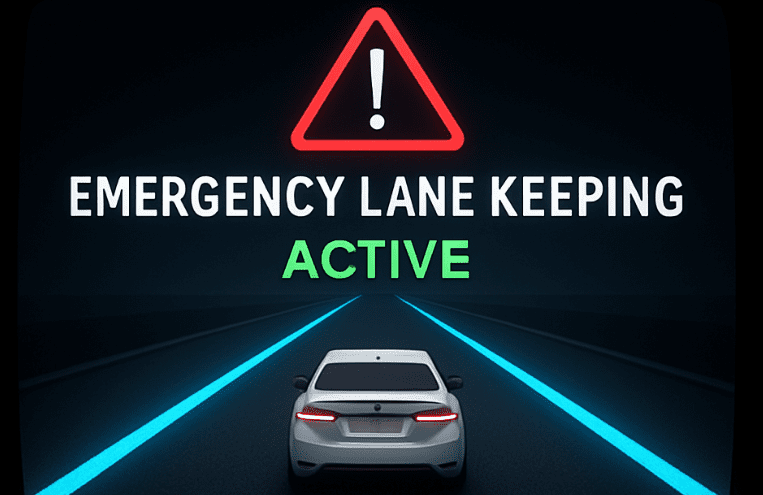
Emergency Lane Keeping (ELK) is designed to prevent accidents caused by sudden lane departures. It actively steers the vehicle back into its lane when it senses danger.
This system combines sensors, cameras, and steering intervention to ensure safety. It is particularly useful in preventing accidents due to drowsy or distracted driving.
Key Points:
- Prevents dangerous lane departures.
- Applies automatic steering correction.
- Works alongside lane assistance features.
- Protects against driver inattention.
- Enhances overall vehicle safety.
12. Wrong-Way Driving Warning
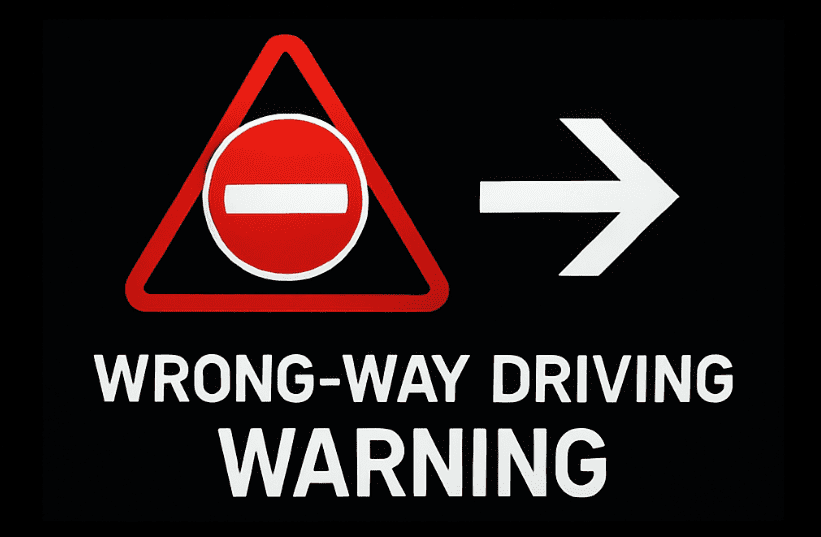
Wrong-Way Driving Warning alerts the driver if they are driving against traffic. Using GPS data, cameras, and road signs, it identifies wrong entries into highways or one-way streets.
This system is crucial for preventing head-on collisions, which are often fatal. It gives drivers immediate alerts to stop and correct their path.
Key Points:
- Detects wrong-way driving situations.
- Uses road sign recognition and GPS data.
- Alerts immediately with strong warnings.
- Prevents dangerous head-on collisions.
- Enhances navigation safety.
13. Pre-Crash Safety Systems (Seatbelt Tightening, Airbag Prep)
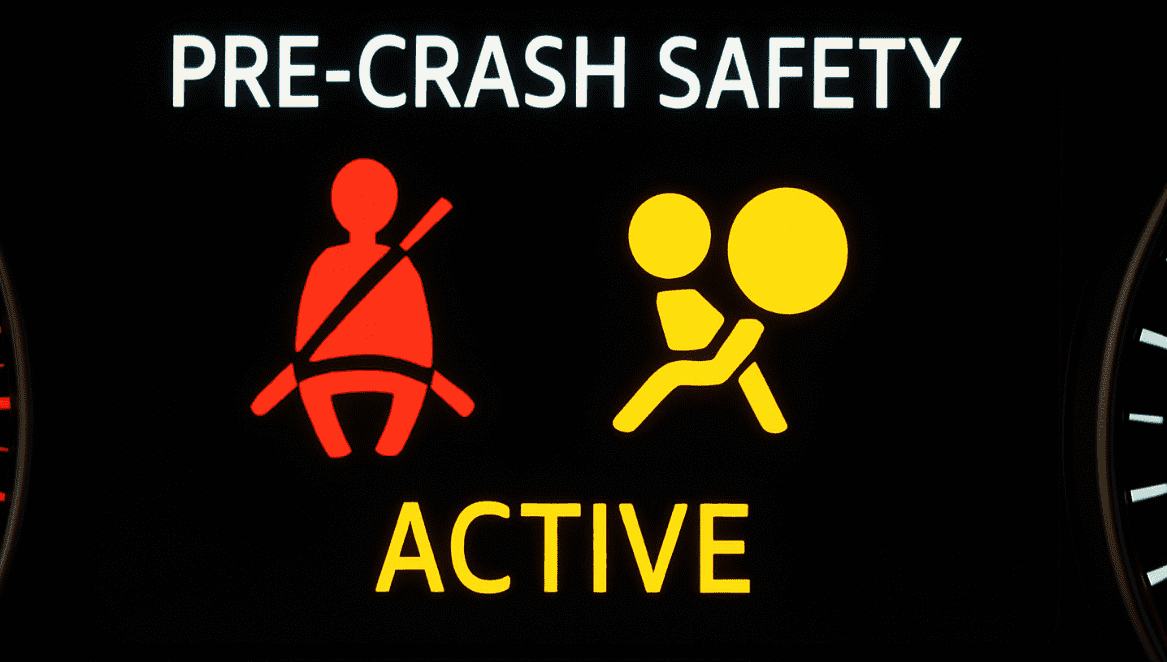
Pre-Crash Safety Systems prepare the vehicle and passengers for an imminent collision. Features include tightening seatbelts, adjusting headrests, and priming airbags before impact.
These actions minimize injury by ensuring that protective systems are fully ready. By predicting collisions, they create a safer environment for occupants.
Key Points:
- Prepares the car and passengers for impact.
- Tightens seatbelts for maximum protection.
- Adjusts headrests to prevent whiplash.
- Primes airbags for faster deployment.
- Reduces injury severity during accidents.
B. Adaptive Driving & Cruise Control
1. Adaptive Cruise Control (ACC)
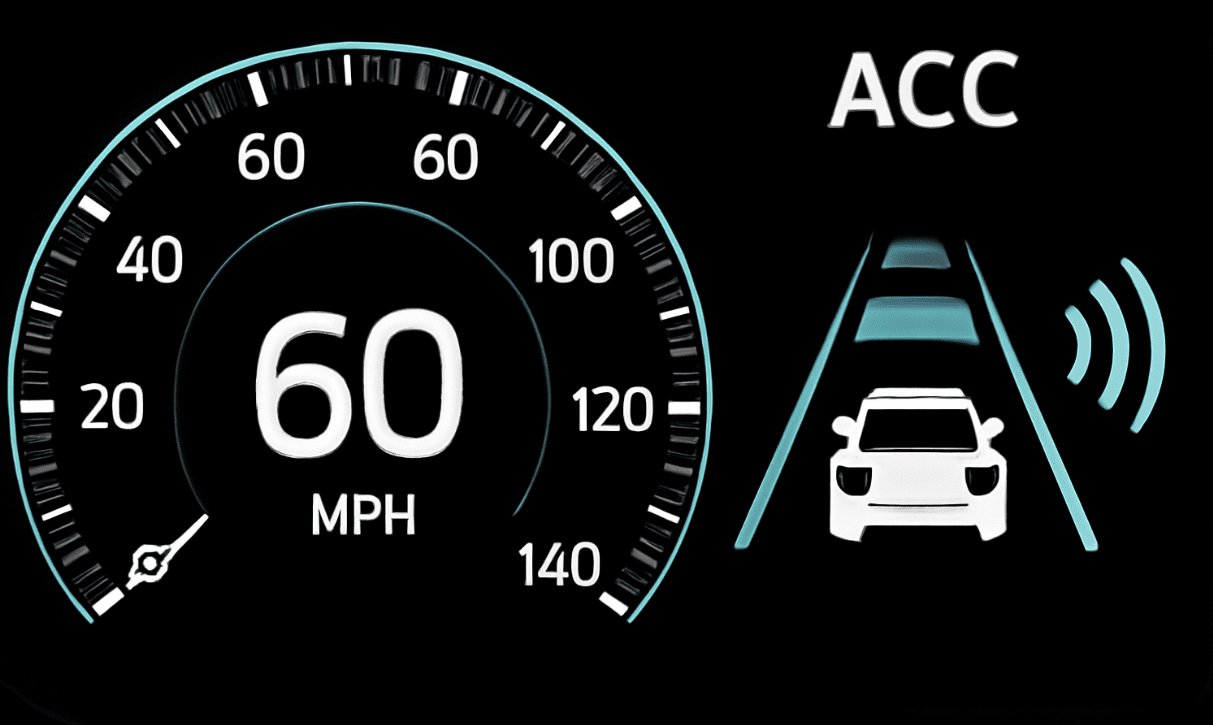
Adaptive Cruise Control (ACC) is an advanced form of traditional cruise control. Instead of just maintaining a constant speed, ACC uses radar and cameras to monitor the traffic ahead and automatically adjusts the car’s speed to maintain a safe following distance. This reduces the need for constant braking and accelerating, especially on highways.
It provides convenience on long journeys, reduces driver fatigue, and enhances safety by keeping the vehicle within a safe range of other cars. Many modern ACC systems can also bring the vehicle to a complete stop and resume driving without driver intervention.
Key Points:
- Maintains speed while adapting to traffic conditions.
- Uses radar and cameras to monitor vehicles ahead.
- Automatically adjusts speed for safe distance.
- Enhances driver comfort on highways.
- Can include stop-and-resume functionality in advanced models.
2. Stop-and-Go Adaptive Cruise Control
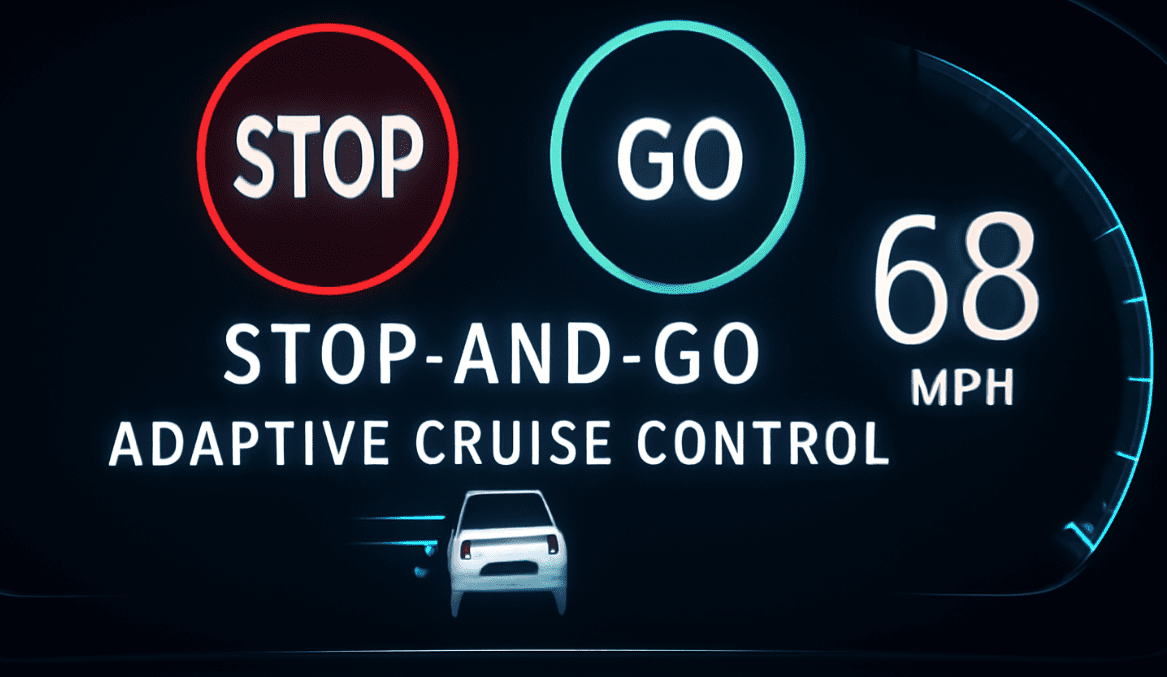
Stop-and-Go Adaptive Cruise Control builds upon ACC by handling low-speed driving in heavy traffic. It can bring the car to a full stop when traffic halts and automatically accelerate again when traffic moves.
This feature is particularly valuable in urban environments and during rush-hour traffic. It reduces driver stress in stop-and-go situations and keeps the vehicle safe by maintaining a proper distance from the car in front.
Key Points:
- Works in slow traffic and on congested roads.
- Stops the vehicle completely when traffic halts.
- Automatically resumes when traffic starts moving.
- Prevents rear-end collisions in heavy traffic.
- Reduces driver workload during rush hours.
3. Traffic Jam Assist (TJA)
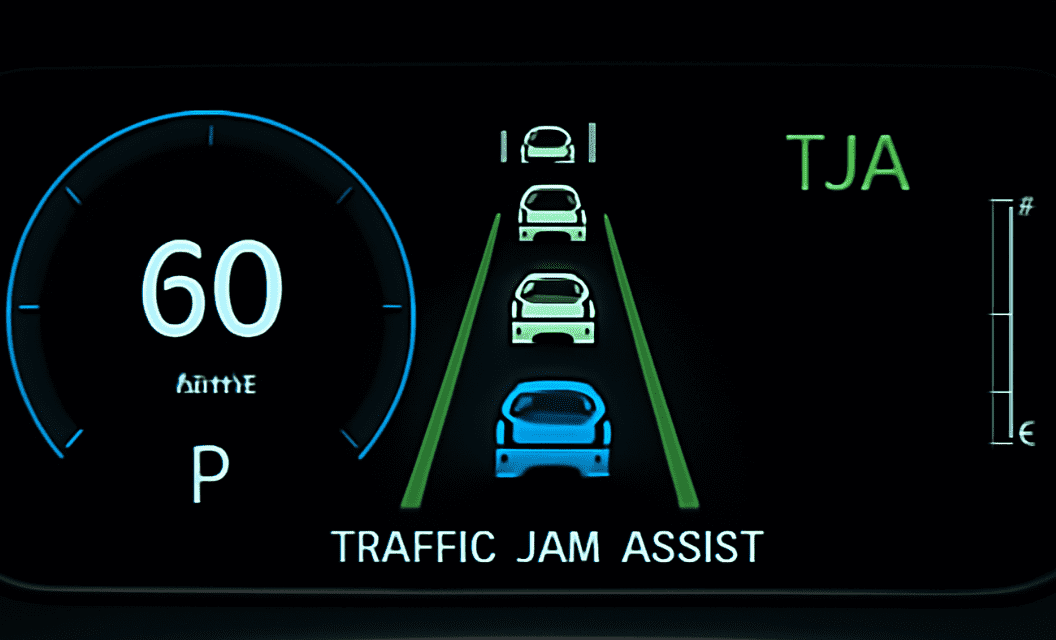
Traffic Jam Assist (TJA) is a semi-autonomous feature that combines Adaptive Cruise Control with Lane Centering Assist. In slow-moving traffic, it automatically controls acceleration, braking, and steering to keep the car within its lane and maintain a safe distance.
This system reduces stress in gridlock situations, allowing the driver to relax while still staying attentive. It’s not full autonomy, but it provides hands-on support in congested areas, making it a step toward automated driving.
Key Points:
- Automates driving in heavy traffic.
- Controls speed, braking, and steering.
- Keeps the vehicle in lane and maintains distance.
- Reduces driver stress in traffic jams.
- Functions as a bridge to semi-autonomous driving.
4. Intelligent Speed Assistance (ISA)
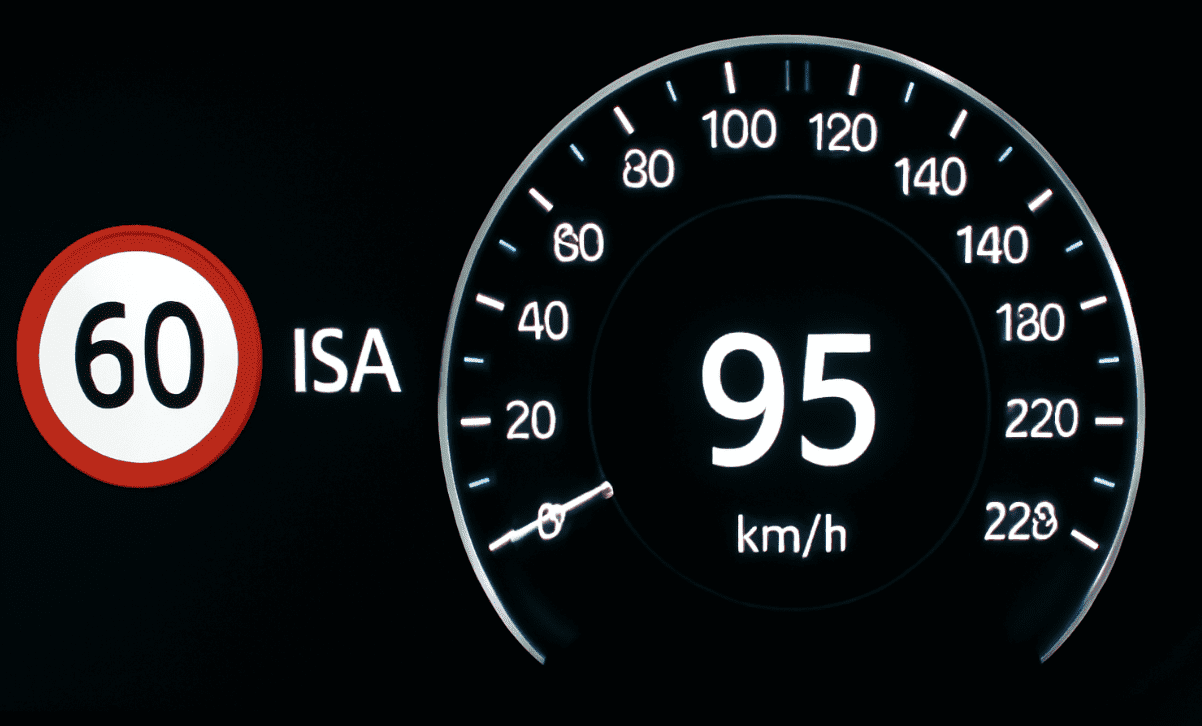
Intelligent Speed Assistance (ISA) ensures drivers stay within legal speed limits. Using GPS data and traffic sign recognition, ISA detects speed limits and warns the driver or actively limits vehicle speed.
In many countries, ISA is becoming mandatory to reduce accidents caused by overspeeding. Some systems give drivers alerts, while others automatically restrict engine power to prevent crossing the limit.
Key Points:
- Detects road speed limits using GPS and cameras.
- Warns or restricts the driver from overspeeding.
- Reduces risk of speed-related accidents.
- It can automatically limit vehicle acceleration.
- Becoming mandatory in Europe and other regions.
5. Highway Pilot (Partial Autonomy on Highways)
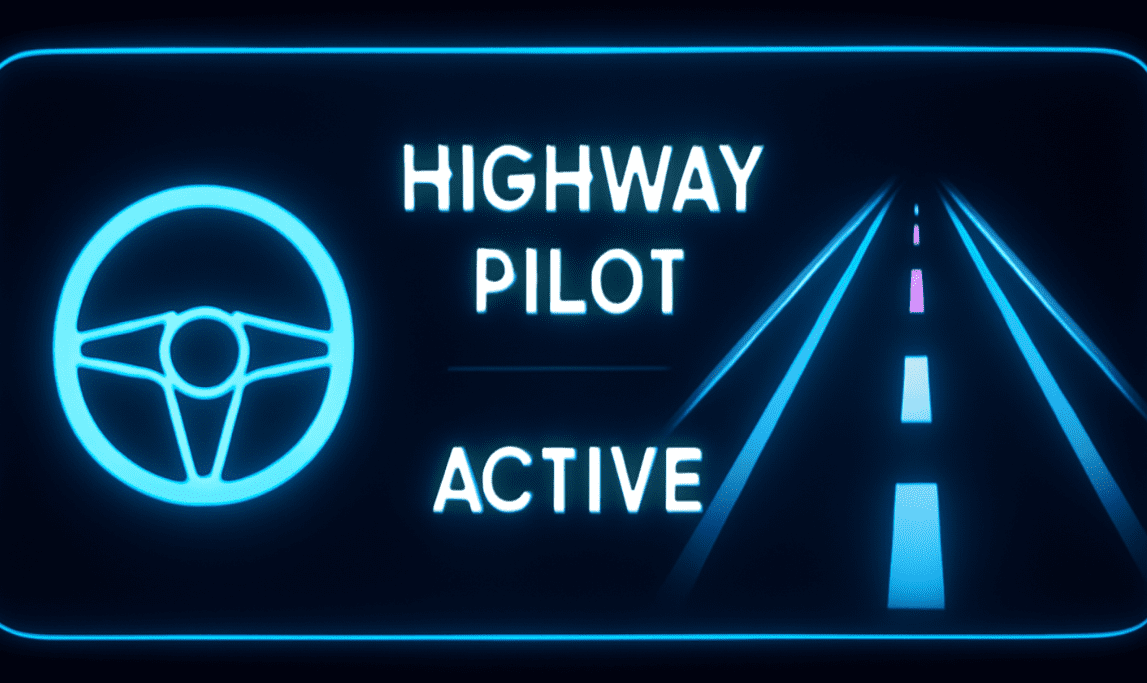
Highway Pilot is a partial self-driving feature designed for highway travel. It combines Adaptive Cruise Control, Lane Centering, and Traffic Sign Recognition to manage the vehicle with minimal driver input.
Drivers still need to supervise, but the system can handle steering, braking, lane keeping, and speed adjustments. This significantly reduces fatigue on long highway drives and serves as a foundation for future fully autonomous vehicles.
Key Points:
- Provides partial autonomy on highways.
- Manages steering, braking, and speed control.
- Reduces fatigue on long-distance trips.
- Works with multiple driver-assist systems.
- Prepares the ground for fully autonomous driving.
C. Driver Monitoring & Alerts
1. Driver Monitoring System (DMS)
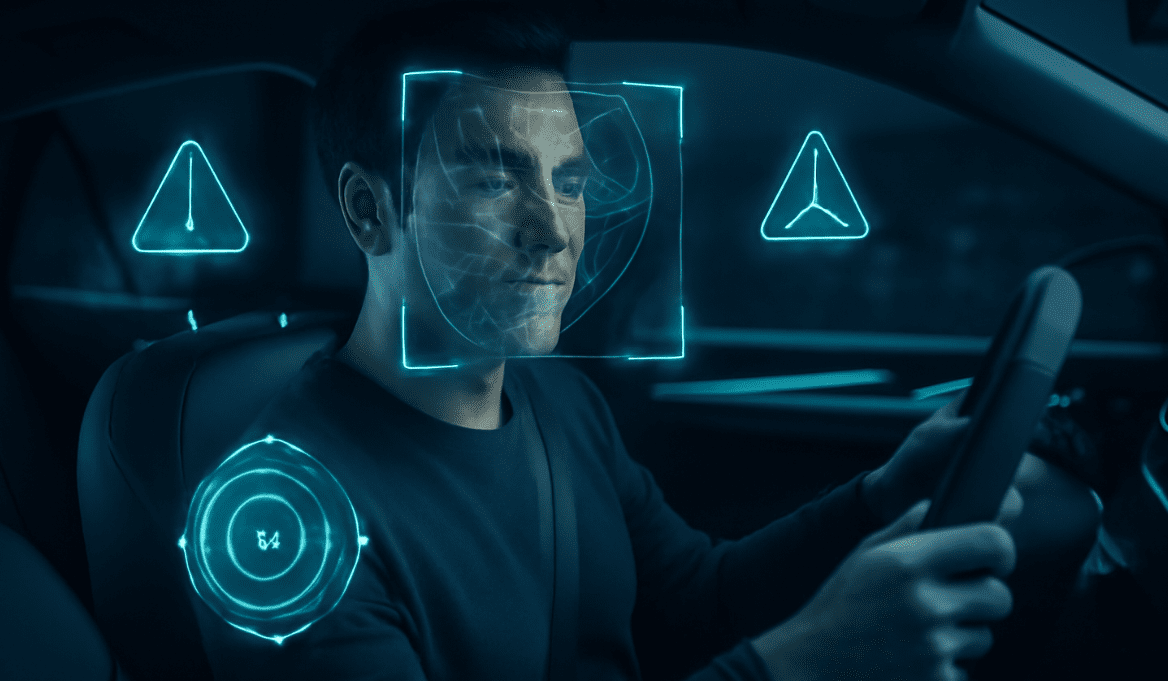
A Driver Monitoring System (DMS) is designed to ensure that the driver remains attentive and engaged while operating the vehicle. Using cameras, infrared sensors, and sometimes biometric technology, the system tracks driver behavior such as head position, eye movement, and hand placement.
The purpose of DMS is to detect signs of distraction, drowsiness, or lack of attention and provide timely alerts. In advanced systems, it can even intervene by slowing down the car or triggering other safety measures if the driver becomes unresponsive.
Key Points:
- Monitors driver’s head, eyes, and behavior.
- Uses cameras and sensors for real-time detection.
- Detects distraction, drowsiness, or lack of attention.
- Issue alerts or warnings to refocus the driver.
- Advanced systems can intervene for safety.
2. Drowsiness Detection
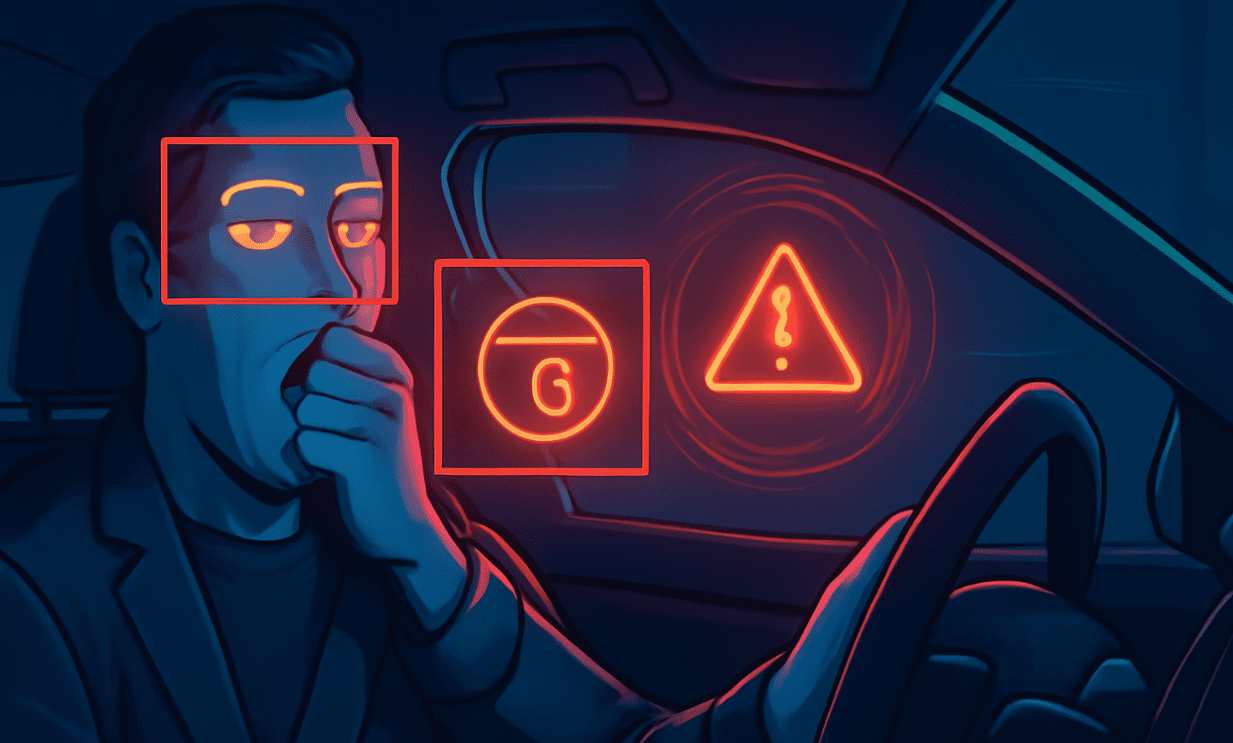
Drowsiness Detection systems identify signs of fatigue that may impair safe driving. They analyze steering patterns, lane movements, and driver behavior to detect when the driver is tired.
Once fatigue is detected, the system alerts the driver with visual, audible, or haptic warnings. Some cars even suggest taking a break by showing a coffee cup symbol on the dashboard. This technology is especially valuable on long highway drives.
Key Points:
- Detects fatigue through driving patterns.
- Uses steering and lane-tracking analysis.
- Provides visual, audible, or vibration alerts.
- Reduces accidents caused by sleepy driving.
- Encourages drivers to take rest breaks.
3. Attention Assist / Driver Fatigue Warning
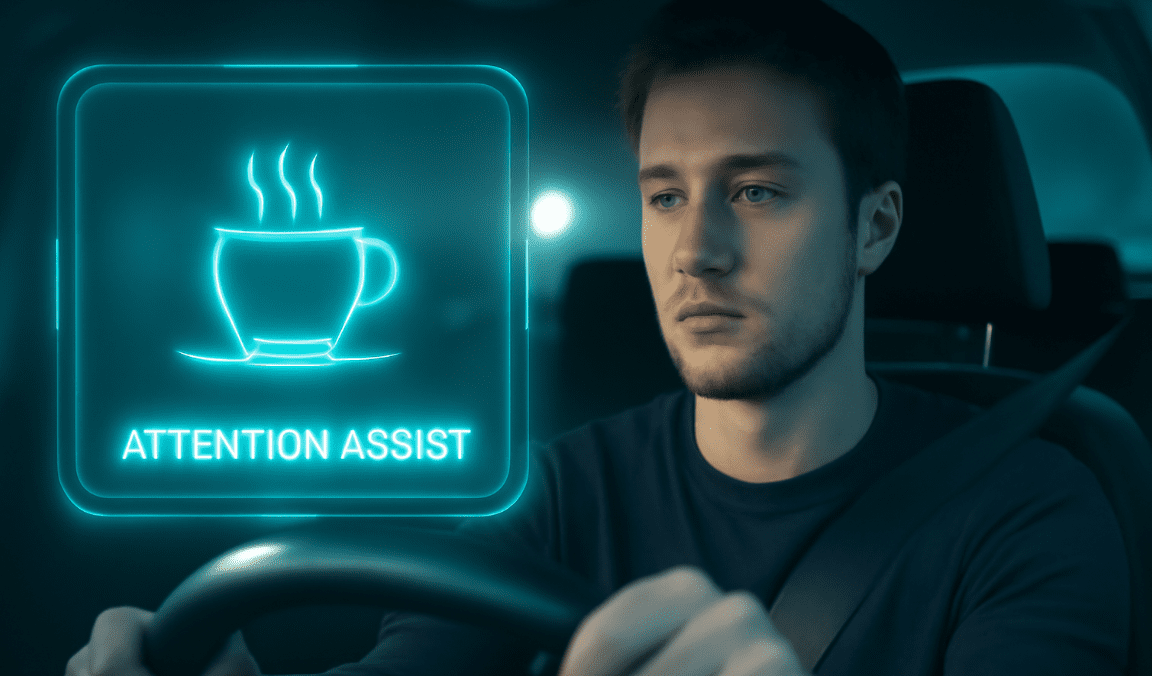
Attention Assist is a driver fatigue detection system that goes beyond drowsiness detection. It monitors subtle behavioral changes like delayed reactions, erratic steering, and irregular braking to identify reduced attention levels.
If the system senses fatigue or loss of focus, it issues warnings and may recommend a break. This proactive feature plays an important role in preventing accidents during long trips and night driving.
Key Points:
- Identifies reduced driver attention and reaction times.
- Monitors braking, steering, and acceleration patterns.
- Provides fatigue warnings on the dashboard.
- Suggests rest stops for safety.
- Enhances driver awareness during long journeys.
4. Hand-on-Wheel Detection
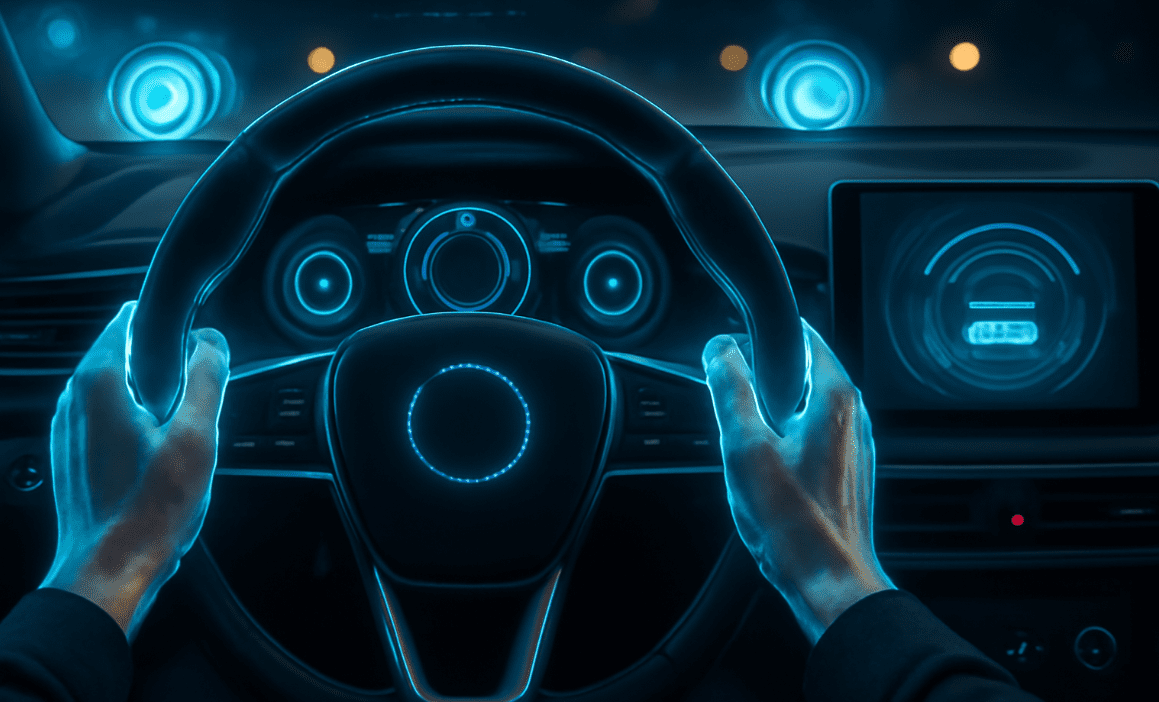
Hand-on-Wheel Detection ensures the driver’s hands remain on the steering wheel, especially when advanced driver-assist systems like Lane Keeping Assist or Adaptive Cruise Control are active.
If the driver releases the wheel for too long, the system issues reminders. In some cases, if the driver fails to respond, the car may slow down and come to a stop for safety.
Key Points:
- Ensures the driver keeps their hands on the steering wheel.
- Supports semi-autonomous driving safety.
- Issue reminders if hands are off the wheel for too long.
- May trigger automatic deceleration if ignored.
- Prevents overreliance on automated systems.
5. Eye-Tracking & Gaze Monitoring
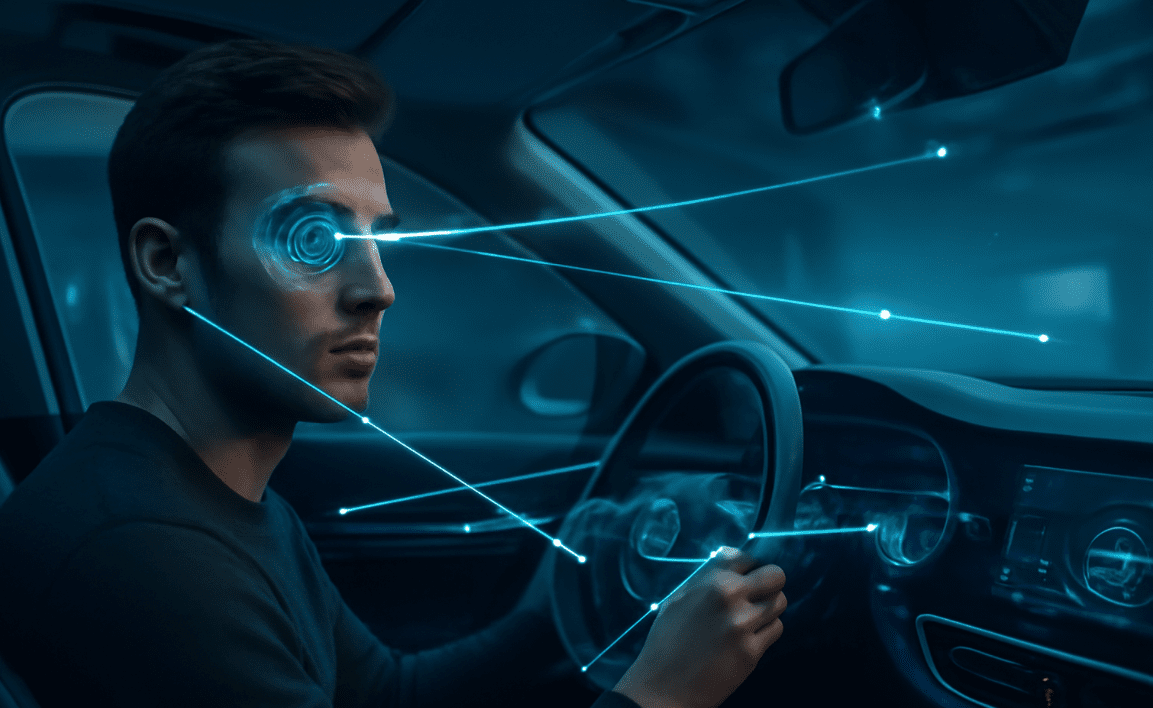
Eye-Tracking & Gaze Monitoring systems use infrared cameras and sensors to analyze the driver’s eye movements and gaze direction. They detect whether the driver is looking at the road, mirrors, or distracted by devices.
This technology plays a critical role in reducing accidents caused by inattention. If the driver looks away for too long, the system issues immediate alerts, ensuring they refocus on the road. It’s also a stepping stone for advanced driver-assist and autonomous systems.
Key Points:
- Tracks the driver’s eye position and gaze direction.
- Uses infrared cameras for accurate monitoring.
- Detects distraction from the road or mirrors.
- Provides immediate alerts to refocus the driver.
- Key technology for semi- and fully autonomous cars.
D. Parking Assistance
1. Parking Sensors

Parking Sensors are among the earliest and most common driver-assist features. These ultrasonic sensors, usually mounted on the front and rear bumpers, detect nearby obstacles while parking. They provide audio and/or visual alerts to help drivers maneuver safely in tight spaces.
The system reduces the chances of hitting hidden objects, other cars, or walls. Improving driver awareness makes parking less stressful and much safer, especially in urban environments with limited space.
Key Points:
- Detects obstacles during parking maneuvers.
- Uses ultrasonic sensors on bumpers.
- Provides audio or visual alerts to the driver.
- Prevents damage from hidden objects.
- Ideal for tight urban parking spaces.
2. Rearview Camera
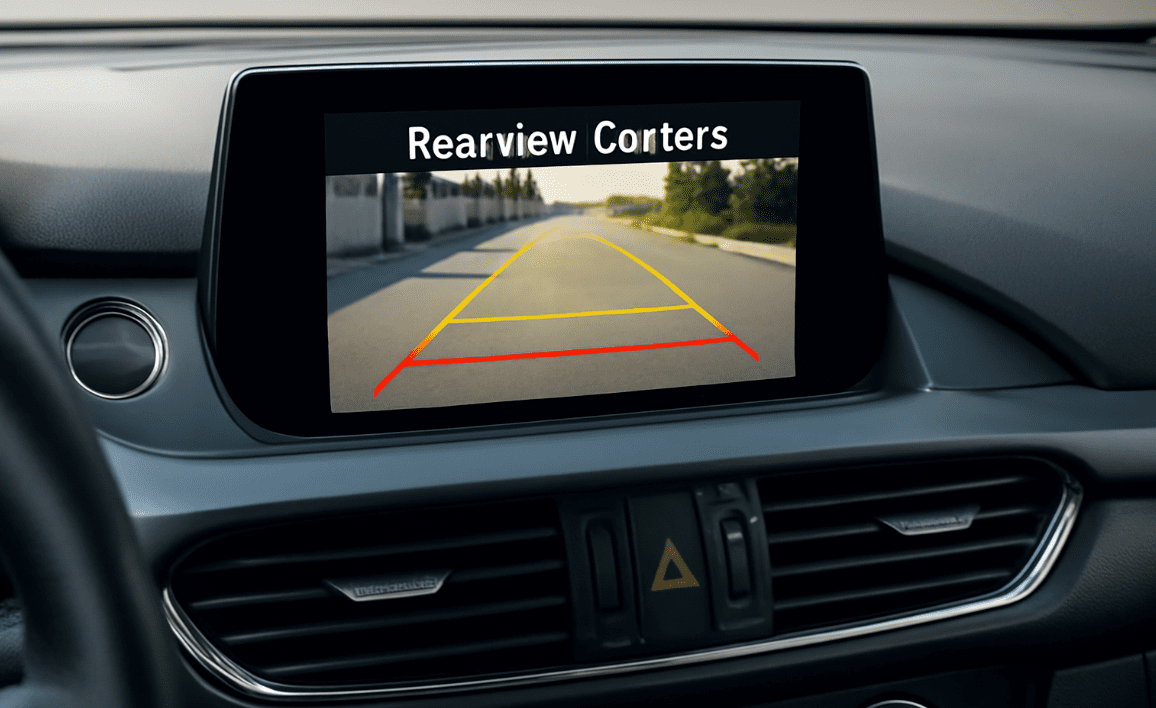
The Rearview Camera displays the area behind the vehicle when reversing. It provides a clear, wide-angle view that eliminates blind spots directly behind the car. Many systems also include dynamic guidelines to show the intended path.
This feature has become standard in many countries due to its effectiveness in preventing back-over accidents, especially involving children or small objects that are not visible in mirrors.
Key Points:
- Provides a live video feed when reversing.
- Eliminates rear blind spots.
- Often includes dynamic parking guidelines.
- Helps prevent accidents involving pedestrians or objects.
- Now mandatory in many regions for safety.
3. 360° Surround View Camera
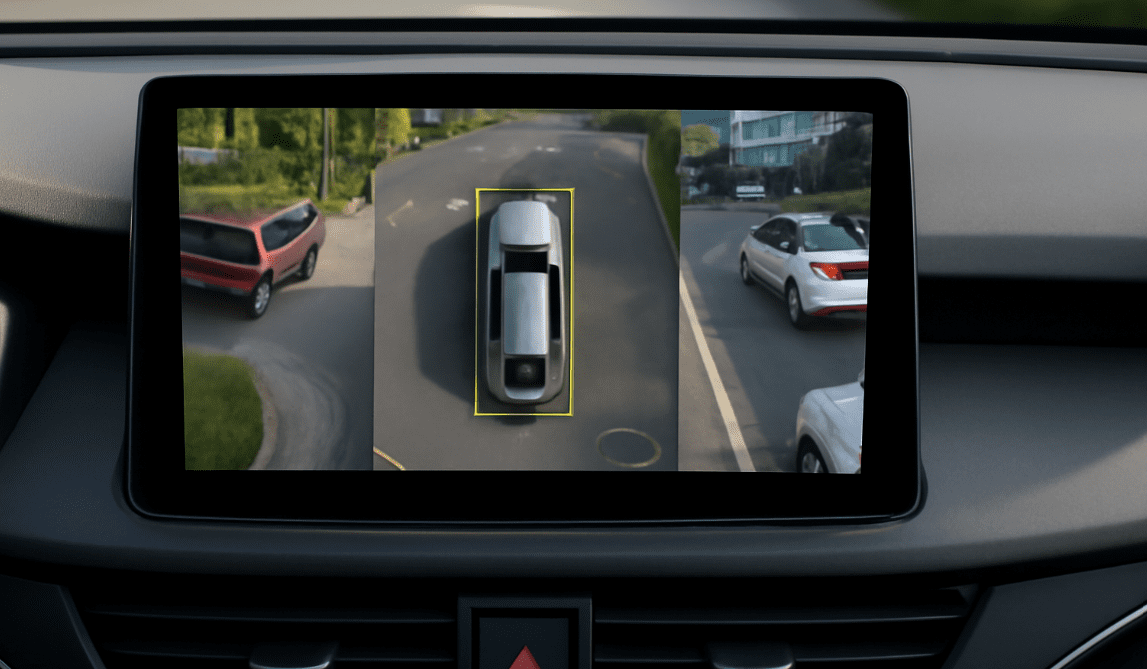
A 360° Surround View Camera uses multiple cameras around the vehicle (front, rear, and sides) to create a bird’s-eye view. This composite image is displayed on the infotainment screen, helping drivers park with complete awareness.
It significantly reduces stress in tight spaces, parallel parking, and crowded environments. Drivers can see obstacles from all sides, making it an excellent feature for larger vehicles like SUVs and trucks.
Key Points:
- Combines multiple cameras for a full view.
- Provides a bird’s-eye perspective of surroundings.
- Helps with parallel and tight parking.
- Enhances safety in crowded areas.
- Ideal for larger or luxury vehicles.
4. Automated Parking Assist
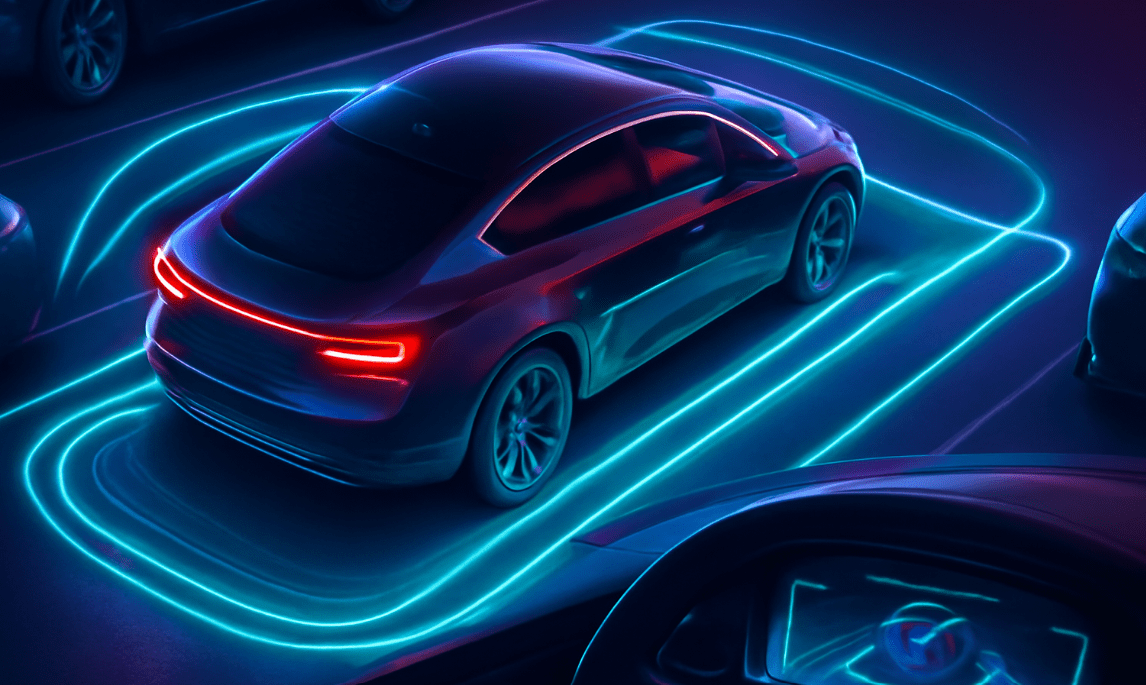
Automated Parking Assist takes over steering during parking maneuvers. The driver controls acceleration, braking, and gear shifting while the system handles the steering to fit the car into the selected space.
This feature reduces the anxiety of parallel or reverse parking, especially for inexperienced drivers. With precision steering, it ensures the car is parked correctly and safely every time.
Key Points:
- Automates steering during parking.
- Works for parallel and perpendicular spaces.
- The driver controls only speed and braking.
- Reduces parking stress for new drivers.
- Ensures accurate and safe placement.
5. Remote Park Assist (via Smartphone)
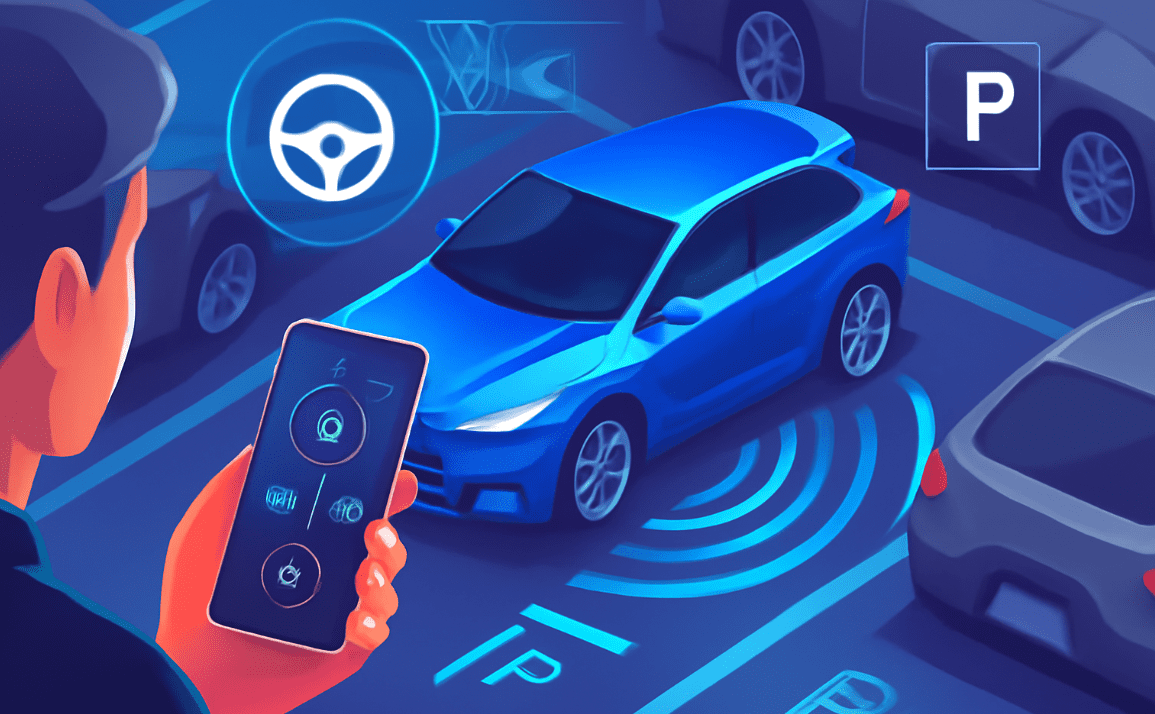
Remote Park Assist allows drivers to park their car while standing outside the vehicle using a smartphone or key fob. The system autonomously controls acceleration, braking, and steering to fit into tight spaces.
This is especially useful when parking in cramped garages or between cars where opening the door is difficult. It enhances convenience while ensuring precise parking.
Key Points:
- Lets driver park the car remotely using phone or key fob.
- Ideal for tight spaces where doors can’t open.
- The car manages steering, braking, and acceleration.
- Enhances convenience and safety.
- Popular in premium and electric vehicles.
6. Cross-Parking Assist
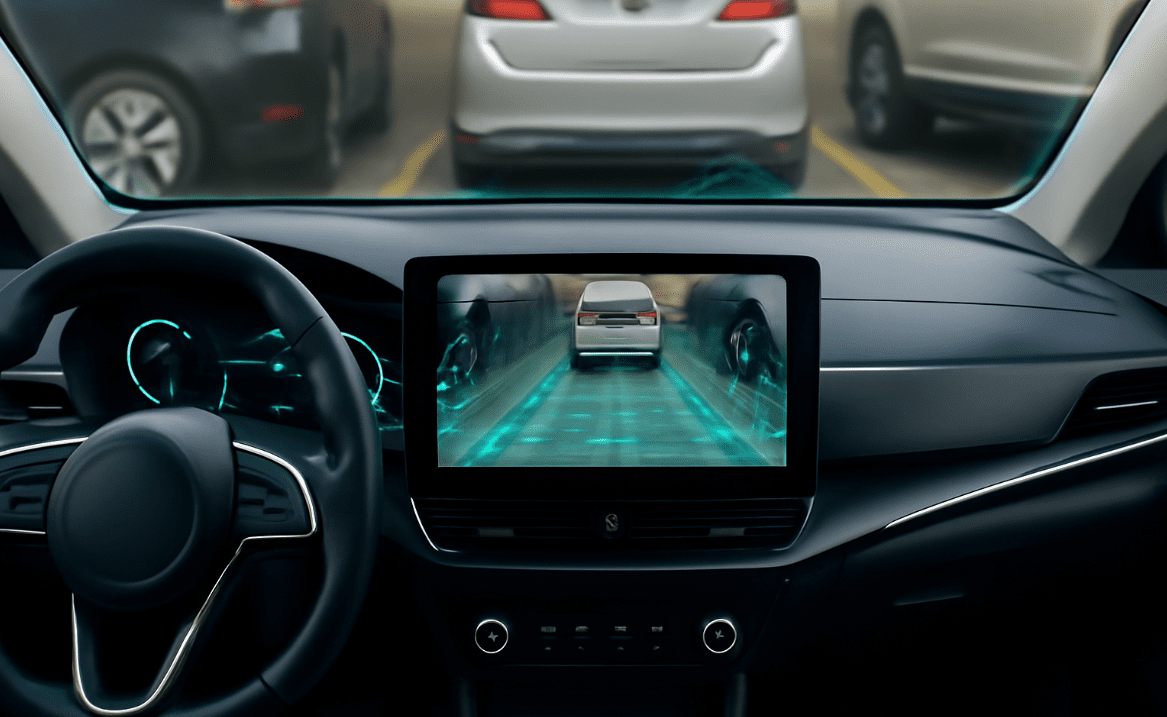
Cross-Parking Assist helps drivers when maneuvering into spaces that are positioned sideways (perpendicular or angled parking). The system guides or automates the steering and alerts the driver of obstacles.
It reduces the chances of collision with nearby vehicles or objects when entering or exiting such parking spaces. This makes it particularly useful in crowded malls or office complexes.
Key Points:
- Assists with perpendicular or angled parking.
- Guides the driver or automates steering.
- Detects side obstacles and alerts the driver.
- Reduces the risk of scraping nearby cars.
- Useful in crowded commercial parking areas.
E. Vision & Camera-Based Assistance
1. Night Vision System (Infrared)
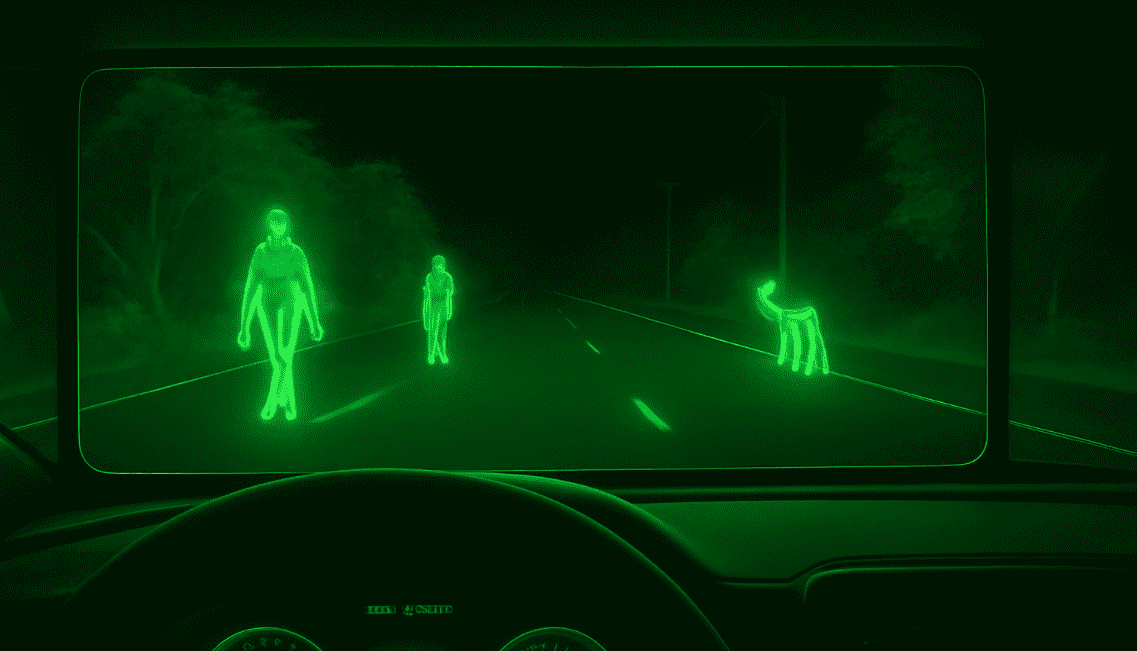
The Night Vision System uses infrared cameras to detect heat signatures from pedestrians, animals, and other objects in low-light or nighttime conditions. The information is displayed on the dashboard or head-up display, giving drivers enhanced visibility beyond the reach of headlights.
This system is especially helpful in rural or poorly lit areas where unexpected hazards might appear. By detecting objects earlier, it provides drivers with more reaction time and reduces the likelihood of nighttime accidents.
Key Points:
- Uses infrared cameras for night-time visibility.
- Detects heat signatures from people, animals, and objects.
- Displays enhanced vision on the dashboard or HUD.
- Improves safety in poorly lit or rural areas.
- Reduces risks of nighttime collisions.
2. Traffic Sign Recognition (TSR)
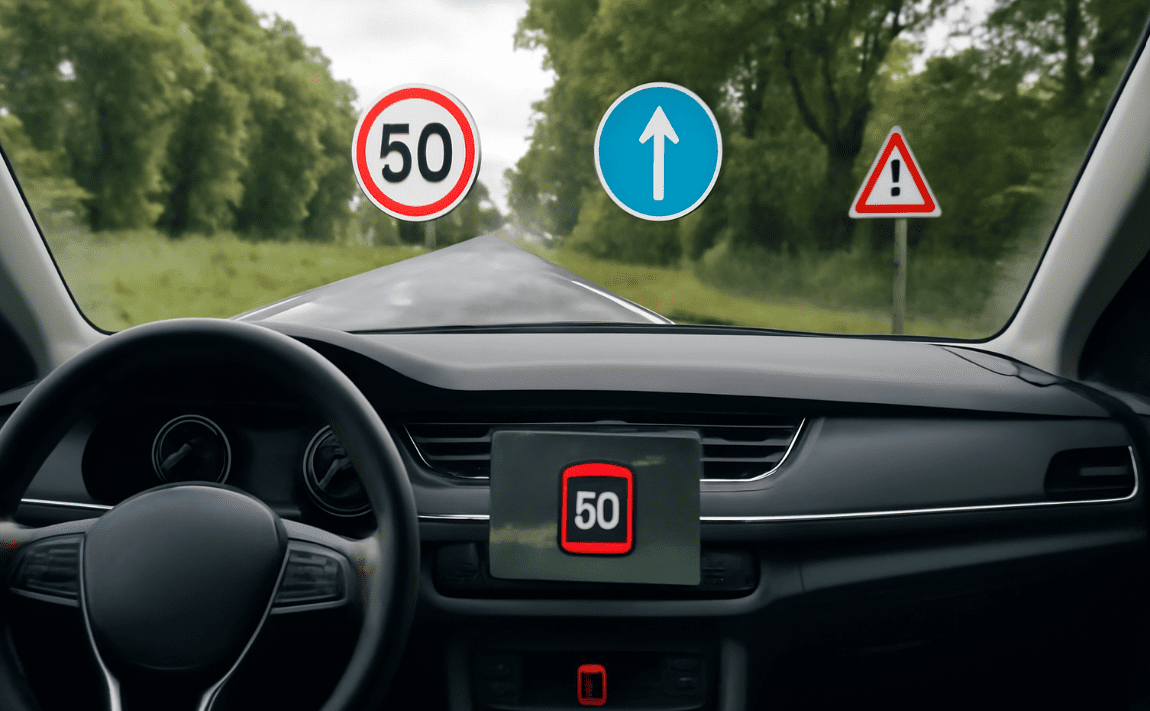
Traffic Sign Recognition (TSR) uses forward-facing cameras to detect and interpret road signs such as speed limits, no-entry, or stop signs. The detected signs are displayed on the instrument cluster or infotainment screen to keep the driver aware.
This system helps prevent traffic violations and improves road safety by keeping drivers informed, especially in unfamiliar locations. Advanced TSR can also work with Intelligent Speed Assistance (ISA) to adjust vehicle speed automatically.
Key Points:
- Identifies and reads road signs in real-time.
- Displays signs on the dashboard or infotainment screen.
- Helps prevent overspeeding and missed warnings.
- Enhances driver awareness in new areas.
- Integrates with speed assistance systems.
3. Pedestrian Detection
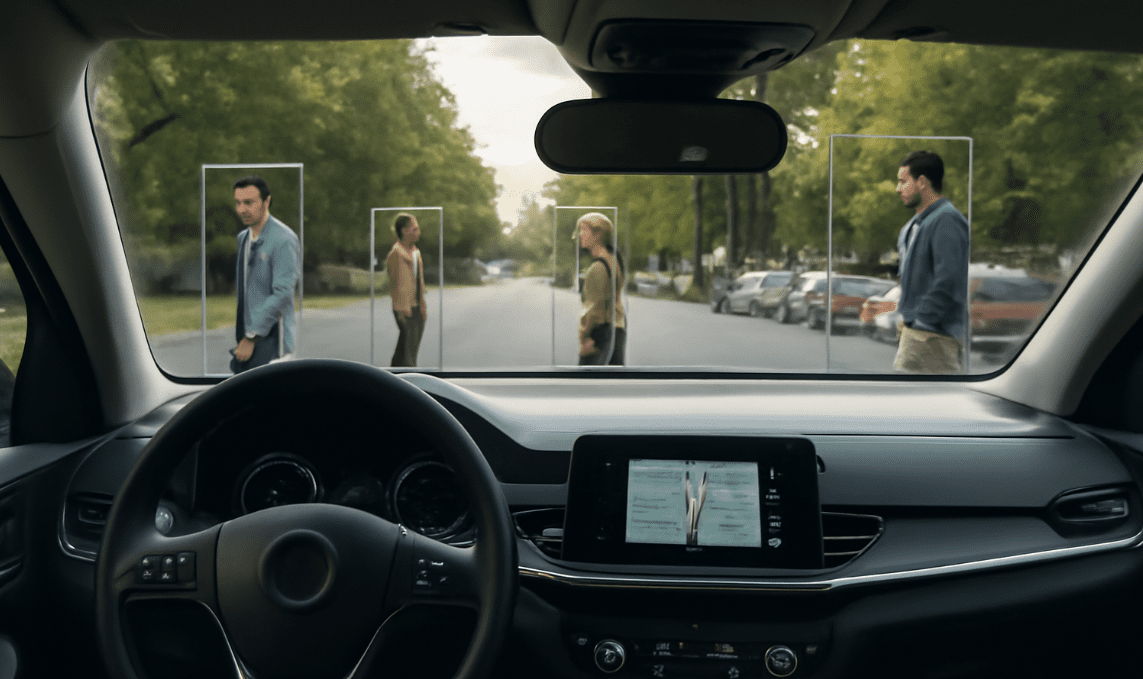
Pedestrian Detection uses cameras, radar, and sensors to identify people crossing or standing near the roadway. If the system detects a collision risk, it alerts the driver and, in many cases, triggers Automatic Emergency Braking (AEB).
This feature is especially important in urban areas with heavy foot traffic. It significantly reduces accidents involving pedestrians by providing quicker reaction times than humans alone.
Key Points:
- Detects pedestrians in or near the vehicle’s path.
- Alerts the driver and can activate AEB.
- Works in both day and low-light conditions.
- Reduces urban pedestrian accidents.
- Enhances overall safety for vulnerable road users.
4. Cyclist Detection
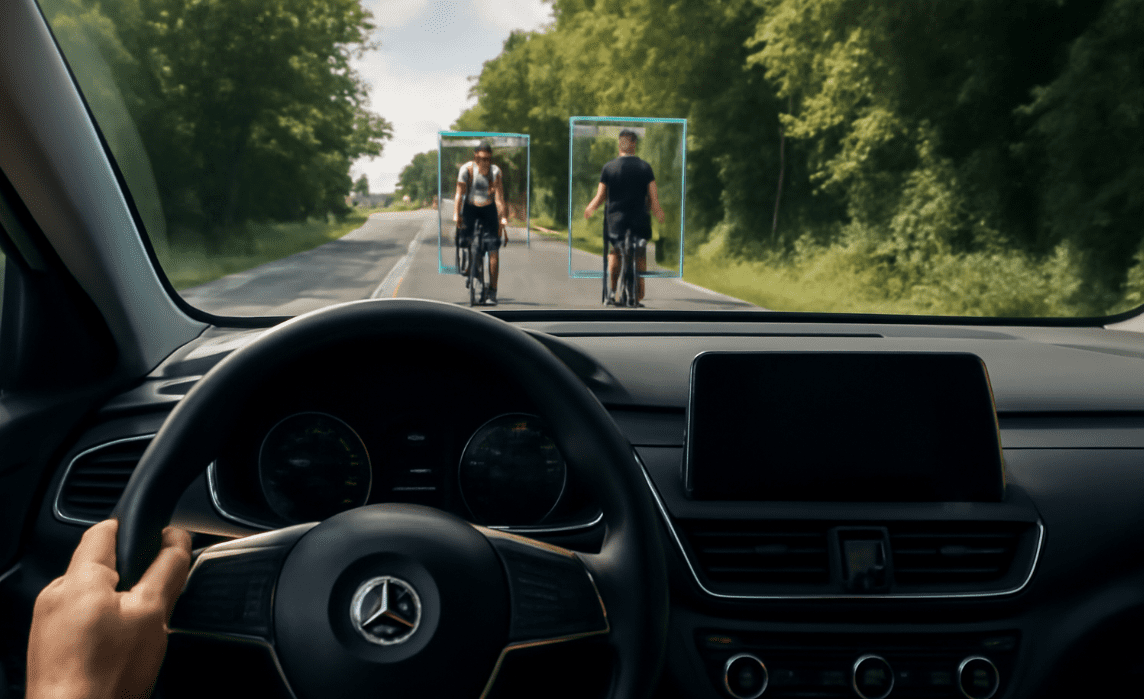
Cyclist Detection functions similarly to pedestrian detection but is tailored for fast-moving, narrow-profile road users. Cameras and radar systems identify cyclists approaching from behind or crossing the road.
This technology is crucial in preventing accidents during lane changes, right turns, or opening doors in traffic. Recognizing cyclists early prevents life-threatening collisions in shared road spaces.
Key Points:
- Detects cyclists in the vehicle’s path.
- Provides alerts and may trigger braking.
- Prevents lane-change and right-turn collisions.
- Essential for cities with high bicycle traffic.
- Improves safety in shared road environments.
5. Animal Detection
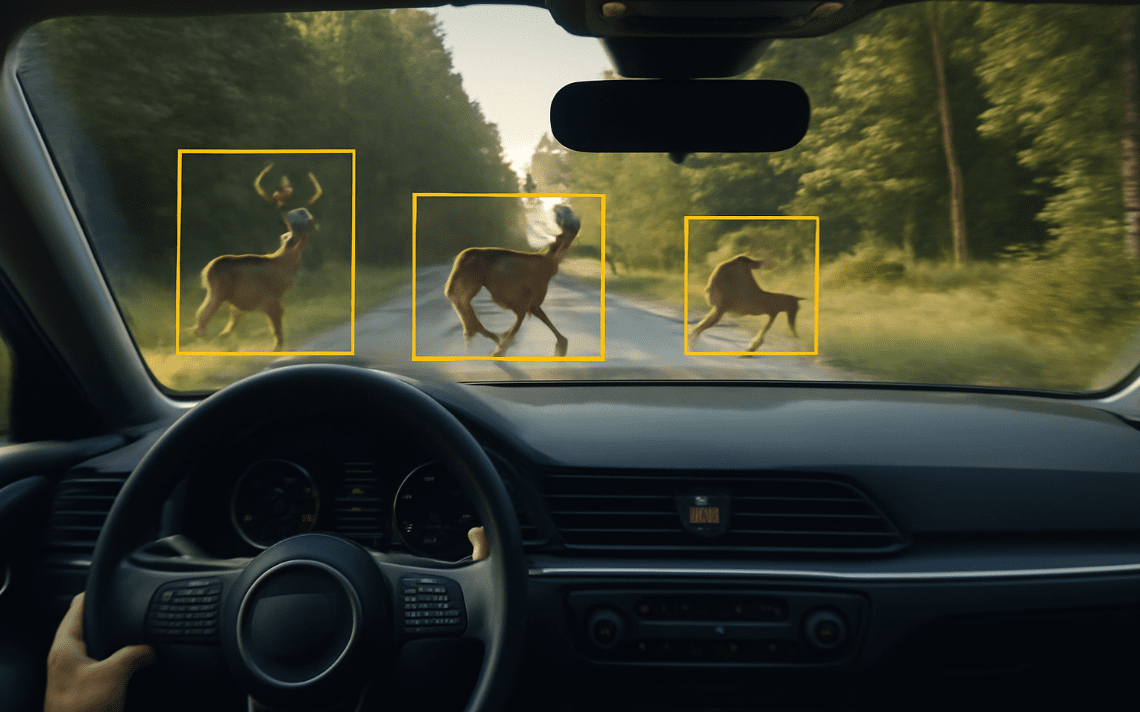
Animal Detection systems use infrared cameras, radar, or AI vision to recognize large animals such as deer, cattle, or dogs near the roadway. It warns the driver or activates AEB to reduce collision risk.
This feature is highly useful in rural or forested regions where animal crossings are common. Detecting animals earlier than human eyesight allows it to prevent serious accidents and damage.
Key Points:
- Detects large animals near or on the road.
- Uses radar and infrared for early detection.
- Provides visual and audible warnings.
- Can work with AEB to prevent collisions.
- Ideal for rural and forested highways.
6. Intelligent Headlight Control (Auto High Beam / Adaptive Lighting)

Intelligent Headlight Control automatically adjusts the vehicle’s headlights for optimal visibility without blinding other drivers. Auto High Beam switches between low and high beams depending on traffic, while Adaptive Lighting adjusts the beam angle based on curves and speed.
This system improves nighttime safety by maximizing visibility while being considerate of oncoming vehicles. It’s especially useful in highways, rural areas, and winding roads where visibility changes rapidly.
Key Points:
- Automatically switches between high and low beams.
- Adaptive lighting adjusts beam angle for curves and speed.
- Enhances visibility without dazzling other drivers.
- Reduces nighttime accidents.
- Increases comfort and safety on long drives.
F. Lateral & Longitudinal Control
1. Electronic Stability Control (ESC)
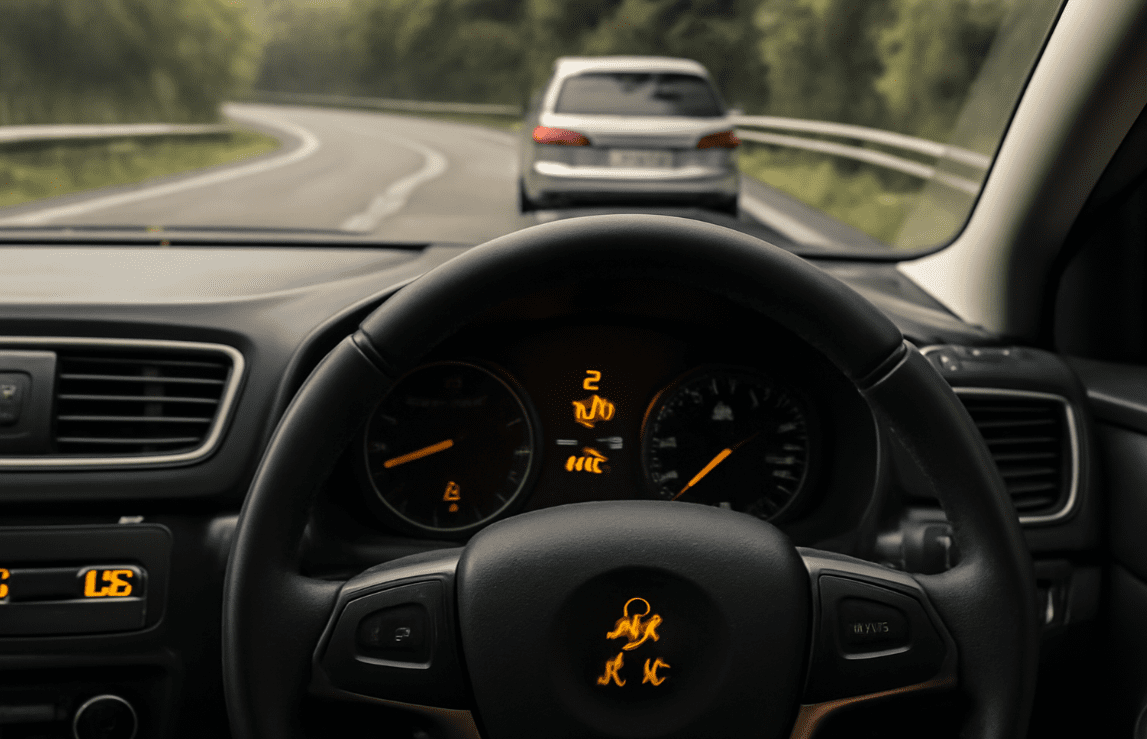
Electronic Stability Control (ESC) is a crucial safety feature that prevents skidding and loss of control during sudden maneuvers or slippery road conditions. It works by monitoring steering input, wheel speed, and vehicle direction. When the system detects instability, it applies braking to individual wheels and adjusts engine power to bring the vehicle back under control.
This feature is especially valuable in emergencies such as swerving to avoid obstacles or driving on wet or icy roads. ESC greatly reduces the risk of rollovers and side skids, making it one of the most important advancements in vehicle safety.
Key Points:
- Prevents skidding and loss of vehicle control.
- Monitors steering, wheel speed, and direction.
- Applies brakes selectively to stabilize the vehicle.
- Reduces rollover and side skid risks.
- Mandatory in most modern vehicles worldwide.
2. Traction Control System (TCS)
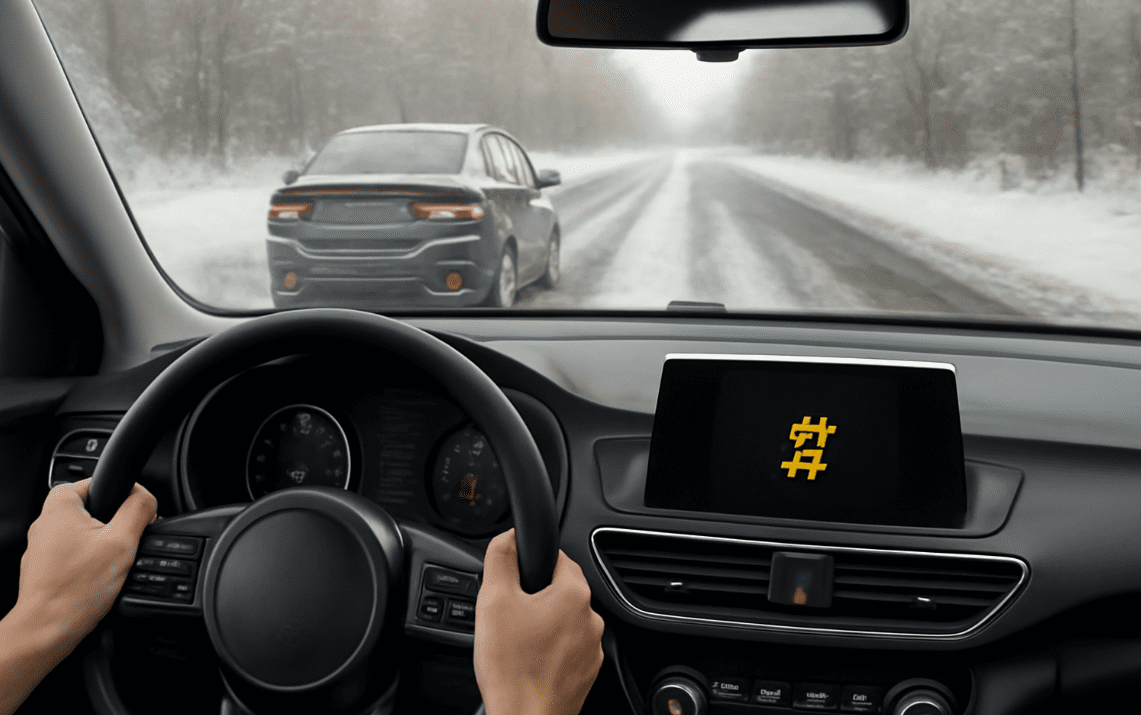
The Traction Control System (TCS) helps maintain grip on slippery surfaces such as wet roads, snow, or gravel. It monitors wheel spin during acceleration and adjusts engine power or applies brake pressure to ensure traction is maintained.
By preventing wheels from spinning excessively, TCS ensures smoother acceleration, better stability, and improved handling. It is particularly beneficial when starting on slippery surfaces or while taking sharp turns in poor weather.
Key Points:
- Prevents wheel spin during acceleration.
- Improves grip on wet, icy, or gravel surfaces.
- Adjusts engine power or applies braking.
- Enhances stability and control.
- Works closely with ABS and ESC.
3. Hill Start Assist
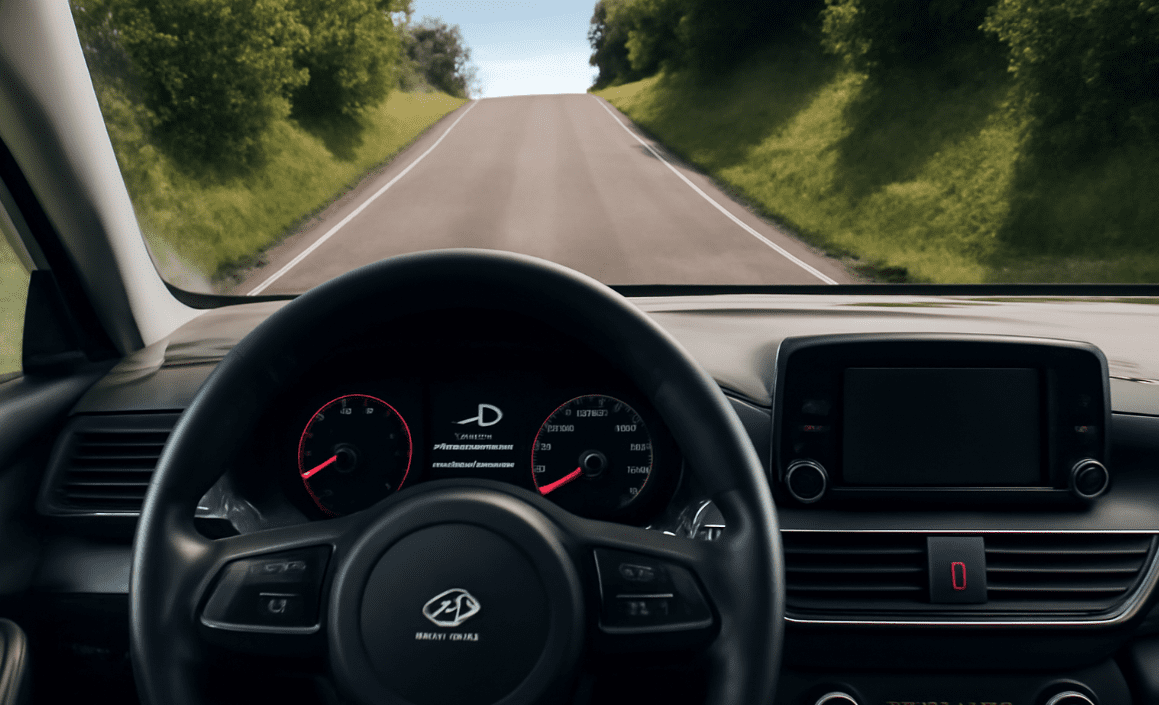
Hill Start Assist prevents vehicles from rolling backward when starting on an incline. When the driver moves their foot from the brake to the accelerator, the system temporarily holds brake pressure for a few seconds.
This makes driving on steep slopes much safer and more comfortable, especially in heavy traffic or for new drivers. It eliminates the fear of rolling back into another vehicle while starting uphill.
Key Points:
- Prevents rollback on steep inclines.
- Holds brake pressure for a few seconds.
- Helps drivers transition from brake to accelerator.
- Increases safety in uphill traffic conditions.
- Reduces stress for new or inexperienced drivers.
4. Downhill Assist Control

Downhill Assist Control automatically regulates vehicle speed while descending steep slopes. It uses braking and engine control to maintain a steady, safe speed without requiring constant brake input from the driver.
This system is particularly useful in off-road vehicles and hilly terrains, where manual braking could cause skidding or overheating of brakes. It enhances safety while allowing the driver to focus on steering.
Key Points:
- Controls speed during downhill driving.
- Prevents overuse of brakes on steep slopes.
- Maintains safe and steady descent speed.
- Especially useful for off-road driving.
- Reduces the risk of brake failure or skidding.
5. Brake Assist System (BAS)

Brake Assist System (BAS) detects emergency braking situations and provides additional braking force to reduce stopping distance. Often, drivers don’t apply enough pressure during panic stops—BAS compensates for this automatically.
By working alongside ABS and ESC, BAS ensures the maximum braking effect is achieved during emergencies. This can be the difference between avoiding a collision and having one.
Key Points:
- Detects emergency braking situations.
- Provides extra braking force automatically.
- Reduces stopping distance in panic stops.
- Works with ABS and ESC for maximum safety.
- Prevents accidents by improving braking response.
6. Regenerative Braking Coordination
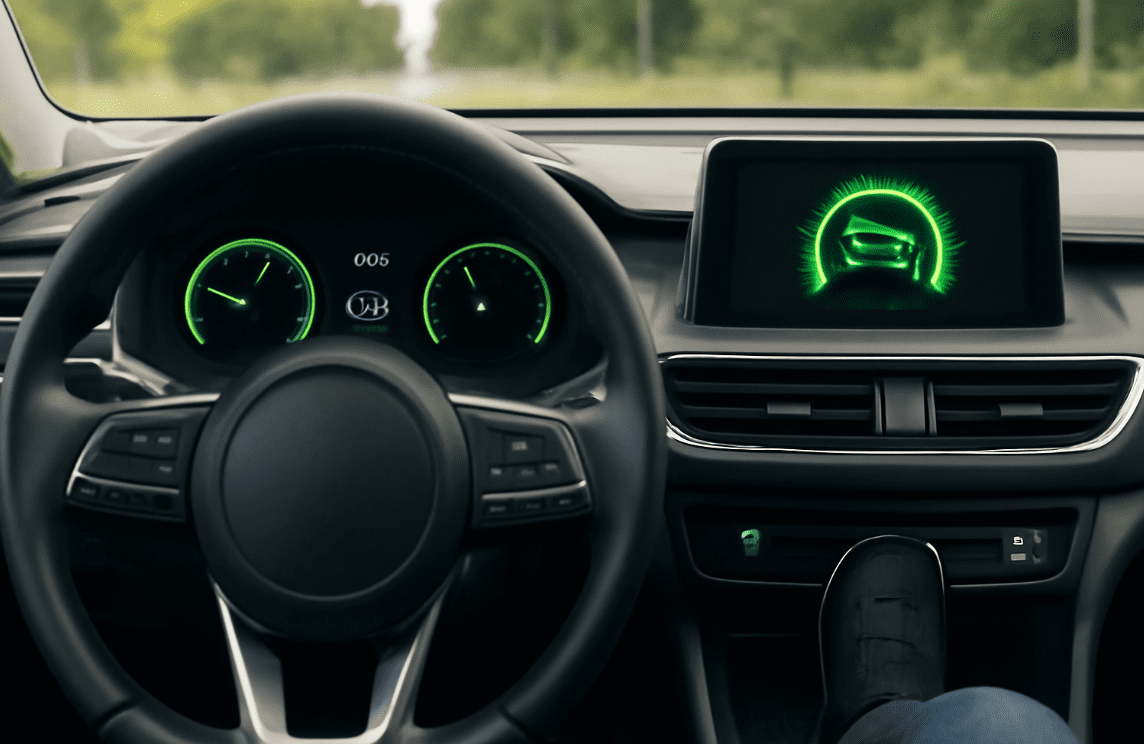
Regenerative Braking Coordination is mainly used in hybrid and electric vehicles. It recovers energy during braking by converting kinetic energy into electricity, which is stored in the battery.
Advanced systems coordinate regenerative braking with conventional braking to provide a smooth and consistent feel. This not only improves vehicle efficiency but also extends the driving range of electric vehicles.
Key Points:
- Recovers energy during braking in EVs/Hybrids.
- Converts kinetic energy into stored electricity.
- Coordinates with mechanical brakes for smooth control.
- Increases overall efficiency and driving range.
- Reduces brake wear and maintenance costs.
G. Surrounding Awareness & Communication
1. Radar-Based Obstacle Detection
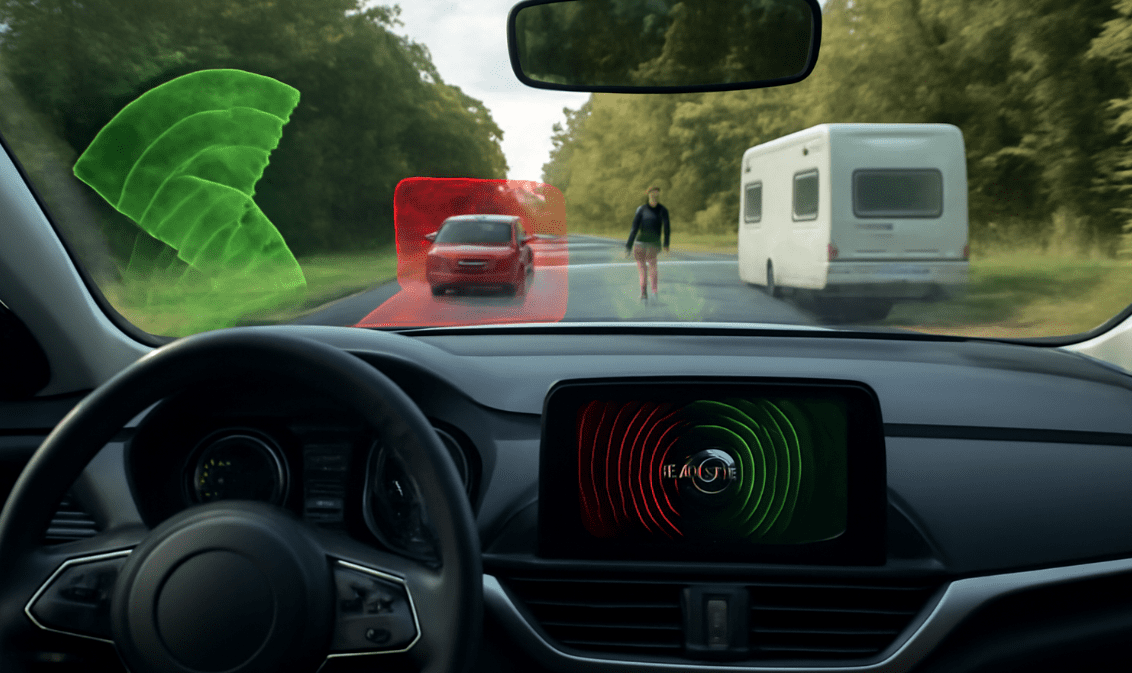
Radar-based obstacle detection uses radio waves to sense objects around the vehicle. It works effectively in poor visibility conditions such as fog, rain, or night driving, making it one of the most reliable ADAS technologies. By calculating the time taken for radio waves to reflect back from objects, radar systems estimate their speed and distance.
These systems are crucial for adaptive cruise control, collision avoidance, and blind spot detection. Modern radars also differentiate between moving and stationary objects, enhancing driving safety.
Key Points:
- Detects objects using radio waves.
- Works in all weather and lighting conditions.
- Supports adaptive cruise control and emergency braking.
- Identifies stationary and moving objects.
- Improves safety in blind spots and intersections.
2. Lidar-Based Environment Mapping
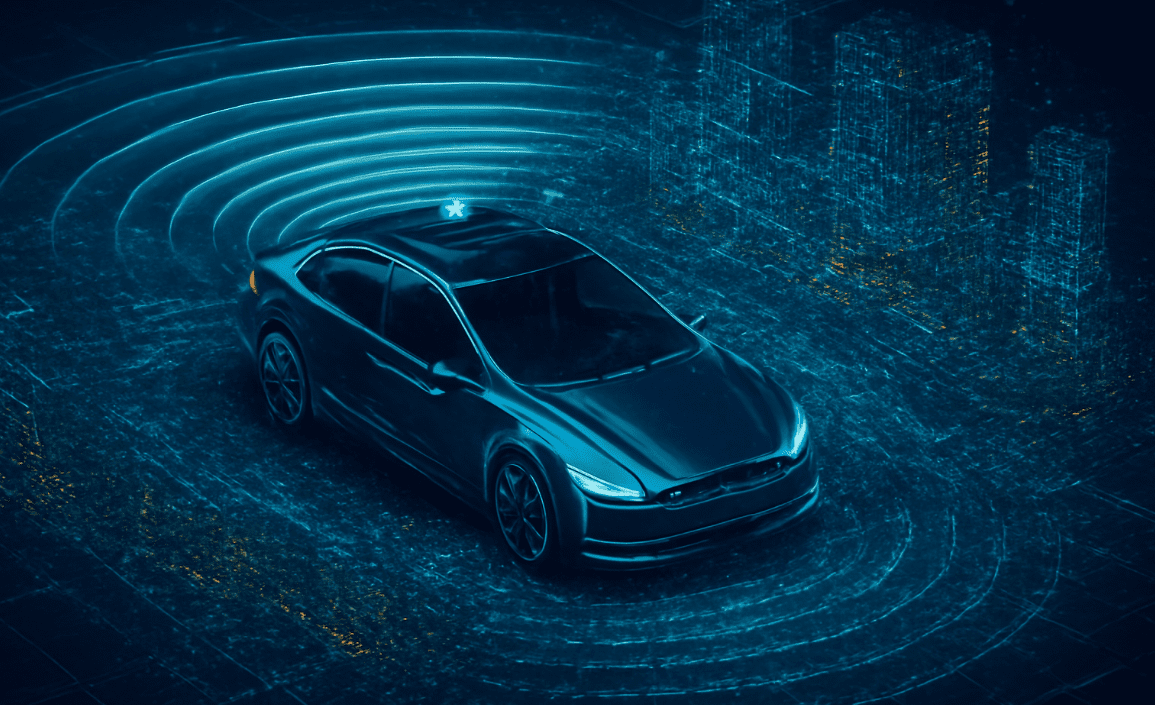
LiDAR (Light Detection and Ranging) uses laser beams to create a 3D map of the environment. It provides precise depth perception, making it useful for high-level autonomous driving. Unlike radar, LiDAR offers high-resolution object recognition, helping vehicles understand lane markings, pedestrians, and road edges.
Although more expensive and sensitive to weather conditions, LiDAR is often combined with radar and cameras for better accuracy. It helps vehicles make smarter real-time driving decisions in complex urban settings.
Key Points:
- Uses laser beams for precise environment scanning.
- Creates high-resolution 3D maps of surroundings.
- Detects lanes, pedestrians, and vehicles.
- Limited performance in heavy rain or fog.
- Essential for autonomous navigation systems.
3. Vehicle-to-Vehicle Communication (V2V)
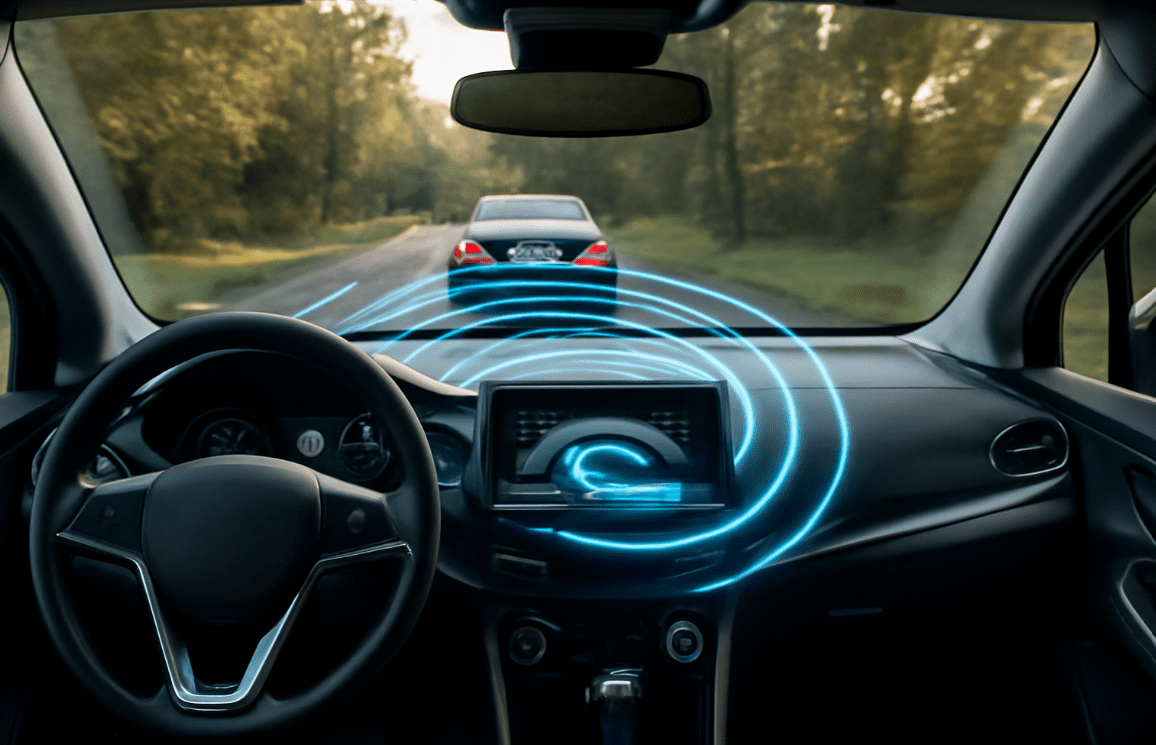
V2V allows cars to communicate wirelessly with each other, sharing critical information like speed, location, and braking status. This enables vehicles to anticipate potential collisions before they occur. For example, if a car suddenly brakes ahead, following vehicles are alerted instantly, even if the driver cannot see the obstacle.
This communication reduces accidents, improves traffic flow, and enhances cooperative driving. It’s a key component in developing connected and automated transportation systems.
Key Points:
- Enables wireless communication between vehicles.
- Provides early warnings about collisions or sudden braking.
- Improves road safety and driving efficiency.
- Reduces traffic congestion by better coordination.
- Supports cooperative driving and platooning.
4. Vehicle-to-Infrastructure Communication (V2I)
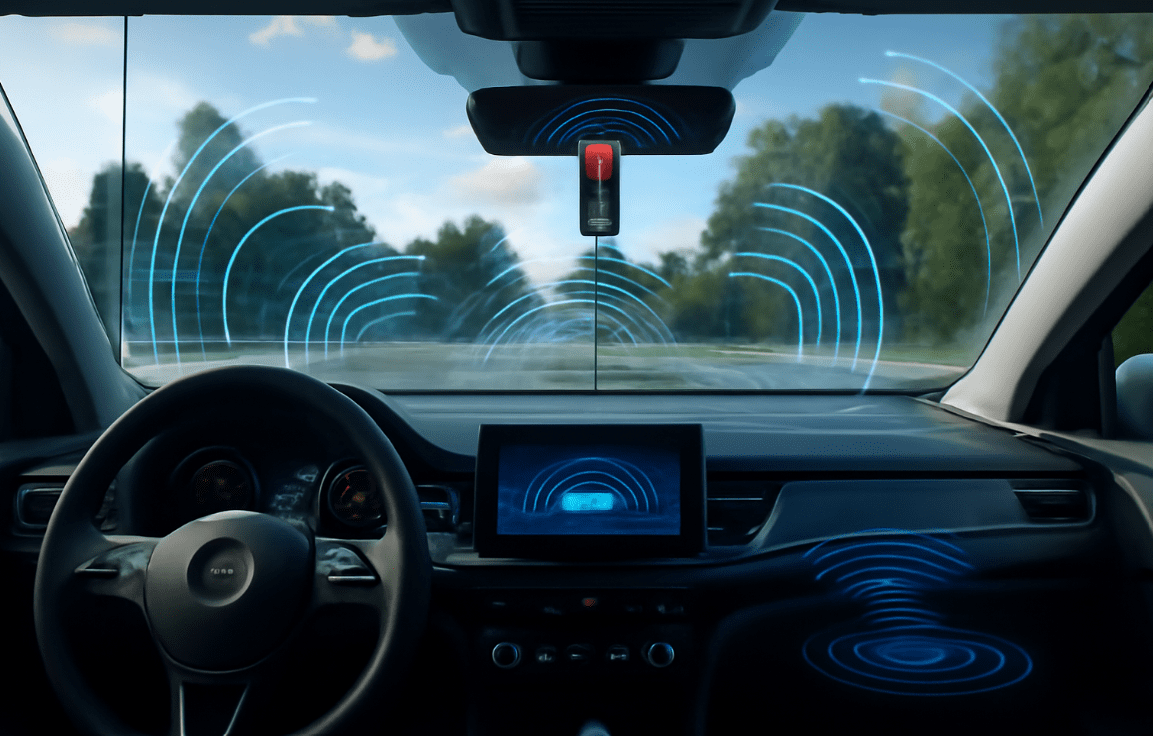
V2I enables vehicles to interact with road infrastructure like traffic signals, toll booths, and road sensors. For example, cars can receive alerts about upcoming red lights, speed limits, or construction zones. This helps drivers make informed decisions, reducing risks and delays.
In smart cities, V2I will play a crucial role in synchronizing traffic flow, reducing congestion, and optimizing fuel efficiency. It bridges the gap between vehicles and smart infrastructure systems.
Key Points:
- Connects vehicles with traffic signals and road sensors.
- Provides updates on road conditions and hazards.
- Enhances fuel efficiency by optimizing traffic flow.
- Warns about road construction and lane closures.
- Supports smart city and intelligent transportation systems.
5. Vehicle-to-Everything Communication (V2X)
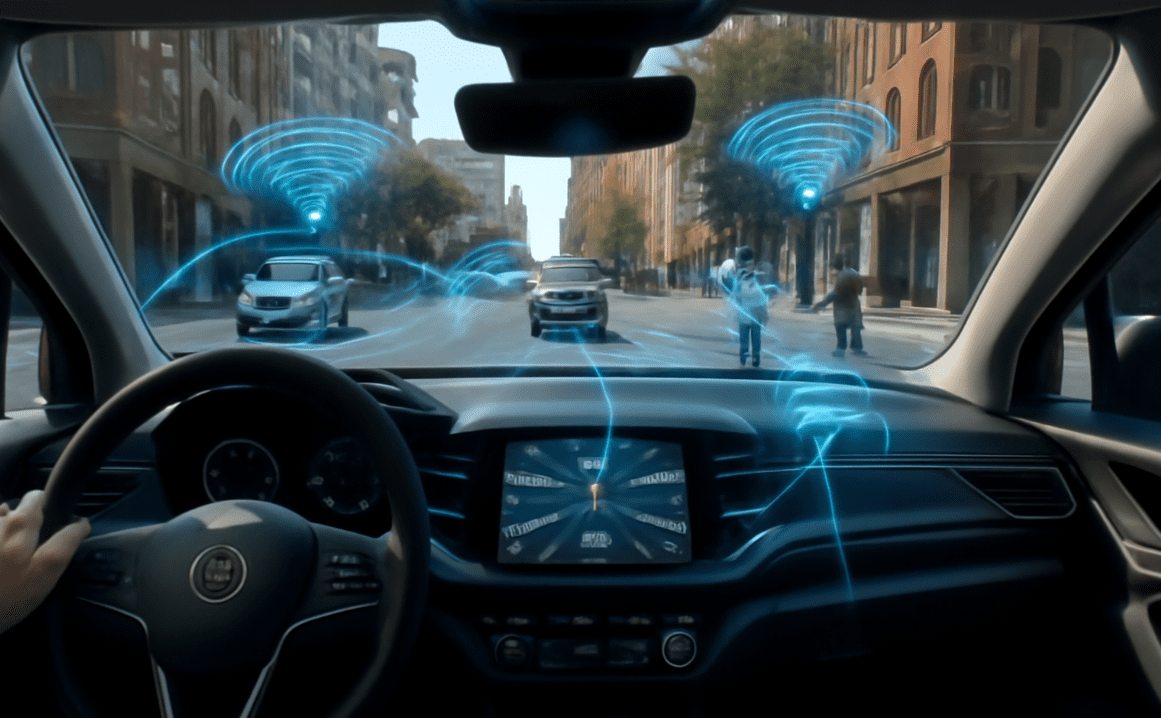
V2X is the most advanced form of communication, combining V2V and V2I with interactions involving pedestrians, cyclists, and networks. It ensures vehicles are aware of their surroundings beyond line-of-sight. For instance, cars can detect an approaching ambulance, even before hearing the siren.
This technology is vital for achieving full autonomous driving and smart mobility ecosystems. V2X reduces accidents, enhances urban mobility, and prepares transportation for future intelligent systems.
Key Points:
- Connects vehicles with everything in the ecosystem.
- Improves safety for pedestrians and cyclists.
- Detects emergency vehicles early for faster response.
- Enables real-time data sharing for autonomous cars.
- Forms the backbone of future smart mobility systems.
H. Advanced Features (Towards Autonomy)
1. Highway Driving Assist (HDA)
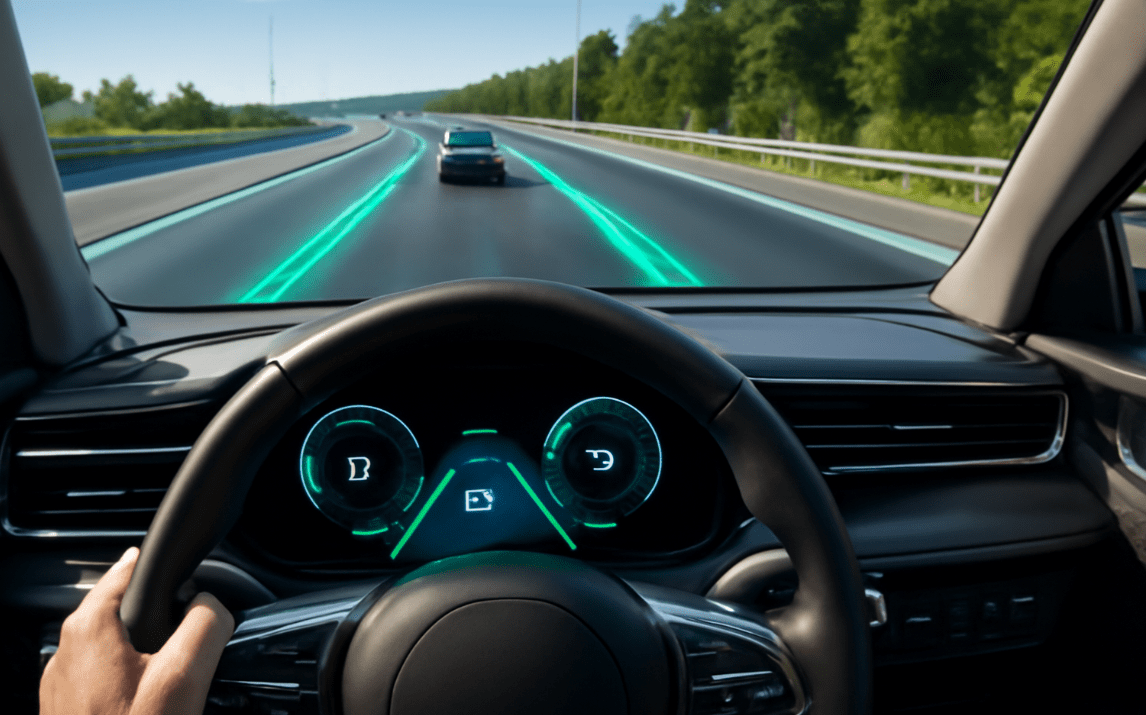
Highway Driving Assist combines adaptive cruise control, lane centering, and navigation data to provide semi-automated driving on highways. It automatically adjusts the vehicle’s speed based on traffic flow while keeping the car centered in its lane. This reduces driver fatigue on long journeys and ensures safer highway navigation.
The system uses sensors, radars, and cameras to monitor surrounding vehicles and road conditions. Some advanced versions integrate map data to anticipate curves or exits. While drivers must remain attentive, HDA marks an important step toward fully autonomous highway travel.
Key Points:
- Integrates adaptive cruise control and lane centering.
- Maintains safe speed and distance in highway traffic.
- Reduces driver fatigue on long journeys.
- Uses cameras, radars, and navigation data.
- Provides a semi-automated driving experience.
2. Lane Change Assist (LCA)
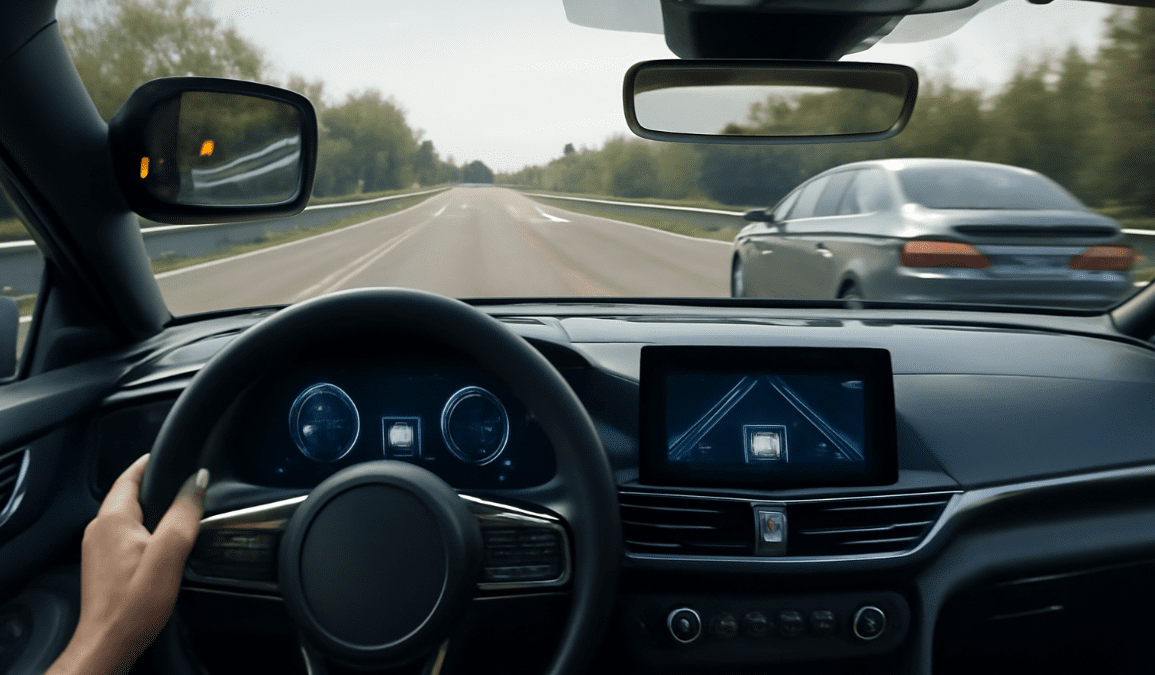
Lane Change Assist helps drivers switch lanes more safely by monitoring blind spots and traffic in adjacent lanes. The system alerts the driver when it’s unsafe to change lanes and, in some vehicles, can automatically perform the lane change once the indicator is engaged.
This feature relies on radar sensors and cameras placed around the vehicle. By preventing risky maneuvers, LCA reduces accidents caused by human error, particularly on multi-lane roads and highways.
Key Points:
- Detects vehicles in adjacent lanes and blind spots.
- Alerts the driver when a lane change is unsafe.
- Can perform automatic lane changes in some systems.
- Uses radar and cameras for real-time monitoring.
- Enhances safety during overtaking and merging.
3. Overtaking Assistance
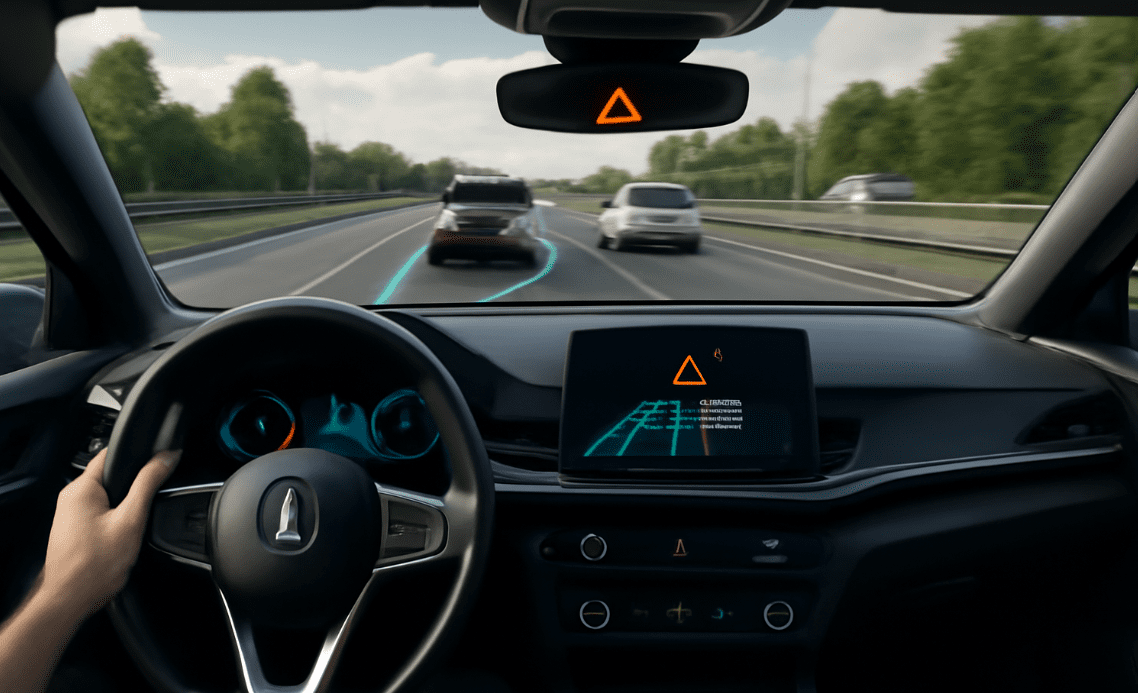
Overtaking Assistance supports drivers when passing slower vehicles. It evaluates road conditions, speed of oncoming traffic, and safe distances before suggesting or executing overtaking maneuvers. In advanced systems, the car may initiate overtaking when the driver signals, provided conditions are safe.
This system improves safety by minimizing human misjudgments during high-risk situations. It is particularly useful on highways and two-lane roads where overtaking requires precise timing and awareness of multiple variables.
Key Points:
- Evaluates road and traffic conditions before overtaking.
- Suggests or executes safe overtaking maneuvers.
- Reduces risk of collisions with oncoming traffic.
- Uses radar, camera, and map data for decision-making.
- Enhances driver confidence during complex maneuvers.
4. Platooning (Truck Convoy Driving)
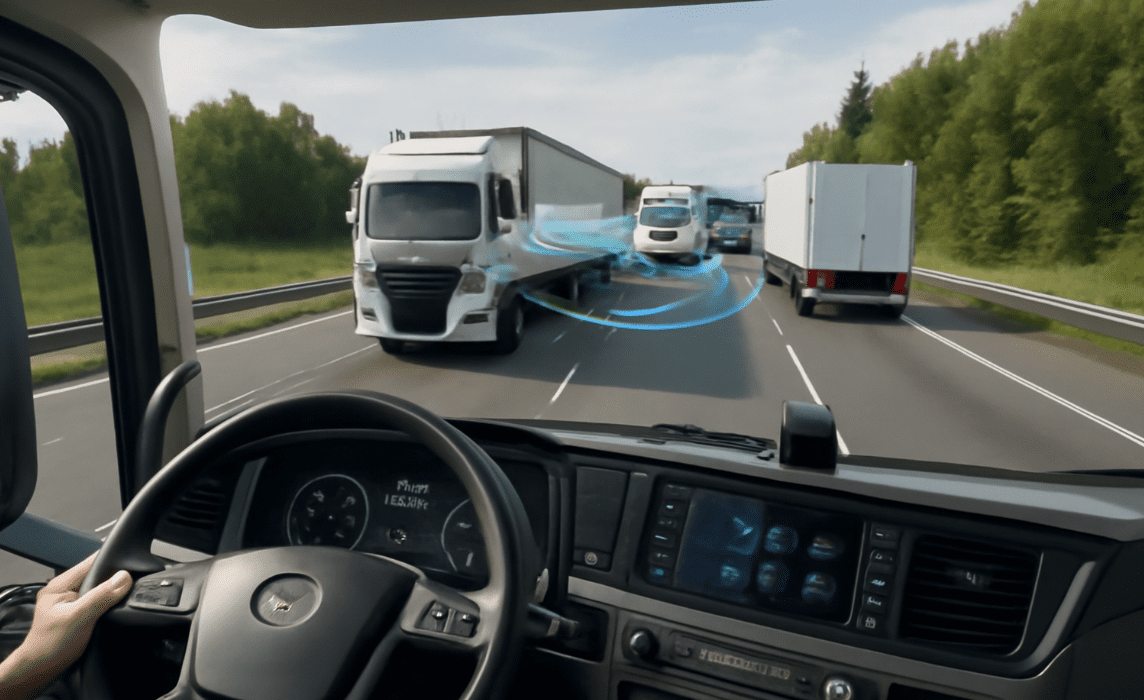
Platooning allows multiple trucks to travel in a convoy with minimal gaps, connected via V2V communication. The lead truck controls speed and braking, while following trucks automatically adjust to maintain synchronization. This reduces aerodynamic drag, leading to significant fuel savings.
Platooning also improves traffic flow and safety by reducing human error and reaction time. Although mainly developed for heavy trucks, the concept could extend to passenger cars in future smart mobility systems.
Key Points:
- Enables trucks to drive in close convoys.
- Uses V2V communication for synchronized control.
- Reduces aerodynamic drag and fuel consumption.
- Improves road safety by minimizing reaction delays.
- Supports future intelligent transport systems.
5. Predictive Cruise Control (using maps & GPS)
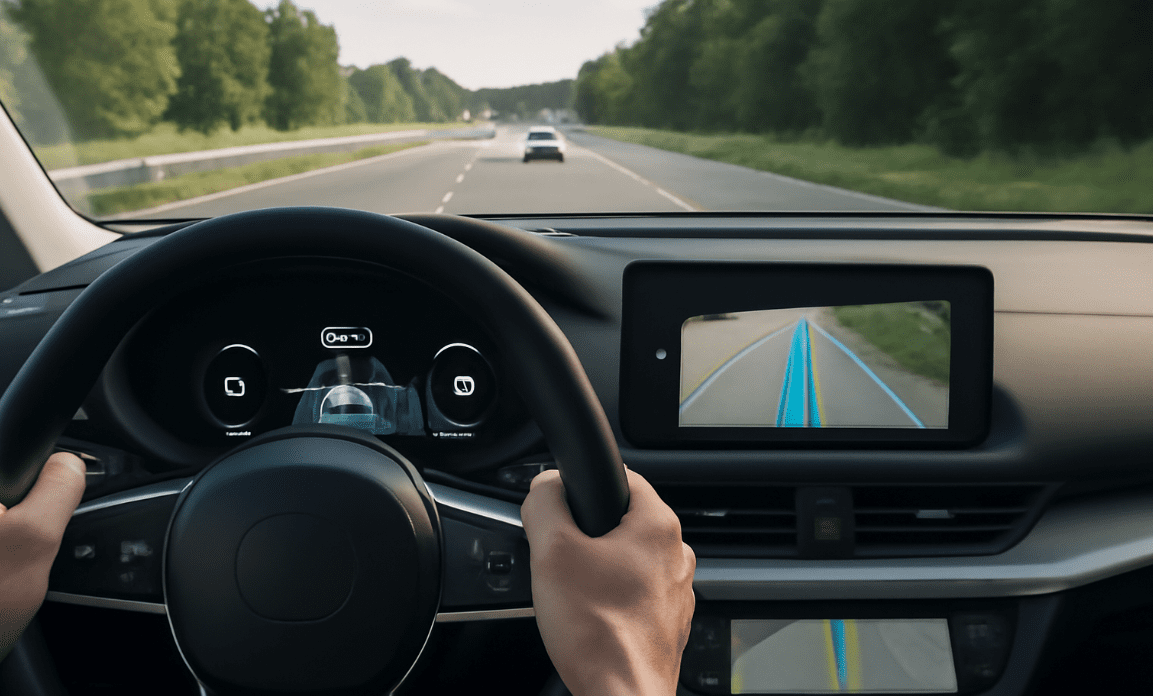
Predictive Cruise Control enhances traditional adaptive cruise control by integrating map and GPS data. It anticipates road conditions such as curves, slopes, and speed limits, adjusting vehicle speed proactively rather than reactively.
This makes driving smoother and more fuel-efficient. For example, the system can slow down before a sharp turn or increase efficiency by optimizing gear shifts before an uphill climb. It combines navigation intelligence with vehicle control for advanced automation.
Key Points:
- Integrates map and GPS data with cruise control.
- Anticipates curves, slopes, and speed limits.
- Provides smoother and more fuel-efficient driving.
- Adjusts speed proactively for road conditions.
- Enhances comfort and driving confidence.
6. Self-Learning ADAS (AI-based adaptation to driver behavior)
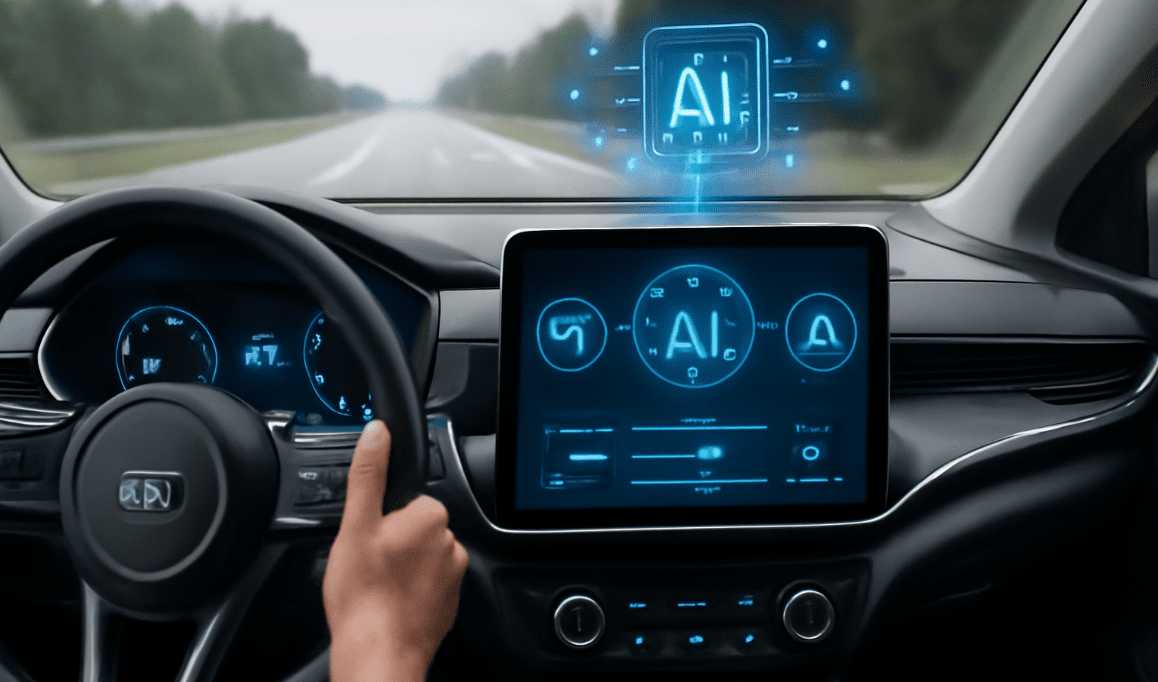
Self-learning ADAS uses artificial intelligence to adapt to a driver’s individual behavior and preferences. Over time, the system learns how a driver accelerates, brakes, and maneuvers, then adjusts assistance features accordingly for a personalized driving experience.
This makes ADAS more intuitive and user-friendly. By blending AI with real-world driving data, the system improves efficiency, safety, and comfort. It represents the transition from fixed, rule-based assistance to intelligent, adaptive support.
Key Points:
- Uses AI to learn driver habits and preferences.
- Adapt assistance features for personalized driving.
- Enhances comfort and reduces unnecessary interventions.
- Learns from real-world driving data continuously.
- Bridges the gap between human and autonomous driving.
Conclusion
In today’s rapidly evolving automotive landscape, Advanced Driver Assistance Systems (ADAS) are no longer just additional features found in premium vehicles — they are becoming the standard foundation of modern mobility. These technologies are actively reducing the number of road accidents, saving countless lives, and boosting driver confidence by offering constant support during everyday journeys. The integration of ADAS into vehicles of all segments shows how safety and intelligence are moving from luxury to necessity.
Looking ahead, ADAS will remain the cornerstone of connected and autonomous mobility. By seamlessly combining hardware such as sensors, radars, lidars, and cameras with intelligent software powered by artificial intelligence and machine learning, vehicles are transforming into reliable co-pilots. These systems continuously monitor the environment, interpret real-time data, and assist the driver in making faster and safer decisions. Such innovations not only enhance road safety but also reduce human error, which is a leading cause of traffic accidents worldwide.
The future of driving is being redefined by ADAS. It is not only about reaching destinations but about ensuring that every trip is safer, more efficient, and more comfortable. With increasing advancements, ADAS is bridging the gap between human-driven cars and fully autonomous vehicles. It paves the way for a future where intelligent mobility solutions are accessible to all, creating a safer transportation ecosystem and setting the stage for the next generation of mobility.
This was about “”. Thank you for reading.
Also, read:
- India’s GaN Chip Breakthrough: Why Gallium Nitride Could Shape the Future of Defense Electronics
- India’s Chip Era Begins: A New Chapter in Semiconductor Manufacturing
- FlexRay Protocol – Deep Visual Technical Guide
- Top 50 AI-Based Projects for Electronics Engineers
- India AI Impact Summit 2026: The Shift from AI Hype to AI Utility
- Python Isn’t Running Your AI — C++ and CUDA Are!
- UDS (Unified Diagnostic Services) — Deep Visual Technical Guide
- Automotive Ethernet — Deep Visual Technical Guide