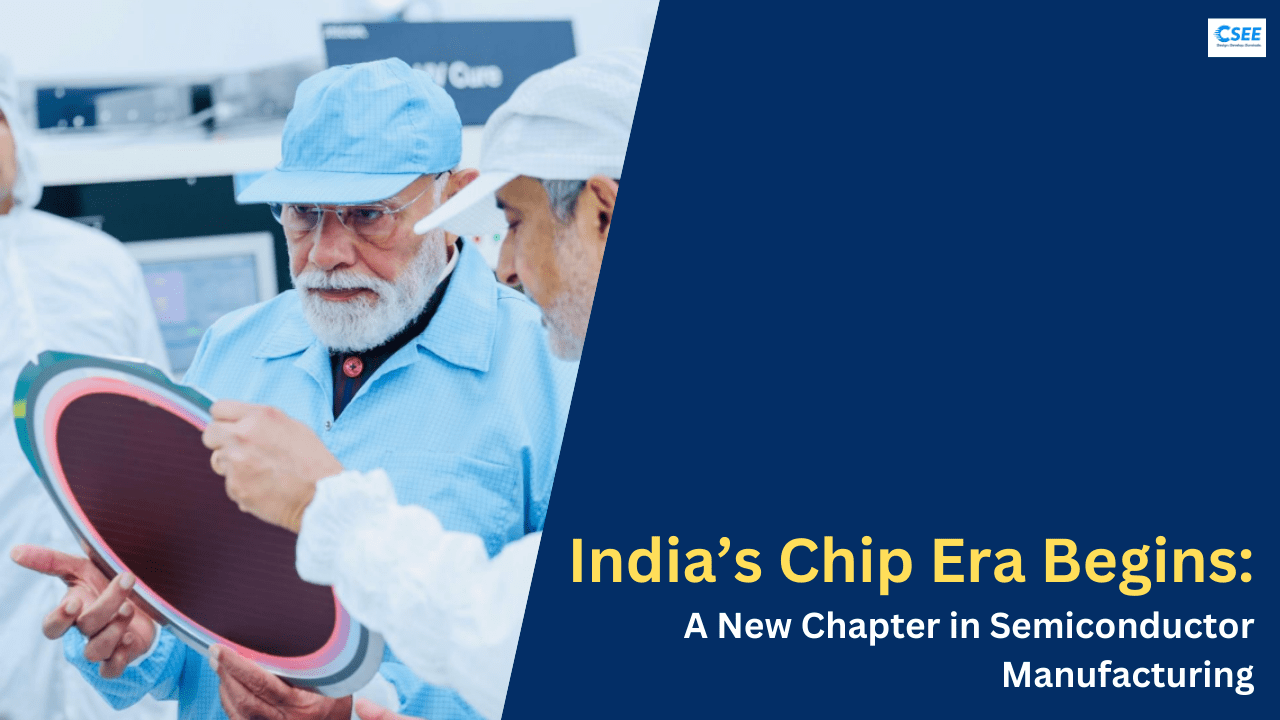
While other countries are focused on geopolitical tensions and conflicts, India is building technology and shaping the future. The inauguration of Micron Technology’s semiconductor facility in Gujarat by Prime Minister Narendra Modi marks a historic milestone in India’s industrial journey. For decades, India has been known as a global software hub, contributing engineers, developers, and IT services to the world. Now, the country is stepping firmly into hardware manufacturing — specifically, semiconductor assembly and testing — which is one of the most critical sectors in the global economy.
This development is not just about a factory opening. It represents a shift in India’s strategic vision. With a total investment of approximately ₹22,500 crore (around $2.75 billion), this facility signals confidence in India’s manufacturing ecosystem, workforce, policy framework, and long-term economic stability. It also marks India’s entry into the global semiconductor supply chain in a more direct and production-oriented role.
Understanding the Semiconductor Industry
Semiconductors are the foundation of modern electronics. From smartphones and laptops to electric vehicles, medical devices, artificial intelligence systems, and satellites — almost every modern device depends on semiconductor chips. These tiny components act as the brain of electronic systems, processing data and controlling operations.
The semiconductor industry is highly complex and capital-intensive. It involves multiple stages:
- Chip design
- Wafer fabrication
- Assembly
- Testing
- Packaging
India has traditionally been strong in chip design, with many global companies running design centers in cities like Bengaluru, Hyderabad, and Noida. However, large-scale manufacturing and packaging facilities were mostly located in countries such as Taiwan, South Korea, China, and the United States. The launch of Micron’s facility in Gujarat changes that narrative.
What the Micron Facility Does
The facility in Gujarat is an ATMP unit — Assembly, Testing, Marking, and Packaging. This means that while the silicon wafers may be fabricated elsewhere, the final critical steps of preparing the chips for commercial use are done in India.
At this plant:
- Memory wafers are assembled into usable chip modules.
- Chips undergo rigorous electrical and performance testing.
- Products are marked and labeled according to specifications.
- Final packaging ensures chips are ready for integration into devices.
These memory chips include DRAM and NAND products, which are essential for data storage and processing. They are widely used in:
- Smartphones
- Laptops and PCs
- Data centers
- Artificial Intelligence systems
- Automotive electronics
- Industrial equipment
By handling these processes locally, India becomes part of the value chain rather than only a consumer market.
Investment Details and Infrastructure
The total project investment is approximately ₹22,500 crore ($2.75 billion). This includes:
- Construction of advanced cleanroom facilities
- High-end semiconductor packaging equipment
- Automated testing systems
- Utility infrastructure for power, water, and air handling
- Logistics and export capabilities
The plant includes a massive cleanroom environment — critical for semiconductor operations — where dust and contamination are tightly controlled. Semiconductor manufacturing requires extremely precise conditions because even microscopic particles can damage chips.
This level of investment demonstrates long-term commitment. Semiconductor facilities are not short-term ventures; they are multi-decade strategic assets.
Job Creation and Economic Impact
One of the most important benefits of this project is employment generation.
The facility is expected to create:
- Around 5,000 direct jobs
- Nearly 15,000 indirect jobs
Direct jobs include engineers, technicians, operators, quality control specialists, and administrative staff. Indirect jobs include roles in supply chain, logistics, maintenance, construction, support services, and local businesses.
Beyond job numbers, the real impact lies in skill development. Semiconductor manufacturing requires highly trained professionals in:
- Electrical engineering
- Electronics engineering
- Materials science
- Mechanical systems
- Automation
- Quality control
This will encourage universities and technical institutes to align their curriculum with semiconductor manufacturing needs.
Role of the India Semiconductor Mission
This project is part of the broader India Semiconductor Mission (ISM), which aims to establish India as a global semiconductor hub. The government has announced financial incentives and support packages to attract semiconductor investments.
The India Semiconductor Mission focuses on:
- Financial incentives for chip manufacturing
- Support for packaging and testing units
- Encouraging domestic startups in semiconductor design
- Building supply chain ecosystems
- Creating semiconductor clusters
By combining policy support with global partnerships, India aims to reduce its dependency on imports and strengthen supply chain resilience.
Strategic Importance in a Global Context
The semiconductor industry faced a major crisis during the COVID-19 pandemic when chip shortages disrupted automobile production, electronics manufacturing, and global trade. This exposed the vulnerability of concentrated manufacturing hubs.
Countries worldwide began prioritizing semiconductor self-reliance. The United States, European Union, Japan, and others launched large subsidy programs. India’s move aligns with this global shift.
By hosting semiconductor facilities, India:
- Reduces import dependency
- Strengthens national security
- Attracts global supply chains
- Improves trade balance
- Enhances technological independence
The Gujarat facility is therefore both an economic and strategic move.
Impact on AI, Automotive, and Digital India
Semiconductors are critical for emerging technologies:
01. Artificial Intelligence
AI systems require massive data processing capabilities. Memory chips like DRAM and NAND are essential for AI training and inference.
02. Automotive Electronics
Modern vehicles use hundreds of chips for engine control, infotainment, safety systems, and electric vehicle battery management.
03. Data Centers
Cloud computing and digital services depend on high-performance memory modules.
04. Digital Infrastructure
India’s push for digital payments, 5G, IoT, and smart cities depends on semiconductor availability.
By participating in this ecosystem, India ensures a stable supply for its growing technology demands.
Strengthening the Supply Chain Ecosystem
A semiconductor plant does not operate in isolation. It creates an ecosystem of:
- Raw material suppliers
- Equipment vendors
- Logistics companies
- Research institutions
- Skill development centers
Over time, this ecosystem attracts additional investments. Companies prefer to set up near existing semiconductor hubs because shared infrastructure reduces costs and risks.
This could lead to more semiconductor companies establishing facilities in India.
Challenges Ahead
While this milestone is significant, challenges remain:
- Semiconductor fabrication (wafer manufacturing) is still limited in India.
- High capital requirements make scaling complex.
- Skilled workforce supply must keep pace with industry growth.
- Global competition remains strong.
However, starting with assembly and testing is a practical and strategic first step.
Long-Term Vision
India’s semiconductor strategy is not about overnight transformation. It is a phased approach:
- Establish ATMP facilities
- Build supply chain capabilities
- Develop local design and manufacturing ecosystem
- Move toward advanced fabrication plants
This long-term vision aligns with India’s broader goals of becoming a $5 trillion economy and a global manufacturing powerhouse.
Conclusion: A Defining Moment for India
The inauguration of Micron’s semiconductor facility in Gujarat is more than a factory launch. It symbolizes India’s ambition, policy confidence, and industrial capability. With a ₹22,500 crore investment, thousands of jobs, and integration into the global semiconductor supply chain, India has taken a decisive step toward technological self-reliance.
While other nations navigate conflict and uncertainty, India is investing in innovation and infrastructure. The country is moving from being a service-driven economy to a manufacturing-driven technology power.
This is just the beginning. The chip era in India has officially started — and its impact will shape the nation’s economic and technological future for decades to come.
Thanks for reading.
Also, read:
- Why Qualcomm Is Entering the Automotive Industry
- The Memory Problem Behind AI Chips
- Why EUV Lithography Took Decades to Develop
- How Intel Lost Its Semiconductor Dominance
- Want To Crack Top Embedded Companies? Build These LLM Projects
- Why The Entire AI Industry Needs ASML
- CPU vs GPU vs NPU: Who Handles What?
- From Beginner to NVIDIA Data Analyst: A 6-Month Roadmap