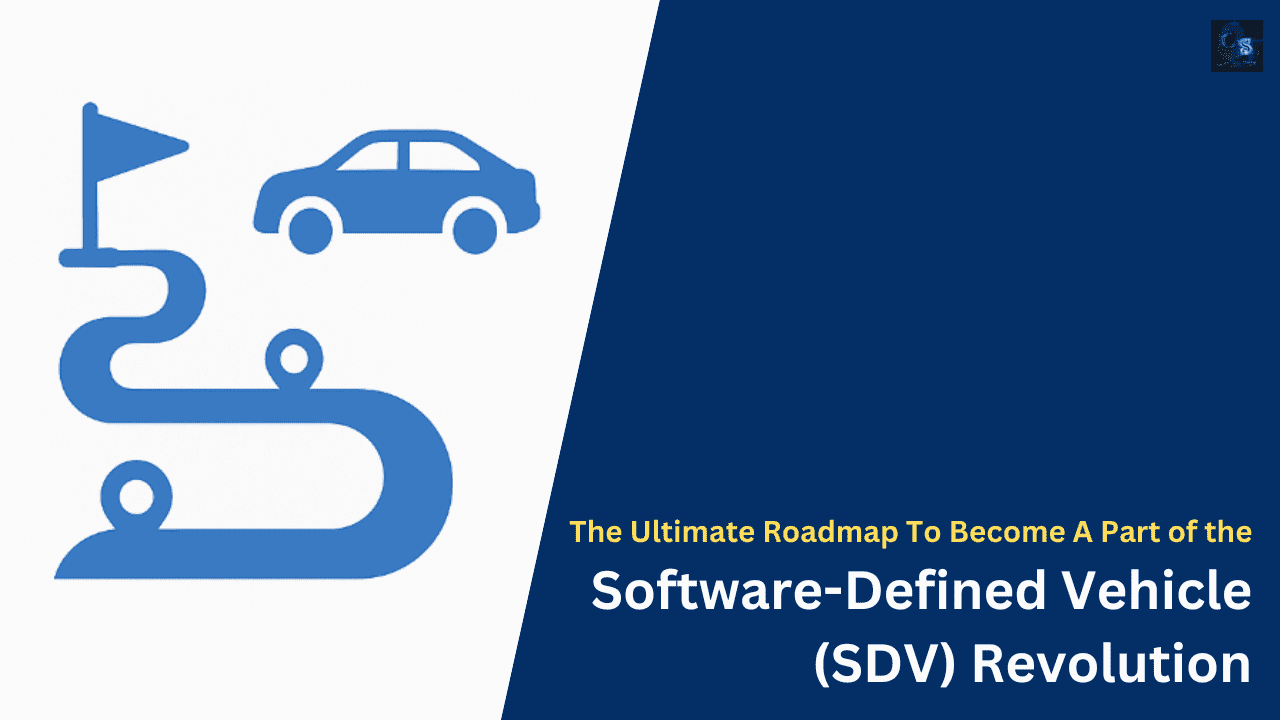
Hello guys, welcome back to my blog. In this article, I will discuss a roadmap to become a part of the software-defined vehicle (SDV) revolution, the skills required, online resources of SDVs, and future trends.
Ask questions if you have any electrical, electronics, or computer science doubts. You can also catch me on Instagram – CS Electrical & Electronics
- Computer Vision In ADAS: From Lane Keeping To Collision Avoidance
- OBD-II to UDS Migration: Benefits And Compatibility Issues
- CAN vs CAN-FD vs Ethernet: Choosing the Right Automotive Network
Roadmap To Become A Part of the Software-Defined Vehicle (SDV) Revolution
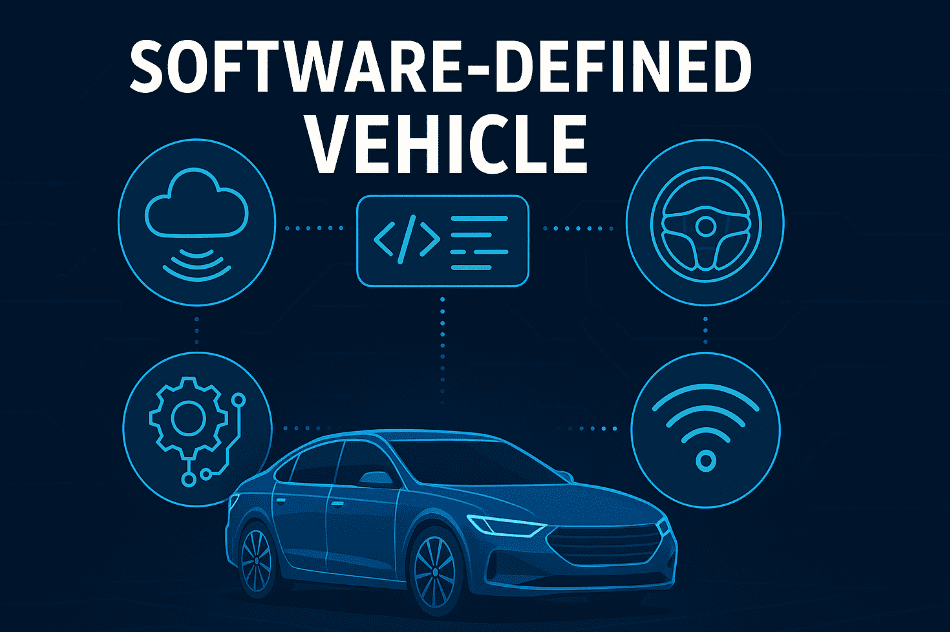
The automotive industry is no longer what it used to be. A new revolution is underway that is reshaping cars into intelligent, connected, and upgradable machines. This evolution has led to the emergence of what we now call “Software-Defined Vehicles” (SDVs). Unlike traditional vehicles, where hardware dictated functionality, SDVs rely heavily on software to define their behavior, upgrade their performance, and introduce new features without needing physical modifications.
From real-time safety updates to autonomous navigation, over-the-air updates to in-car entertainment enhancements, SDVs are ushering in an entirely new experience of what it means to own and operate a vehicle. Companies like Tesla, Mercedes-Benz, Volkswagen, and newer players like NIO and Rivian are embracing this shift, hiring thousands of engineers who understand the fusion of software with mechanical systems.
If you’re a student, a fresher, or a working professional looking to enter this domain, this guide will help you navigate the path from zero to expert in the world of software-defined vehicles. This roadmap provides deep insights into the required education, technical skills, tools, certifications, projects, and future opportunities.
What Is a Software-Defined Vehicle (SDV)?
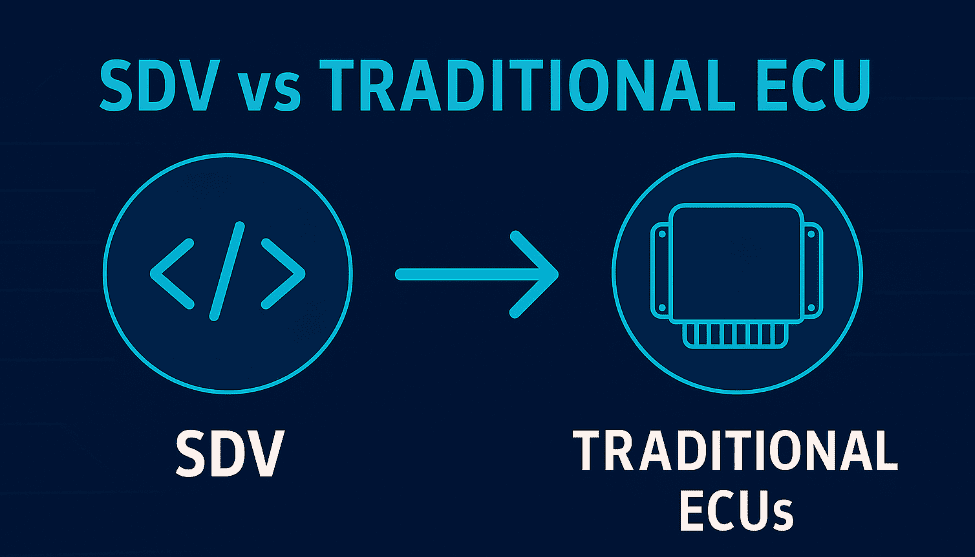
A software-defined vehicle is one where the majority of its functions—from engine control and safety features to infotainment and driver assistance—are controlled by software. In a traditional car, features are hardcoded into hardware. Once the vehicle leaves the factory, it cannot be upgraded easily. In contrast, an SDV can receive remote updates, fix bugs, add new features, and enhance performance through code.
Key Characteristics of SDVs:
- Over-the-Air (OTA) Updates: Update software remotely like smartphones.
- Centralized Computing Architecture: Replaces dozens of small ECUs with centralized, powerful computing platforms.
- Service-Oriented Architecture (SOA): Software is divided into services that can be updated or reused.
- Modularity: Hardware and software are loosely coupled for easier scalability.
- Cloud Integration: Vehicles interact with cloud systems for real-time data, analytics, and services.
Technologies Enabling SDVs:
- Embedded Linux, QNX, and Android Automotive
- AUTOSAR Classic and Adaptive platforms
- Ethernet, CAN, LIN, and FlexRay communication protocols
- Real-time Operating Systems (RTOS)
- AI & Machine Learning for perception and decision-making
- Functional Safety (ISO 26262) and Cybersecurity (ISO/SAE 21434)
Educational Background & Knowledge Foundation
Recommended Academic Path:
To enter the SDV industry, a background in the following streams is ideal:
- Electronics & Communication Engineering
- Electrical & Electronics Engineering
- Computer Science Engineering
- Instrumentation & Control Engineering
- Mechatronics Engineering
Key Subjects You Must Learn:
- Embedded Systems: Understanding microcontrollers, memory management, and firmware development.
- Data Structures and Algorithms: Strong coding fundamentals are essential.
- Control Systems: Especially for applications in powertrain and autonomous driving.
- Digital Electronics and Microprocessors: Foundational for hardware-software integration.
- Automotive Electronics: ECU architecture, sensor integration, in-vehicle networks.
- Real-Time Operating Systems (RTOS): How real-time tasks are managed.
- Communication Protocols: CAN, LIN, Ethernet, UDS, and diagnostics.
- Artificial Intelligence and Machine Learning: For perception modules in ADAS systems.
Core Skills and Tools for SDV Professionals
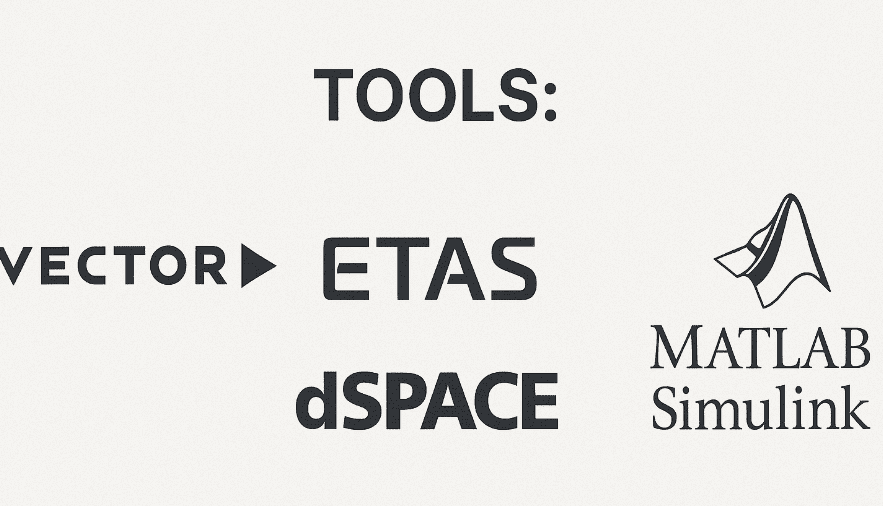
The SDV ecosystem is broad and requires proficiency in a variety of domains. Below are the must-have technical and tool-based competencies:
Programming Languages:
- C and C++: For real-time systems and ECU programming
- Python: For scripting, testing automation, AI models, and backend tools
- MATLAB/Simulink: For algorithm design, simulation, and code generation
- Rust and Go: Emerging in safety-critical and concurrent environments
- Bash/Shell Scripting: For Linux-based system configurations
Tools & Platforms:
- Model-Based Design Tools: MATLAB, Simulink, Stateflow, TargetLink
- ECU Testing Tools: Vector CANoe, CANalyzer, ETAS INCA, dSPACE ControlDesk
- Build & Integration: Jenkins, Yocto, BitBake, GitHub Actions
- Virtualization: Docker, QEMU, Hypervisor-based OS testing
- Diagnostic Tools: UDS simulators, OBD-II scanners
- Cybersecurity Frameworks: Secure boot, encryption, TARA analysis tools
Standards & Protocols:
- AUTOSAR: Classic for traditional ECUs, Adaptive for high-performance computing
- ISO 26262: Functional safety standard
- ISO/SAE 21434: Cybersecurity in automotive
- ASPICE: Automotive SPICE process for software quality
Career Roles and Specializations
The SDV space opens up a wide array of career roles depending on your skills and interests. Here are some of the high-demand positions:
Embedded Systems Roles:
- ECU Software Developer
- AUTOSAR Developer
- Diagnostics Engineer
- Firmware Engineer
Model-Based Development (MBD) Roles:
- MBD Engineer
- Simulink/Stateflow Model Designer
- Code Generation Specialist
- MIL/SIL/HIL Tester
Advanced Software Engineering Roles:
- Vehicle OS Developer
- Cloud Integration Developer
- DevOps Engineer (Automotive)
- Backend API Developer for In-Vehicle Apps
ADAS & AI Roles:
- ADAS Algorithm Developer
- Computer Vision Engineer
- Sensor Fusion Engineer
- Autonomous Driving Software Architect
Cybersecurity & Functional Safety:
- Cybersecurity Engineer
- Functional Safety Engineer (ISO 26262)
- Secure Boot and Firmware Expert
Step-by-Step Roadmap to Enter the SDV Industry
✅ Step 1: Build a Strong Foundation
- Learn C/C++, data structures, and OS basics.
- Practice microcontroller programming (Arduino, STM32).
- Take online courses from NPTEL, Coursera, Udemy.
⚖️ Step 2: Choose Your Domain
- AUTOSAR or MBD?
- ADAS or Diagnostics?
- Cloud or Cybersecurity? Choose a focus area that matches your long-term interests.
? Step 3: Build Projects
- Develop a CAN-based sensor system.
- Simulate Lane Keeping using OpenCV and Python.
- Create a diagnostic dashboard using UDS over CAN.
? Step 4: Internship or Industrial Training
- Apply to internships at Tier 1 suppliers, OEMs, or startups.
- Learn industry tools like CANoe, INCA, and Simulink.
? Step 5: Get Certified
- ISO 26262 Functional Safety
- AUTOSAR (Vector, Elektrobit)
- dSPACE/NI HIL Training
- Linux Embedded Certification
⏳ Step 6: Build an Online Portfolio
- Upload projects on GitHub
- Write blogs on Medium or LinkedIn
- Showcase your learning via YouTube or Instagram
✈️ Step 7: Start Applying
- Target companies working on SDVs
- Prepare for interviews by solving embedded and automotive-specific problems
Online Resources to Learn & Grow
Learning Platforms:
- Udacity: Self-Driving Car Nanodegree
- Coursera: Automotive Systems, AI for Everyone
- NPTEL: Automotive Control, Embedded Systems
- Vector Academy: AUTOSAR, CAN Protocols
- dSPACE Academy: HIL, Control Systems
Forums & Communities:
- Stack Overflow
- GitHub open-source projects (OpenPilot, Apollo)
- LinkedIn Automotive Tech Groups
- Reddit r/embedded and r/automotive
Books to Read:
- “Embedded Systems with ARM Cortex” by Jonathan Valvano
- “Automotive Ethernet” by Ingo Totzke
- “Designing Embedded Systems” by Peter Marwedel
Future Trends and Opportunities in SDVs

? AI & Autonomy:
- Real-time 3D mapping
- AI-based Driver Monitoring Systems (DMS)
- Sensor fusion for Level 3 and 4 autonomy
✨ OTA and Cloud Services:
- Full vehicle updates from the cloud
- Real-time analytics and fault diagnosis
- Cloud-native vehicle applications
?️ Cybersecurity:
- Intrusion Detection Systems (IDS)
- End-to-End Encryption
- Secure Over-the-Air firmware deployment
? Smart Infrastructure:
- V2X communication
- Smart traffic coordination
- Vehicle-cloud-grid integration
? Sustainability:
- SDVs enabling electric powertrains
- Energy-efficient software designs
- Software-controlled energy recovery systems
Final Tips for Job Seekers in the SDV Industry
- Never stop learning. Technologies evolve quickly.
- Be hands-on. Recruiters prefer practical experience over theory.
- Focus on one or two niches. Deep knowledge trumps shallow breadth.
- Stay connected. Follow thought leaders, attend webinars, and join forums.
- Keep a portfolio. Make yourself discoverable.
Conclusion: Define the Future with Code
Software-Defined Vehicles represent the most exciting frontier in the automotive world. If you can code, design systems, and understand how software drives functionality, your place in the automotive revolution is already waiting. Follow this roadmap, invest in your learning, and build real-world projects to carve your name into the future of mobility.
This was about “Roadmap To Become A Part of the Software-Defined Vehicle (SDV) Revolution“. Thank you for reading.
Also, read:
- How Does An EV Know It Has 50% Battery Left? 🔋
- Why AI Agents Could Become The Digital Workforce
- Press Accelerator → What Happens Inside the Car?
- The Future of Communication: Neuralink VOICE
- Top 10 Tools to Design ADAS and Autonomous Driving Systems Virtually
- 20 Advanced Coursera Courses for Embedded Engineers That Can Lead to High-Paying Careers
- E/E Architecture Is Changing: From Distributed ECUs to Zonal Architecture
- Embedded C vs C++: Which Should Embedded Engineers Learn?